
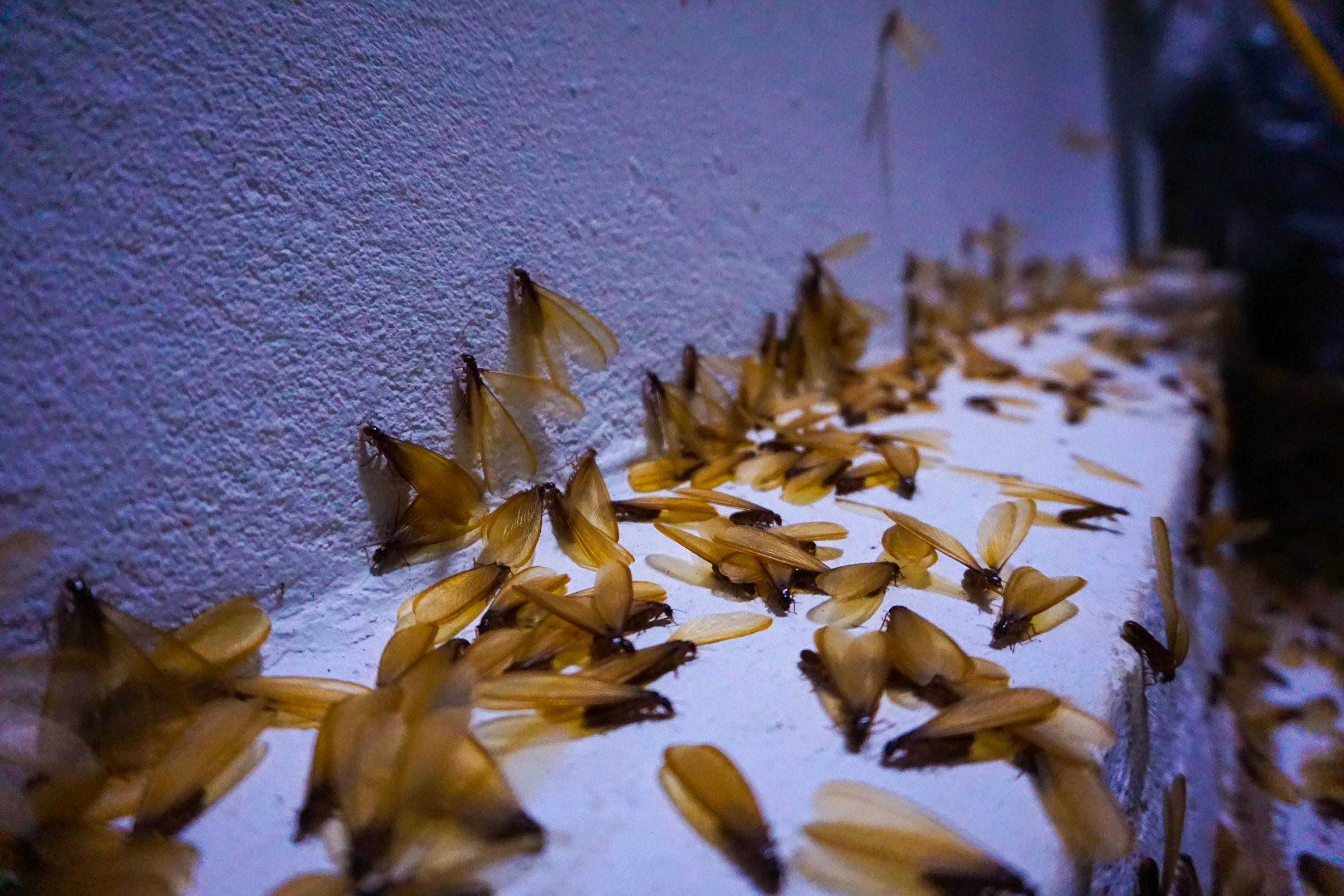
You step outside after a rainy stretch and notice pale wings around a patio door, window, or foundation. A few insects may still be crawling nearby, while others have already disappeared. If you are asking when do termites swarm in California, the answer depends on the termite type, local weather, and where the colony is living.
Subterranean termites often become easier to notice after wet weather because their colonies stay connected to soil. Drywood termites live inside wood and follow a different seasonal pattern. This guide explains California termite swarming season, why termites swarm after rain, how to read the signs around your home, and when an inspection makes sense.
When Do Termites Swarm in California?
There is no single month that applies to every species or every part of the state. Subterranean termites often produce visible flights when moist conditions and suitable temperatures line up, while drywood termites are more closely associated with warmer seasonal periods.
The winged termites you see are reproductive members of an established colony. They leave the colony, fly, shed their wings, and try to pair off in a suitable location. The University of California Statewide Integrated Pest Management Program identifies subterranean, drywood, and dampwood termites as important California termite groups and explains that they differ in nesting habits, moisture needs, and swarming behavior.
| Termite Type | Where It Usually Lives | Conditions Around Swarming | Clues You May Find |
| Subterranean termites | Soil and soil-connected areas | Moist soil, favorable temperatures, and calm flight conditions | Mud tubes, swarmers, discarded termite wings |
| Drywood termites | Inside relatively dry wood | Warm seasonal conditions | Pellets, small exit holes, discarded wings |
| Dampwood termites | Damp or decaying wood | Consistently moist wood | Soft wood, moisture damage, winged termites |
For you as a homeowner, the location of the swarm often tells you more than the calendar. Flying termites near wet soil after rain present a different clue than swarmers emerging directly from a wooden window frame.
Why California Termite Season Varies by Region
California covers several climate zones, so termite season in Sacramento or Fresno may not match the timing along the coast or farther south. Rainfall, temperature, humidity, and local soil conditions can all shift visible activity.
That is why a blanket rule such as “termites swarm in spring” is too simple for California. Different termite groups respond to different environmental conditions, and local weather can move a swarm window earlier or later.
Why Do Termites Swarm After Rain?
If you see flying termites shortly after a storm, the rain did not create a new infestation. The colony was already present. Wet weather simply changes the conditions around it.
Subterranean termites rely heavily on moisture. Rain raises soil moisture and humidity near the surface, which can make the environment less drying for reproductive termites once they leave the protection of the colony. Warm temperatures and lighter winds can make that short flight easier.
| Weather Factor | Why It Matters |
| Rainfall | Raises moisture in the soil and surrounding air |
| Humidity | Reduces moisture loss while swarmers are exposed |
| Warm temperatures | Support termite activity and flight |
| Light winds | Make short reproductive flights easier |
| Mature colony | Provides the reproductive termites needed for a swarm |
A termite swarm after rain can look sudden because the insects become visible all at once. The colony itself may have been hidden in soil, wood, or another protected area for a long time.
You may also notice that several homes on the same street report swarmers after the same storm. Nearby termite colonies experience similar weather, so reproductive flights can overlap across a neighborhood.
How Subterranean and Drywood Termite Swarms Differ
Not all swarming termites behave the same way. Subterranean and drywood termites can both affect California homes, but the signs they leave behind are different.
Subterranean Termites Stay Connected to Soil
Subterranean termites depend on soil or another reliable moisture source. Their workers move between the colony and wood while avoiding prolonged exposure to dry air.
Check foundation edges, crawl spaces, and other areas where the structure meets the ground. Mud tubes crossing concrete, masonry, or another surface are a common sign of subterranean termite activity. You may also find termite wings around windows or doors after a swarm.
Rain has a stronger connection to this group because wetter soil changes the environment around the colony. That is one reason homeowners often notice subterranean termite swarms after rainy periods.
Drywood Termites Live Inside Wood
Drywood termites do not need contact with soil. They can live inside structural lumber, trim, furniture, and other dry wooden materials.
A common clue is a small pile of hard pellets below infested wood. Drywood termites push this material from their galleries through tiny openings. If you clean the pellets away and they return in the same place, there may be active termites inside the wood above.
| Sign | Subterranean Termites | Drywood Termites |
| Mud tubes | Common | Not typical |
| Soil connection | Yes | No |
| Hard pellets | Not typical | Common |
| Colony inside dry structural wood | Not typical | Yes |
| Indoor swarmers | Possible | Possible |
| Discarded termite wings | Possible | Possible |
Do not identify the insect by color alone. Body shape, wings, and the evidence around the property are more useful when comparing termite swarmers with other flying insects.
Does a Termite Swarm Mean Your California Home Is Infested?
Seeing a large outdoor termite swarm does not automatically mean termites are living inside your house. Swarmers may come from soil, landscaping, buried wood, a fence, a tree, or another structure nearby.
Indoor swarming termites are more significant. If insects appear to come from a baseboard, wall, floor gap, window frame, or another structural opening, the source may be within or directly connected to the home. Repeated piles of wings in one indoor location also deserve attention.
| What You See | What It May Tell You |
| One winged insect outdoors | Too little evidence to locate a colony |
| Many swarmers outdoors | A mature termite colony is active nearby |
| Swarmers emerging indoors | Possible activity within or connected to the structure |
| Wings collecting in one area | Recent reproductive activity nearby |
| Mud tubes | Evidence consistent with subterranean termites |
| Pellets below wood | Evidence consistent with drywood termites |
Termites are a costly structural pest, but a swarm by itself does not tell you how much damage exists. The U.S. Environmental Protection Agency states that termites cause billions of dollars in structural damage each year and that property owners spend more than $2 billion annually treating them.
Termites or Flying Ants?
Flying ants can appear during similar weather, and you may mistake them for termite swarmers when they are moving quickly near a window or outdoor light. A termite swarmer has a broad waist, fairly straight antennae, and two pairs of wings that are close to the same size. A flying ant has a narrow waist, bent antennae, and front wings that are noticeably larger than the rear pair.
If you are unsure, photograph the insect closely or save one before cleaning the area. A clear specimen is much easier to identify than a description given later.
What To Do When Termites Swarm in California After Rain
When termites swarm in California after rain, start with the exact location where you found them. Photograph the insects, loose wings, nearby wood, and any opening where they seem to be emerging. That information can help distinguish an outdoor swarm from activity connected to the structure.
Check the surrounding area before you clean everything away. Look for mud tubes along the foundation, pellets below wood, recurring discarded wings, damaged trim, or another swarm from the same location.
Check Moisture and Wood Around the House
Walk the exterior once the rain has passed. Look for leaking outdoor faucets, irrigation that keeps the foundation wet, drainage problems, wood debris, or firewood stored directly beside the house.
These conditions do not prove that you have a termite infestation. They can, however, provide moisture or wood sources near the structure and make termite signs more difficult to see.
Keep foundation edges visible where practical. Soil, thick mulch, stored lumber, and dense material against the building can hide areas you would otherwise be able to check.
Know When to Schedule a Termite Inspection
An isolated outdoor swarm may simply show that termites are active somewhere in the area. Indoor swarmers, mud tubes, recurring pellets, repeated termite wings, or visible wood damage give you more reason to schedule a professional termite inspection.
An inspection should identify the termite type and locate the activity before a treatment plan is chosen. Subterranean termites connected to soil and drywood termites living inside structural wood require different approaches.
Protecting Your Home During California Termite Swarming Season
So, when do termites swarm in California? The timing depends on the termite group, local weather, and colony conditions. Subterranean termites are closely connected to soil moisture, which helps explain why termites swarm after rain. Drywood termites live inside wood and follow a different seasonal pattern.
Pay attention to where the insects appear and what remains after they are gone. Outdoor flying termites tell you a mature colony is nearby. Indoor swarmers, mud tubes, pellets, or repeated piles of termite wings provide stronger evidence that the structure should be checked.
If you find those signs around a Sacramento, Fresno, or Central Valley property, contact Official Pest Prevention for a termite inspection. A technician can identify the termite type, trace where the activity is coming from, and recommend a treatment based on the actual source rather than the swarm alone.
