
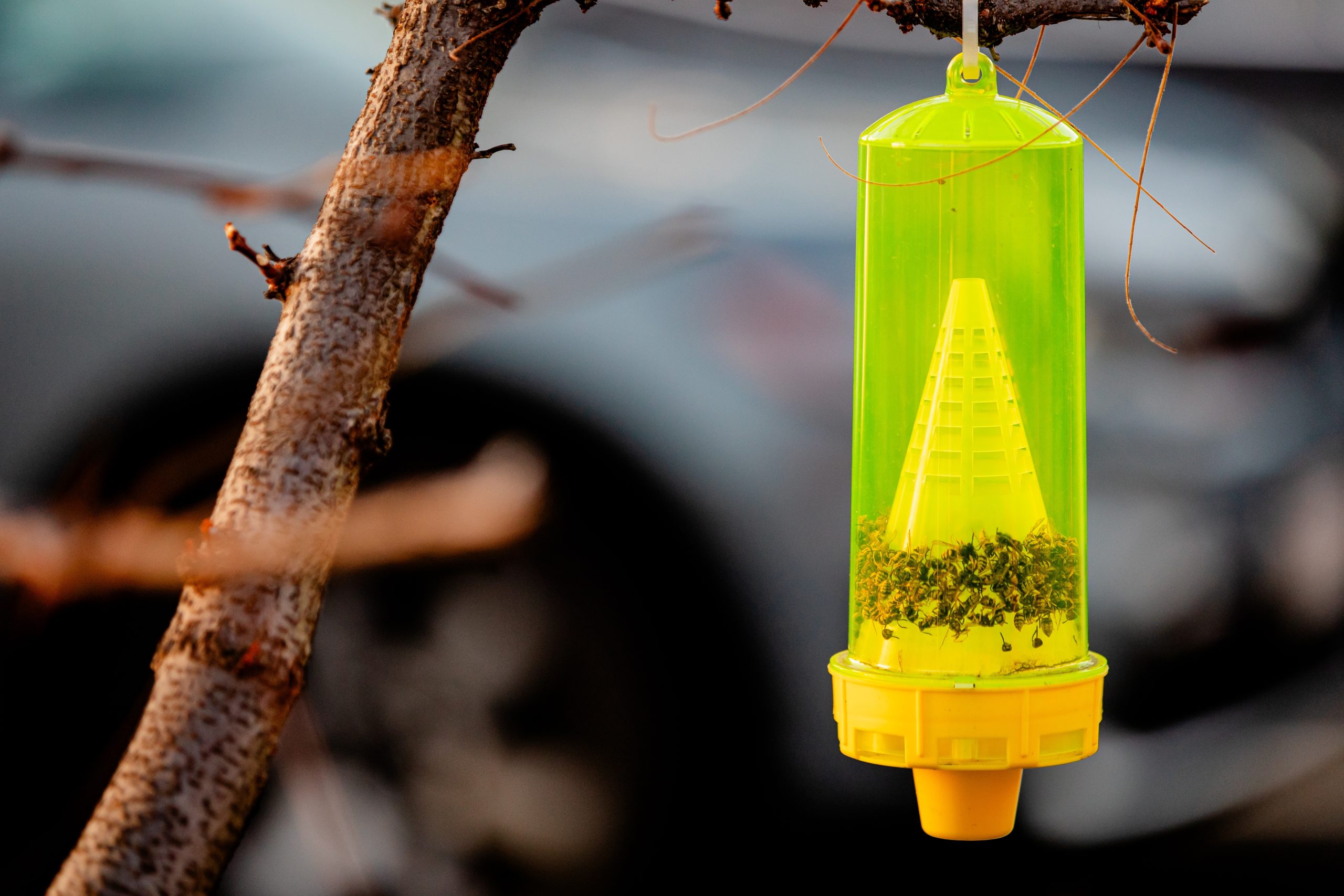
A yellow jacket trap can contain fresh attractant and still catch very little. In many yards, the problem is placement. The trap hangs where yellow jackets rarely travel, or it sits too close to the patio, grill, or doorway you want to protect.
Where you hang a yellow jacket trap affects whether foraging insects encounter it before they reach people, food, or trash. A good location uses an existing travel route and keeps attracted insects outside the busiest part of the property.
That approach matters across California, especially in warmer inland areas. Long warm seasons, backyard fruit, outdoor meals, pet food, and open recycling can create several competing food sources around one home. A yellow jacket trap works best when it intercepts that activity instead of adding another attraction beside your table.
Why Yellow Jacket Trap Placement Changes the Results
Yellow jacket trap placement works best when it matches the movement already happening around your property. Foraging workers often cross the same areas while traveling between food, water, and the nest. Fence lines, hedges, roof edges, garbage storage areas, and fruit trees can all become regular routes.
A trap in an inactive corner may never receive enough traffic to perform well. Moving it closer to a repeated route gives nearby yellow jackets a better chance of detecting the lure before they reach a patio, trash container, or outdoor kitchen.
Place the Trap Along a Route
Where to hang a yellow jacket trap becomes easier to answer once you watch the yard for several minutes. One insect flying across the lawn tells you little. Repeated movement in the same direction gives you a useful pattern.
For example, yellow jackets may travel from a fence line toward a grill or trash area. A trap placed near the outer portion of that route can intercept activity before it reaches people. Hanging the same trap beside the grill would place the lure too close to food, drinks, and regular foot traffic.
Where to Hang a Yellow Jacket Trap
The best place for a yellow jacket trap depends on the property layout, the trap design, and the activity you observe. A useful location is usually outside the main seating area, away from daily foot traffic, and close enough to a repeated flight path for insects to encounter the attractant.
There is no universal distance or height that works for every product. Some traps hang from a branch or hook. Others sit on a level surface. Follow the manufacturer’s directions for height, sunlight, weather exposure, refill timing, and disposal.
| Property Area | Better Placement | Why It Helps |
| Patio or deck | Outside the main seating and dining area | Keeps attracted insects away from people and uncovered food |
| Outdoor kitchen | Beyond the cooking and serving zone | Reduces competition from grease, meat, and sweet drinks |
| Trash storage | Near the flight route but away from the bin handle | Lets the trap intercept activity without blocking daily access |
| Fruit trees | Outside the main picking and walking area | Keeps the lure away from people gathering fruit |
| Fence line | Where repeated movement is visible | Uses an existing route across the property |
| Pool area | Beyond seating, towels, and beverage stations | Reduces close contact around bare skin and sugary drinks |
| Pet area | Away from bowls, kennels, and water stations | Prevents pets from disturbing the trap and removes competing food |
Keep the Trap Easy to Maintain
A yellow jacket trap needs regular checks. Liquid can evaporate faster during hot California afternoons, reusable traps can become dirty, and dead insects may collect near the entrance.
Choose a location you can reach without a ladder or unstable footing. The trap should also hang securely enough that wind, pets, children, or yard equipment cannot knock it down. A spilled lure can create a sticky attraction in the wrong part of the yard.
Where Not to Place Yellow Jacket Traps
Poor yellow jacket trap placement can increase activity exactly where you do not want it. A trap may catch insects and still be in the wrong spot if people must pass close to it throughout the day.
Avoid narrow walkways, doorways, grill areas, pool seating, children’s equipment, and pet feeding stations. These locations turn the trap into a destination beside normal household activity.
| Poor Location | Why It Causes Trouble | Better Choice |
| Beside a dining table | Attracts foragers into the meal area | Move it beyond the occupied patio |
| Next to a back door | Concentrates traffic along an entry route | Use a quieter perimeter location |
| On play equipment | Children may disturb the trap | Place it where children cannot reach it |
| Beside pet food | The food competes with the lure | Remove bowls after feeding and move the trap |
| Near a grill | Heat, grease, and meat odors interfere with placement | Move it outside the cooking area |
| On a narrow walkway | People repeatedly pass close to arriving insects | Choose a low-traffic location |
| Beside a suspected nest entrance | Defensive insects may react to movement | Keep away and arrange an inspection |
Stay Away From Suspected Nest Entrances
A yellow jacket trap should never hang beside repeated traffic entering a ground hole, wall gap, eave, utility box, or landscape void. That pattern may point to a nearby nest.
Movement, mowing, digging, or an attempted treatment can trigger defensive behavior near the colony. A trap at the entrance does not remove the nest. It only places you closer to active insects when you install, refill, or inspect it.
Why Yellow Jacket Bait Still Matters
Yellow jacket bait still affects trap performance. A well-placed trap can underperform when the attractant is old, dried out, diluted, or poorly matched to the insects present.
The UC Statewide Integrated Pest Management Program explains that some attractants work better for certain yellow jacket species than others. That helps explain why one product may perform well in one area and produce limited results somewhere else.
Commercial lures are easier to evaluate because they include replacement and use instructions. Homemade mixtures can change as they dry, spoil, or become diluted. That makes it harder to tell whether the problem comes from the bait, the trap design, or the location.
Remove Food That Competes With the Trap
A yellow jacket attractant may lose to an open soda, ripe fruit, pet food, grill grease, or a leaking trash bag. These sources already provide strong odors and easy access.
Removing them makes the yard less attractive and gives the trap a better chance to work. It also gives you a clearer way to judge whether the location is reducing activity around the patio or doorway.
| Competing Source | Why It Attracts Yellow Jackets | What to Do |
| Fallen fruit | Damaged fruit provides sugar and moisture | Pick it up regularly |
| Open drinks | Soda and juice are easy to reach | Use covered cups and clean spills |
| Meat scraps | Food waste can attract foragers | Clear plates and cooking waste promptly |
| Overflowing trash | Mixed food waste produces a steady odor | Use tight lids and clean residue |
| Sticky recycling | Bottles and cans may hold sweet liquid | Rinse containers and close the bin |
| Pet food | Protein and fat may remain available for hours | Bring bowls inside after feeding |
| Grill grease | Residue remains after cooking | Clean grease trays and nearby surfaces |
| Exposed compost | Fresh scraps stay accessible | Cover new material properly |
How Season Affects Yellow Jacket Trap Performance
Yellow jacket trap performance often changes as colonies grow through the warmer months. More workers are searching for food, and outdoor conditions provide more opportunities around patios, parks, restaurants, and commercial properties.
Late summer can bring heavier activity around trash, ripe fruit, and sweet drinks across many parts of California. That does not mean every species responds to the same bait on the same schedule. Property conditions, lure freshness, and placement still shape the result.
Judge the Protected Area
Do yellow jacket traps work? The answer should be based on activity around people, not only the number of insects inside the trap.
Remove exposed food, note the location, and monitor the patio, doorway, or pet area for several days under similar conditions. Replace the lure according to the product instructions. Moving the trap too often makes it difficult to tell whether placement, weather, or bait condition caused the change.
What a Yellow Jacket Trap Cannot Do
A yellow jacket trap can reduce nuisance activity by catching some foraging workers. It cannot confirm the exact nest location, remove developing brood, or guarantee that no one will be stung.
Persistent traffic into one ground opening or structural gap suggests a nest may be nearby. Sudden activity after mowing, digging, or moving yard equipment can point to the same problem.
At that stage, continued trap testing near the opening creates unnecessary risk. Keep people and pets away from the area and arrange a professional inspection.
When Professional Yellow Jacket Control Makes Sense
Professional yellow jacket control is appropriate when insects repeatedly enter one opening, appear inside a building, sting people near the same location, or react to normal yard work. It is also the safer choice when someone on the property has a serious sting allergy.
The Centers for Disease Control and Prevention recorded 788 U.S. deaths from hornet, wasp, and bee stings between 2011 and 2021. Annual deaths ranged from 59 to 89 during that period. Severe reactions are uncommon, but an active nest still deserves careful handling.
According to MedlinePlus guidance on insect bites and stings, trouble breathing, swelling of the throat or tongue, dizziness, fainting, or widespread hives can signal a severe allergic reaction. Call 911 when those symptoms appear.
Making the Right Yellow Jacket Trap Choice for Your Property
A yellow jacket trap belongs along existing insect traffic and outside the area people use. Fresh attractant matters, but location determines whether the trap intercepts activity or brings it closer to a table, doorway, grill, or play area.
Remove exposed food, clean trash and recycling, pick up fallen fruit, and follow the trap instructions. Judge performance by what happens around people rather than the number of insects inside the trap.
When repeated traffic points to a ground nest, wall void, eave, or concealed opening, contact Official Pest Prevention. A local technician can inspect the property, identify the source, and recommend yellow jacket control for homes and businesses in California.
