
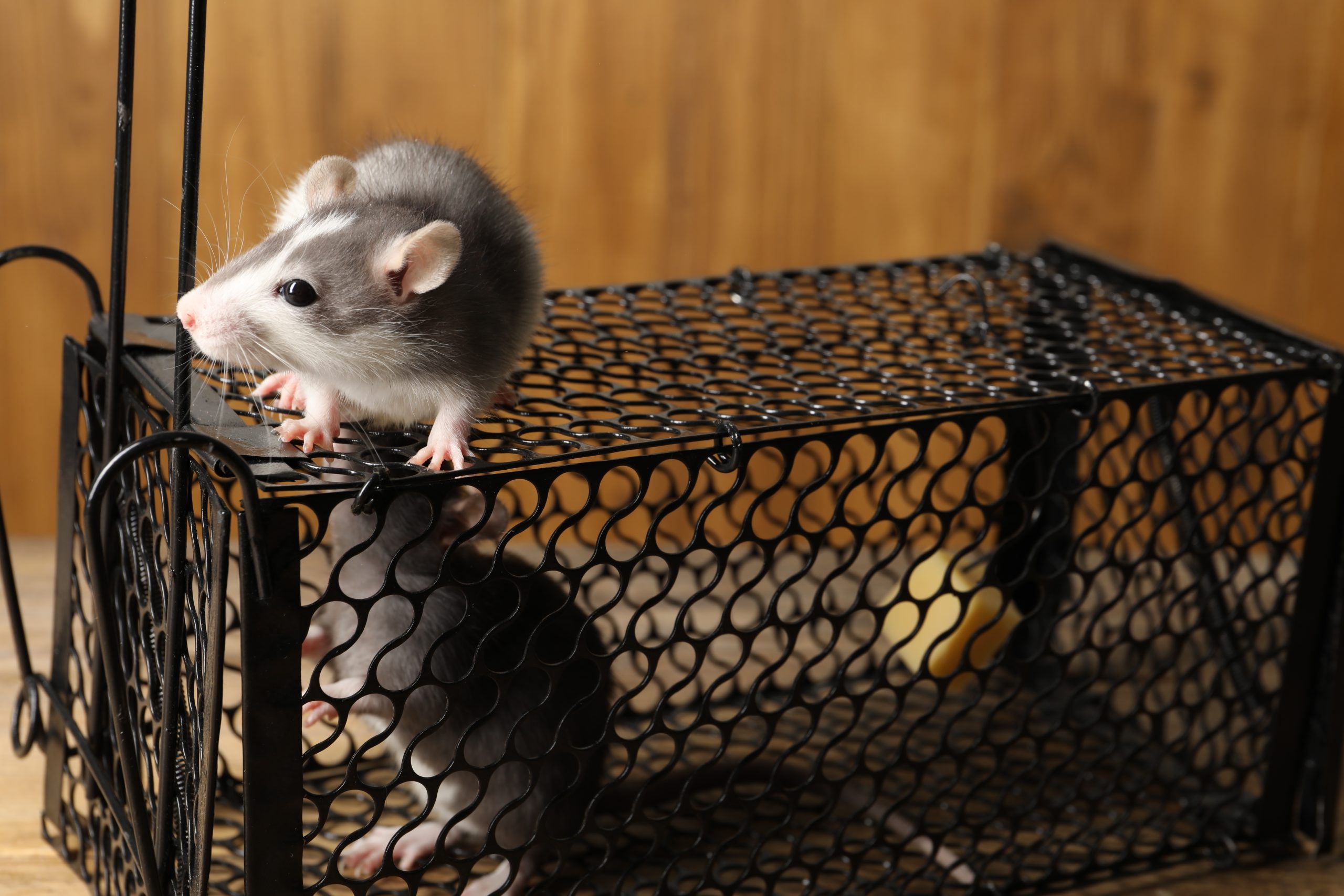
You move a bag of dog food in the garage and find several dark droppings behind it. That night, you hear movement above the ceiling, then everything goes quiet. If rats are already using your home, setting rat traps before winter can help, but placement matters more than simply putting bait in a convenient corner.
Start by finding where the rats are moving. Then place full-size traps along those routes, remove easier food sources, and check the outside of the house for gaps or damaged openings. This guide explains how to set rat traps, where to place them, how to choose bait, and what to do if signs of rats continue after trapping.
How to Set Rat Traps Correctly
If you need to know how to set a rat trap, start with the right size. Choose a snap trap designed for rats, check that the trigger moves freely, and follow the manufacturer’s setting instructions for that model.
Use a small amount of rat bait. The goal is to make the rat work at the trigger, not give it an easy meal. A large amount of food can make the setup less precise.
What Is the Best Bait for Rat Traps?
There is no single best bait for rat traps in every home. Peanut butter is commonly used because a small amount sticks to the trigger, but the food rats are already taking from your property can be a useful clue.
If a bag of birdseed, dry pet food, or another stored product keeps getting disturbed, something familiar may attract more interest than a completely different food. Before judging the baited traps, remove competing food sources so the rat has fewer alternatives nearby.
Use More Than One Trap When the Signs Support It
If you find droppings in the garage and hear movement in the attic, one trap in the kitchen is unlikely to cover both routes. Use multiple rat traps when separate areas show clear signs of activity.
The Centers for Disease Control and Prevention (CDC)’s rodent-control guidance recommends traditional snap traps for home rodent control and advises placing them where rodent activity is present. The agency also recommends keeping traps away from children and pets.
Check the traps regularly. That helps you remove captured rodents promptly and shows whether a particular route is still active.
Why Rat Traps Matter Before Winter
Rats look for food, water, shelter, and protected nesting areas. A garage with stored pet food, an attic with insulation, or a quiet storage room can provide several of those things at once. As colder and wetter weather arrives in Sacramento, Fresno, and other parts of Northern and Central California, fall is a practical time to check for rat activity before rodents become established indoors.
You may never see a live rat. Fresh rat droppings near a wall, teeth marks on packaging, scratching above the ceiling, or damage around a vent can tell you where activity is concentrated. Those clues matter because rat trap placement works best when it follows an actual travel path.
| What You Notice | What It Suggests | Where to Check |
| Fresh rat droppings | Recent activity in that area | Wall edges, shelving, attic routes |
| Chewed food packaging | A nearby food source is being used | Pantry, garage, pet-food storage |
| Scratching after dark | Movement in a concealed space | Attic, ceiling, wall void |
| Tracks or repeated marks | A regular travel path | Baseboards and structural edges |
| Damaged vent or gap | A possible rodent entry point | Roofline, siding, foundation |
Check for evidence such as droppings, tracks, and chewing when deciding where rodent-control devices belong. Instead of scattering rat traps around a room, use the signs to narrow down the best place to put them.
Where to Place Rat Traps for Better Results
A rat can move through the same garage every night and never touch a trap sitting several feet away from its route. If you are wondering where to place rat traps, start with walls, edges, and other protected paths where you have already found evidence.
The UC Statewide Integrated Pest Management Program recommends placing traps where rats are active. Rats commonly travel close to walls and structural features, which makes those areas more useful than the middle of an open room.
Follow the Rats’ Travel Paths
Check behind large appliances, along baseboards, beside shelving, near pet-food storage, and around garage walls. If droppings appear behind a bin of birdseed, that location gives you better information than an empty corner across the room.
In an attic, look along beams, pipes, vents, roof edges, and other structural routes. Roof rats can use elevated pathways, so attic framing and roofline access deserve attention when signs appear above the ceiling.
Position Snap Traps Correctly
Traditional snap traps are commonly placed perpendicular to a wall with the trigger end closest to the wall. That arrangement puts the trigger directly in a route a rat is more likely to use.
The best place to put rat traps is not always the easiest place for you to reach. It is the place where the evidence is strongest, as long as the trap can still be checked and removed safely.
| Area | Better Trap Placement | What to Avoid |
| Garage | Along a wall near fresh droppings or gnawing | Middle of the floor |
| Pantry | Near an active route after food is secured | Beside exposed groceries |
| Attic | Along accessible beams or structural edges | Under loose insulation |
| Utility room | Near a wall or active penetration | Open floor space |
| Storage room | Behind or beside items near a wall | Random corners with no activity |
Why Rat Traps Sometimes Stay Empty
You set the trap, check it the next morning, and find the bait untouched. That does not necessarily mean the rat infestation is over. The trap may be outside the main route, another food source may be more attractive, or the rat may be cautious around something new.
Changing everything at once makes the problem harder to read. Look at the trap location, nearby food, and fresh signs before deciding the trap itself is the problem.
Too Much Bait
A heavy amount of bait can give the rat more food to work around. Use a small portion and keep it where the trigger needs to be activated.
Too Many Easier Food Sources
An open bag of dog food can compete with the trap all night. Store pet food, birdseed, cereal, and dry goods in sturdy containers, clean spills, and keep garbage secured.
Moving Traps Too Quickly
Rats can hesitate around unfamiliar objects. Moving a trap every night gives you little information about whether the original location was actually wrong.
| Problem | What May Be Happening | Better Response |
| Bait remains untouched | Trap is outside the main route | Recheck nearby signs of rats |
| Bait disappears without a catch | Bait amount or trigger setup may be poor | Use less bait and reset carefully |
| Rats ignore the trap | Easier food is available | Remove competing food sources |
| Activity continues elsewhere | More than one route may be active | Add traps where separate signs appear |
| Traps keep moving | Rats never adjust to the new object | Give a good location time before relocating |
What to Do After You Catch a Rat
Catching one rat confirms that your setup worked. It does not show where the animal entered, so the next step is to inspect for rodent entry points and decide whether exclusion work is needed.
Wear disposable gloves when handling a dead rodent or contaminated nesting material. Avoid sweeping dry droppings around the room. Clean affected areas according to current public-health guidance, especially when waste has collected in an attic, garage, or storage space.
Check the Exterior for Access Points
Walk around the house and look at roof vents, fascia, siding, utility penetrations, garage-door edges, foundation areas, and places where different building materials meet. These small gaps can be difficult to notice from inside.
Know the Difference Between Traps and Bait Stations
A snap trap physically captures a rat. An exterior bait station is a secured device designed to hold rodenticide, so it comes with different safety requirements.
The U.S. Environmental Protection Agency (EPA) covers product requirements and precautions involving children, pets, and wildlife. Do not place loose rodenticide around an attic, garage, home, or yard in a way that conflicts with the product label.
Official Pest Prevention may use up to four exterior rodent bait stations in the standard rodent-control program. Their locations are chosen from evidence such as droppings, tracks, and chewing rather than spacing them evenly around a property.
Keep Rats From Coming Back After Winter Starts
Once the immediate rat activity is under control, shift from trapping to prevention. Store pet food and birdseed in durable containers, keep garbage covered, clean up fallen fruit, and reduce clutter that sits undisturbed against garage or storage-room walls.
Outside, pay close attention to vents, roof edges, siding, door seals, and utility openings. These areas matter because winter rodent control is more effective when trapping and exclusion work together. Catching a rat solves the immediate problem. Closing the access route helps reduce the chance of another one taking its place.
Do not rush to seal every opening if you still hear rats indoors. Poorly timed exclusion can leave an animal trapped in an attic or wall, so active interior signs should be considered before sealing begins.
If you keep finding fresh droppings, hear movement above the ceiling, or cannot locate the access point, a professional inspection can help you stop guessing. Official Pest Prevention can inspect the structure, identify active travel routes, and determine whether trapping, monitoring, exclusion, or a combination is appropriate. Contact Official Pest Prevention to schedule a rodent inspection before winter activity becomes harder to track.
