
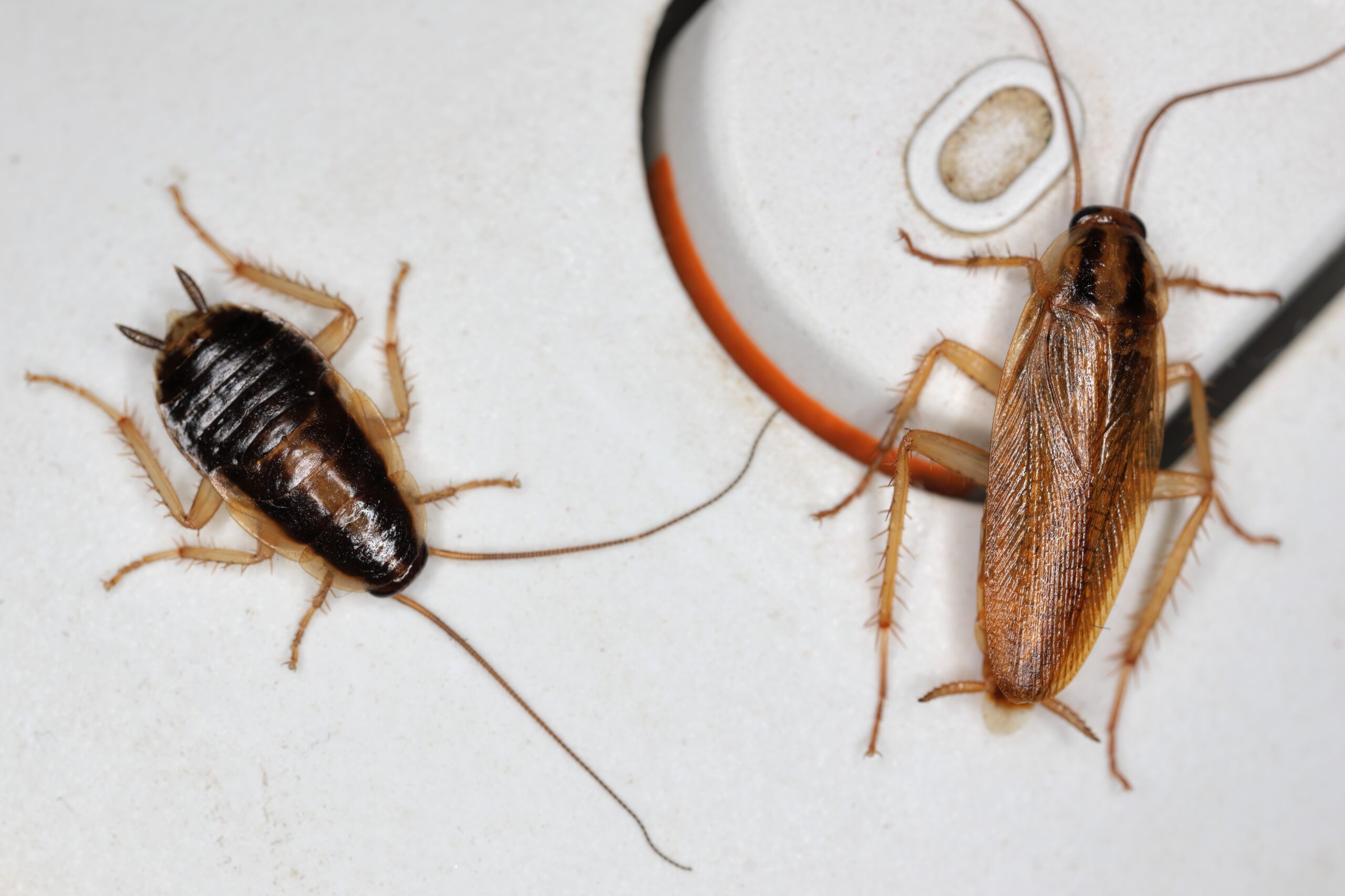
German cockroaches in California homes are small, fast-breeding pests that hide around kitchen appliances, bathroom plumbing, and other warm, sheltered spaces. They can establish an infestation even in a clean home, making early identification and treatment especially important. Recognizing their markings, droppings, and breeding habits can help you determine whether you’re dealing with an occasional sighting or a growing infestation, and why targeted treatment often works better than store-bought sprays.
Key Takeaways
- German cockroaches reproduce quickly. Females typically carry 30 to 40 eggs per capsule, allowing populations to grow rapidly when indoor conditions are favorable.
- Early signs often appear around appliances and plumbing. Pepper-like droppings, egg cases, shed skins, and musty odors can reveal activity before you see large numbers of cockroaches.
- Successful control requires more than spraying visible insects. Sanitation, moisture reduction, targeted baiting, and follow-up treatment help address cockroaches hiding inside cabinets, appliances, and other protected spaces.
How to Identify German Cockroaches in California Homes
German cockroaches are smaller than many other roaches found in California. Adults measure about half an inch to five-eighths of an inch long and have light brown or tan bodies. Their most recognizable feature is a pair of dark, parallel stripes just behind the head.
Although adults have wings, they rarely fly. They usually run into narrow gaps when disturbed. Young German cockroaches, called nymphs, are smaller and darker, without fully developed wings. Finding adults and nymphs together suggests that cockroaches may be breeding nearby.
German Cockroaches vs. Other Common Roaches
California homeowners may also encounter American and Oriental cockroaches. These species differ in size, appearance, and preferred hiding places, which affects how pest control professionals approach them.
| Feature | German Cockroach | American Cockroach | Oriental Cockroach |
| Adult size | 1/2 to 5/8 inch | 1 1/4 to 2 inches | About 1 inch |
| Color | Light brown or tan | Reddish brown | Dark brown to black |
| Distinctive feature | Two dark stripes behind the head | Large body with pale markings behind the head | Broad, dark body |
| Common hiding places | Kitchen appliances and cabinets | Drains, sewers, and warm, damp spaces | Damp areas and drains |
German cockroaches are especially adapted to indoor living. Finding several small roaches around your kitchen appliances deserves closer attention than finding a single large outdoor species near an open door. Identifying the insect correctly helps determine where treatment should begin.
Why German Cockroaches Thrive and Multiply Indoors
The space behind your refrigerator may look empty, but it offers nearly everything a German cockroach needs. The motor generates warmth, crumbs collect underneath, and the narrow gap against the wall provides shelter. Dishwashers and stoves create similar conditions, especially when grease or food residue accumulates nearby.
Bathrooms offer different advantages. Moisture around sink plumbing, condensation, and gaps behind cabinets provide water and protected hiding spots. In Sacramento, Fresno, and other Central Valley communities, indoor heating and air conditioning allow these cockroaches to remain active throughout the year.
How Fast Do German Cockroaches Reproduce?
A female German cockroach carries her eggs in a protective capsule until shortly before hatching. Each capsule typically contains around 30 to 40 eggs, and a female can produce several capsules during her lifetime.
According to the University of California Integrated Pest Management Program (UC IPM), German cockroaches have the fastest reproductive cycle among common household pest cockroaches, with a single female and her offspring capable of producing more than 30,000 cockroaches in one year under favorable conditions.
| Reproduction Detail | Typical Range |
| Eggs per capsule | Approximately 30 to 40 |
| Egg incubation | Around 3 to 4 weeks |
| Development from hatching to adulthood | Often 6 to 12 weeks under favorable conditions |
| Capsules produced per female | Commonly 4 to 8 during her lifetime |
Development varies with temperature, food availability, and other conditions. Still, these numbers explain how an overlooked infestation can grow within a few months. Adults, nymphs, and developing eggs may occupy the same concealed area, which complicates treatment.
Early Signs of a German Cockroach Infestation
German cockroaches spend much of their time hidden, particularly during daylight hours. You may notice evidence of their activity before seeing many live insects. Small black droppings resembling ground pepper are common around cabinet corners, drawer tracks, appliance edges, and plumbing openings.
Other clues include brown egg capsules, pale shed skins, and small nymphs moving near larger cockroaches. Heavier infestations may produce a persistent musty odor, although smell alone can’t confirm the species. Several signs appearing in the same location provide a stronger reason to investigate.
Where to Check for Hidden Cockroach Activity
Start with the kitchen sink cabinet, especially around pipe openings and back corners. Then inspect beside the dishwasher, beneath the stove, and around the refrigerator. A flashlight can help you spot insects or droppings inside narrow gaps that ordinary cleaning misses.
Sticky monitoring traps can help reveal where cockroaches are traveling. Place them according to the manufacturer’s instructions near suspected hiding places, then check them regularly. These traps are useful for monitoring activity, but they rarely eliminate an established infestation.
Repeated sightings deserve attention, especially when you find cockroaches at different life stages. Seeing several during the day may indicate a substantial population or disturbed hiding places. A professional inspection can establish the extent of the problem more reliably than sightings alone.
Health Risks Associated With German Cockroaches
German cockroaches create health concerns beyond their appearance. As they travel between contaminated hiding places and kitchen surfaces, they can mechanically transfer microorganisms. Their droppings, saliva, and shed body parts also contribute allergens to household dust.
The U.S. Environmental Protection Agency (EPA) identifies cockroach allergens as indoor asthma triggers. People sensitive to these allergens may experience symptoms when cockroach material accumulates in their living environment.
Why Cockroach Allergens Matter
Children with asthma and other sensitive household members may be particularly affected by ongoing exposure. Cockroach allergens can remain in settled dust even after visible insects have been removed, making thorough cleaning an important part of recovery.
Pay attention to surfaces where you prepare or store food. Wash potentially contaminated countertops and utensils, discard exposed food that cockroaches have contacted, and keep pantry items in sealed containers.
Although cockroaches can carry microorganisms associated with illness, finding them does not mean a household member will develop a specific disease. Addressing the infestation promptly and maintaining clean food preparation areas are practical ways to reduce exposure.
How to Get Rid of German Cockroaches and Prevent Their Return
Effective German cockroach control starts with removing the conditions that support them. Cleaning limits accessible food, repairing plumbing reduces water sources, and targeted treatment addresses insects concealed inside appliances, cabinets, and other protected areas.
Wash dishes before bed, wipe grease from stovetops, and vacuum crumbs beneath appliances. Store dry foods and pet food in sealed containers, remove unnecessary cardboard, and take out garbage regularly. Fix dripping faucets, dry damp sink cabinets, and close accessible gaps around plumbing once inspection and treatment needs have been addressed.
Why Store-Bought Cockroach Sprays Often Fail
A contact spray may kill the cockroach running across your kitchen floor, but it often misses insects hiding several inches away inside a cabinet joint or appliance opening. Some German cockroach populations have also developed resistance to commonly used products, making repeated applications less reliable.
Foggers present another problem because the pest control treatment may not reach deep hiding places. The EPA supports combining preventive practices with appropriate pest control methods rather than relying on spraying alone.
Spraying around cockroach bait placements can also interfere with control when products repel insects or contaminate the bait. Always follow product labels, especially around food preparation areas, children, and pets.
When Professional Baiting and Follow-Up Treatment Make Sense
If cockroaches continue appearing after cleaning, or you repeatedly find nymphs and fresh droppings, professional treatment is worth considering. A technician can inspect suspected harborages, identify the species, and select suitable treatment locations.
Gel baits attract cockroaches to consume a targeted product. Placement matters because grease, food scraps, and other competing food sources can affect bait performance. Insect growth regulators may also be used to interfere with cockroach development and reproduction.
Because immature cockroaches may remain after the initial service, elimination can take several weeks depending on infestation severity and building conditions. Monitoring during that period helps distinguish real progress from a temporary drop in sightings.
Get Professional German Cockroach Control in California
German cockroaches can continue breeding behind appliances and cabinets while leaving only a few visible clues. Recognizing their markings, checking for droppings and egg cases, and removing food and moisture sources can help you respond earlier. Once an infestation becomes established, targeted treatment is often necessary to reach hidden activity.
Official Pest Prevention local technicians understand the different treatment needs of German cockroaches and can recommend an approach that accounts for their hiding places, rapid reproduction, and the conditions inside your home. If German cockroaches keep appearing in your home, contact Official Pest Prevention to schedule an inspection. You’ll receive guidance on the next steps and a treatment plan designed around the infestation found at your property.
Frequently Asked Questions About German Cockroaches
Can German cockroaches live in a clean house?
Yes. German cockroaches can enter clean homes inside cardboard boxes, grocery packaging, or used appliances. They need only small amounts of food and water to survive. Good sanitation reduces the resources available to them, but cleanliness alone can’t prevent every infestation or eliminate cockroaches already hiding indoors.
How quickly can German cockroaches infest a house?
German cockroaches can establish a growing population within a few months under favorable indoor conditions. Females typically carry 30 to 40 eggs per capsule, and developing nymphs can reach adulthood in several weeks. The actual rate depends on temperature, food, water, and the number of breeding females present.
Why do German cockroaches keep coming back after spraying?
Sprays often miss cockroaches concealed behind appliances, inside cabinet gaps, and around plumbing. Developing eggs and nymphs may remain after visible adults are killed. Some populations also resist certain pest control products. Targeted baiting, suitable growth regulators, sanitation, and follow-up monitoring provide a more complete approach to controlling persistent activity.
