
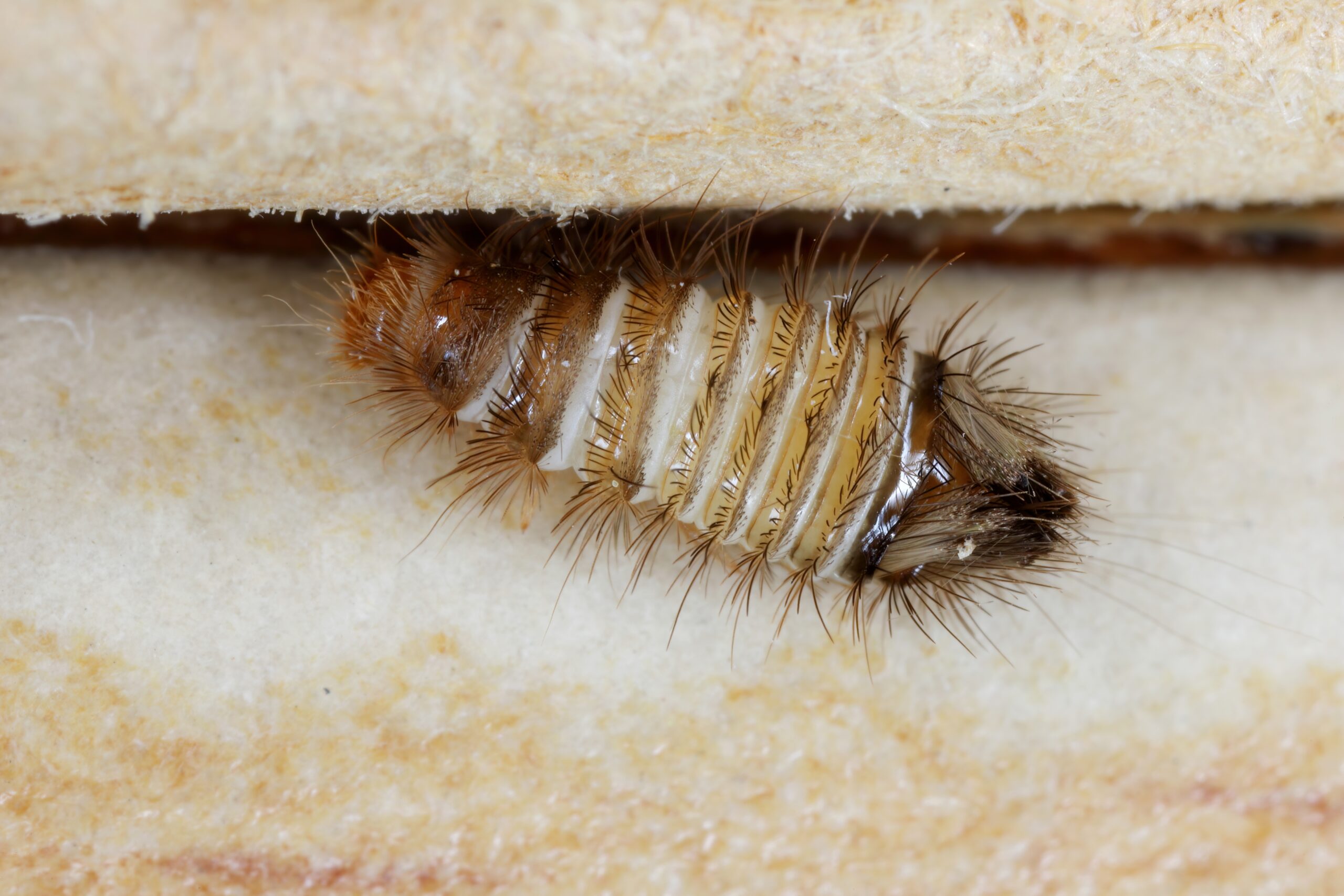
California beetles range from harmless garden predators to household pests that damage clothing, stored food, and wood. Carpet beetles, powderpost beetles, ground beetles, and pantry beetles are among the types homeowners may encounter, but each has different feeding habits and preferred hiding places.
A beetle crawling across your Sacramento garage floor may have wandered in from the yard. Tiny insects inside a bag of flour or fresh holes in wooden furniture deserve closer attention. Knowing where beetles appear, what they eat, and which signs indicate an infestation helps you decide when simple prevention is enough and when professional identification makes sense.
Key Takeaways
- Not all California beetles are harmful. Ground beetles help control other insects outdoors, while carpet beetles, powderpost beetles, and pantry beetles can damage household materials.
- Where you find beetles matters. Larvae in fabrics, insects inside stored food, and fresh powder beneath wood provide more useful clues than a beetle’s color alone.
- Prevention depends on the species. Cleaning storage areas, sealing entry points, and inspecting affected materials can help, but recurring activity or suspected wood damage may require professional identification.
What Types of California Beetles Are Found Around Homes?
California beetles appear in gardens, patios, garages, kitchens, and storage areas. Some live outdoors and occasionally wander inside, while others find enough food and shelter to develop within a home.
For identification, it helps to separate these insects into three general categories: beneficial beetles, nuisance visitors, and beetles capable of damaging household materials.
| Beetle Type | Classification | Common Locations | What They Eat |
| Ground beetles | Generally harmless or beneficial | Gardens, mulch, patios, and garages | Insects, larvae, slugs, and other small animals |
| Outdoor beetles attracted to lights | Nuisance | Porch lights, windows, and entryways | Varies by species |
| Carpet beetles | Damaging | Closets, rugs, carpets, and upholstered furniture | Animal-derived materials during the larval stage |
| Powderpost beetles | Damaging | Wooden furniture, hardwood flooring, and trim | Components of susceptible wood |
| Pantry beetles | Stored-food pests | Cupboards, flour, grains, and packaged foods | Dry food products, depending on species |
A single beetle near your front door doesn’t carry the same significance as larvae feeding beneath a rug. Its location, feeding habits, and signs of reproduction will tell you much more about whether action is needed.
Common California Beetles and How to Identify Them
Several types of beetles in California look similar at first glance. Small, dark insects can be especially difficult to identify without examining where they were found and whether nearby materials show damage.
Some species also change considerably as they develop. The larvae of certain beetles cause household damage even when the adults appear harmless.
Carpet Beetles: Small Pests That Damage Fabrics
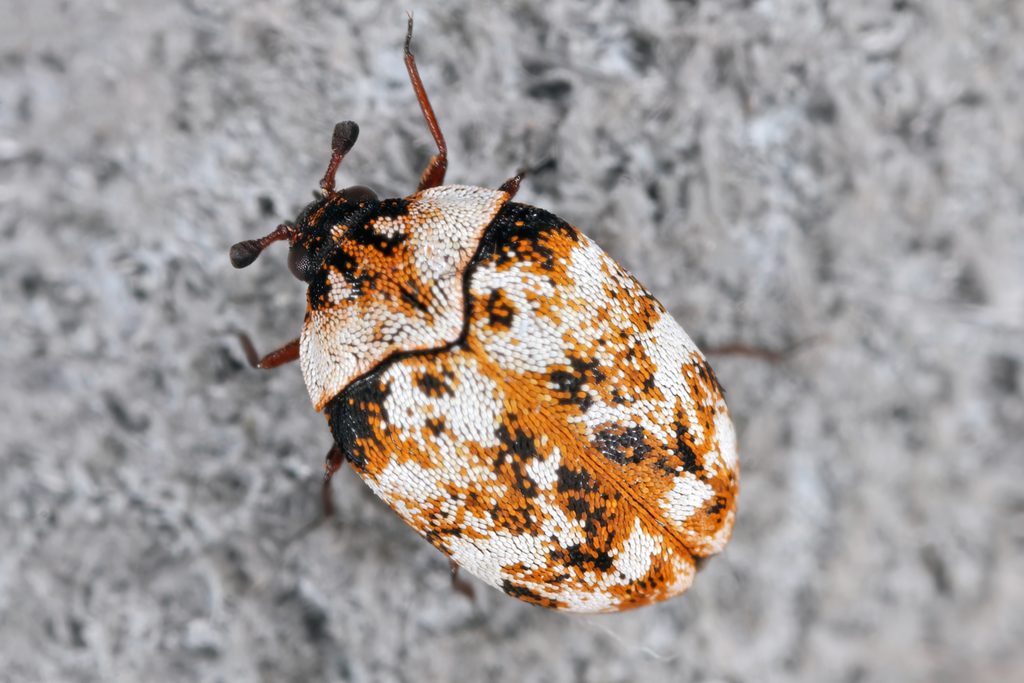
Adult carpet beetles are typically small and rounded. Depending on the species, they may have mottled brown, black, white, or yellowish markings, while others appear almost entirely black.
Their larvae look quite different, with elongated bodies covered in bristly hairs. According to the University of California, these larvae feed on animal-derived materials such as wool, fur, feathers, and hair.
You may find larvae beneath rugs, along carpet edges, or inside closets containing rarely worn clothing. Adult carpet beetles often appear near windows, but their presence alone doesn’t establish an infestation. Shed larval skins and irregular holes in vulnerable fabrics are stronger signs of a problem.
Powderpost Beetles: Wood-Boring Household Pests
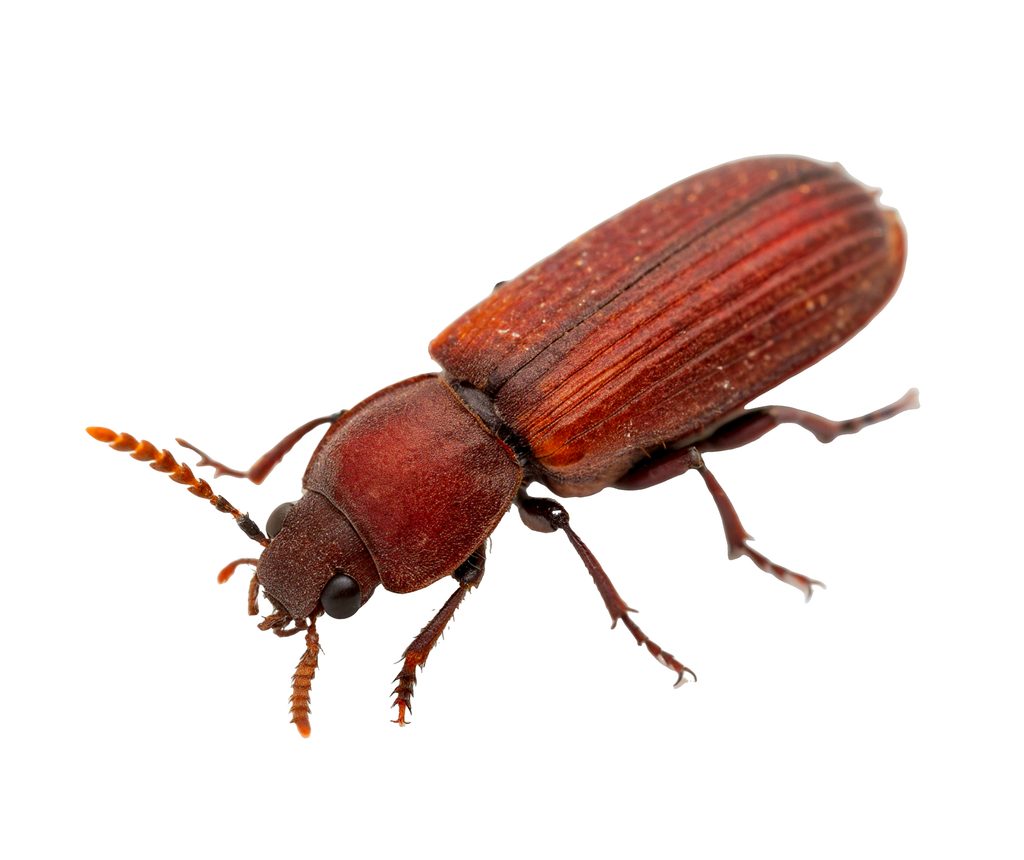
Powderpost beetles develop inside susceptible wood, making them harder to detect than insects crawling across floors. Their larvae tunnel through wooden materials before emerging as adults, sometimes leaving visible damage behind.
Depending on the species, hardwood furniture, flooring, trim, and other wood products may be affected. Small, round exit holes and fine powder called frass are common clues associated with these insects.
According to the University of Kentucky Department of Entomology, older exit holes may indicate a previous infestation rather than ongoing beetle activity. Holes that appear weathered or contain dust and debris are more likely to be signs of past activity. Fresh powder returning after cleaning, especially alongside newly appearing holes, is a stronger reason to arrange an inspection.
Ground Beetles: Helpful Insects Around Your Yard

Ground beetles are often black or dark brown, with hard wing covers, noticeable legs, and bodies built for quick movement. Many hide beneath mulch, stones, or garden debris during the day and become active after dark.
These beetles hunt other insects, larvae, slugs, and small invertebrates. Their feeding habits make them useful predators in gardens rather than insects that typically damage household belongings.
You might spot one crossing a Fresno patio or slipping beneath a Sacramento garage door. Ground beetles generally don’t reproduce indoors, so occasional visitors can usually be removed without treatment.
Pantry Beetles: Insects That Infest Stored Food
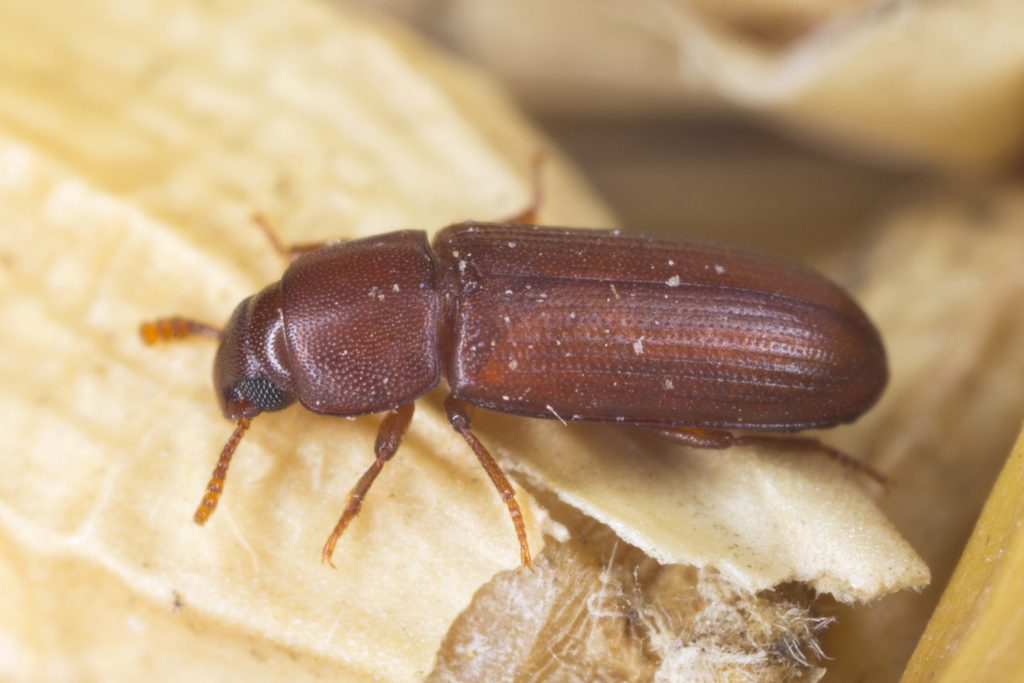
Pantry beetles include flour beetles, grain beetles, and other small species that feed on dried food products. Many are brown or reddish-brown and small enough to remain unnoticed inside packaging.
These insects can arrive in food products that were already infested before purchase. Once indoors, some species may spread to nearby flour, cereal, grains, pasta, or other suitable foods.
If you discover beetles inside a container, inspect surrounding packages rather than cleaning only the visible shelf. A forgotten bag of grain or opened pet food can support continued activity until the infested material is removed.
Signs of California Beetles That Point to an Infestation
Finding one beetle doesn’t necessarily mean others are breeding inside your home. The stronger evidence comes from repeated activity near a food source, immature insects in protected spaces, or damage that continues to appear.
Different beetles leave different clues. Paying attention to the affected material helps you distinguish an occasional visitor from a developing problem.
Damage to Clothing, Rugs, and Upholstery
Carpet beetle larvae usually remain near suitable food sources, especially in areas that aren’t disturbed often. You may discover irregular holes in wool clothing, damaged natural-fiber rugs, or shed larval skins beneath furniture.
Check the surrounding area before assuming the damage is limited to one item. Closets, upholstered furniture, and nearby storage spaces may contain additional larvae or materials they can feed on.
Beetles Inside Pantry Products
Repeated sightings inside dry food packages are a strong indication of pantry pest activity. Check nearby products, particularly opened bags and containers with loose-fitting lids.
Remove infested items and inspect the surrounding shelves. If beetles continue appearing, another contaminated product may remain hidden in the cupboard.
Fresh Holes or Powder Beneath Wood
Powderpost beetle damage can be difficult to evaluate because exit holes remain visible after adults emerge. A wooden chair with old holes isn’t automatically evidence of an active infestation.
Look for newly appearing holes or fresh frass accumulating beneath the same area after cleaning. These observations can help a professional assess whether wood-boring activity is continuing.
Why Beetles Enter Your California Home
Not every beetle found indoors develops there. Many outdoor species enter accidentally through doors, windows, or small openings around the building. Patios, landscaping, garages, and exterior lighting create frequent opportunities for outdoor insects to approach entryways.
Porch Lights and Open Entryways
Certain night-active beetles are attracted to artificial lighting. When porch lights remain on near open doors, insects gathering nearby may accidentally enter the house.
Ground beetles can also move through gaps beneath garage doors or damaged weatherstripping while searching for shelter or prey. Their appearance indoors doesn’t necessarily mean there’s a breeding population.
Food Sources and Undisturbed Storage Areas
Carpet beetles and pantry beetles behave differently from most accidental outdoor visitors. They may remain indoors when suitable food sources are available.
Stored animal-fiber clothing, accumulated lint and hair, and infested dry goods can support beetle development. Finding and addressing these sources is usually more useful than treating the room where an adult beetle happened to appear.
How to Prevent Beetles From Entering or Damaging Your Home
Effective beetle prevention depends on the species involved. The same approach won’t work equally well for outdoor ground beetles, fabric-feeding larvae, and beetles developing inside wood. The Environmental Protection Agency (EPA) emphasizes limiting pest access, removing food sources, and correcting conditions that allow insects to settle indoors.
Protect Fabrics and Stored Food
Vacuum beneath furniture, around carpet edges, and along baseboards where hair, lint, and other debris collect. Clean wool clothing and blankets before placing them in tightly closed storage containers, especially if they won’t be used for several months.
In the pantry, inspect dry goods before storage and discard products showing beetle activity. Transfer suitable foods into sturdy, sealed containers, and remove spilled grains or flour from shelves and corners. These habits reduce feeding opportunities while making new activity easier to notice.
Seal Entry Points and Check Outdoor Lighting
Inspect window screens, door sweeps, garage seals, and openings around utility lines. Repairing these areas helps prevent ground beetles and other outdoor insects from wandering inside.
Reduce unnecessary lighting near entrances when practical, particularly if beetles gather around the porch after dark. Relocating lights away from frequently used doors may also reduce the number of insects entering.
For wood-boring pests, inspect secondhand furniture and stored wooden items before bringing them indoors. Small holes or powder beneath the wood deserve closer examination before the item joins your household furniture.
Protecting Your Home From California Beetle Problems
California beetles aren’t all household pests. Ground beetles often benefit your yard, while carpet beetles, pantry beetles, and powderpost beetles can cause damage when they find suitable materials indoors. Recognizing the differences helps you avoid unnecessary treatment while addressing problems before further damage occurs.
Official Pest Prevention local technicians provide beetle identification and targeted beetle control for California homeowners. If beetles keep appearing in your home or you’ve noticed unexplained fabric or wood damage, contact Official Pest Prevention to arrange an inspection. Identifying the species and locating its source helps ensure your home receives the right treatment instead of an unnecessary one.
Frequently Asked Questions About California Beetles
What are the most common beetles found in California homes?
Homeowners may encounter carpet beetles, ground beetles, pantry beetles, and powderpost beetles, among other species. Carpet beetles are associated with vulnerable fabrics, pantry beetles with stored food, and powderpost beetles with susceptible wood. Ground beetles usually live outdoors and enter houses accidentally. The types found in a particular home depend on its surroundings and available food sources.
Are black beetles in California dangerous?
Most black beetles encountered around homes don’t pose a serious threat to people. Ground beetles, for example, are generally harmless outdoor predators. However, color alone isn’t enough to identify an insect. Some household pests also have dark bodies, so check where the beetle appeared and whether nearby food, fabrics, or wood show signs of damage.
Why do I keep finding small beetles in my house?
Repeated beetle sightings can indicate an indoor food source, an unnoticed breeding area, or an entry point that allows outdoor insects inside. Check pantry products, stored clothing, carpet edges, and nearby windows. If beetles continue appearing after you address these areas, professional identification can help locate the source.
Do carpet beetles or powderpost beetles damage homes?
Carpet beetle larvae can damage susceptible materials such as wool, fur, feathers, and other animal-derived fibers. Powderpost beetle larvae develop inside certain wooden materials and may damage furniture, flooring, or trim. The extent of damage depends on the beetle species, the materials involved, and whether the infestation is still active.
When should I call pest control for beetles?
Consider professional pest control when beetles keep returning, you find larvae damaging fabrics, or wooden materials show fresh holes and powder. An inspection is also useful when you can’t identify the species or locate its food source. Occasional ground beetles and other outdoor visitors generally don’t require professional treatment.
