
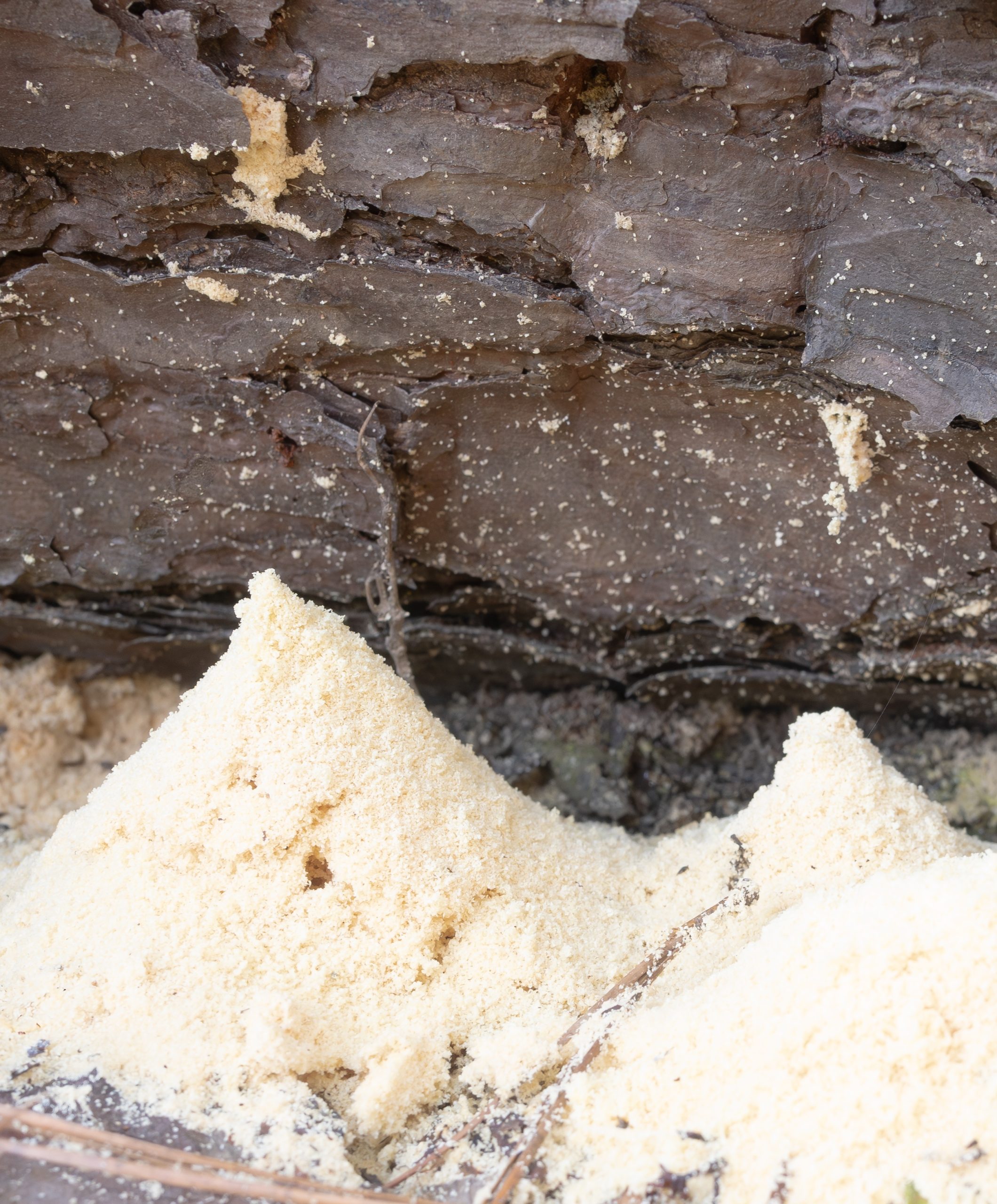
A pile of wood shavings near a baseboard, window frame, or cabinet may seem harmless. That explanation works after drilling, sanding, or a recent repair. When nobody has disturbed the wood, the material could be carpenter ant droppings and debris from a hidden nest.
Carpenter ant droppings look like sawdust because the ants cut into wood to create nesting galleries. Workers carry the loose fragments through the nest and discard them through cracks or small openings. The pile that collects below is often called carpenter ant frass.
The word “droppings” only tells part of the story. Carpenter ant frass may contain wood chips, insect remains, soil, insulation fibers, and other material removed from the gallery. Fresh debris does not prove that a beam or wall has severe damage, but a pile that keeps returning points to active excavation nearby.
California homes can provide several favorable nesting conditions. Roof leaks, plumbing problems, wet window trim, sprinkler overspray, and decaying outdoor wood can all give carpenter ants a place to settle.
What Carpenter Ant Droppings Look Like
Carpenter ant droppings usually appear coarse, uneven, and fibrous. You may notice splinters, curled shavings, or fragments in several sizes. Fine sanding dust tends to look more uniform and usually has an obvious source.
The color depends on the wood being removed. Pale framing lumber may produce tan debris, while older wood can create dark brown fragments. Texture, location, and recurrence tell you more than color alone.
| Feature | Typical Carpenter Ant Frass |
| Texture | Coarse, fibrous, and uneven |
| Shape | Irregular chips, splinters, and curled shavings |
| Color | Often similar to the nearby wood |
| Contents | Wood fragments, insect parts, soil, insulation, and waste |
| Location | Below trim, cracks, wall gaps, beams, or small openings |
| Activity clue | New material appears after the pile is cleaned |
Insect pieces can be an especially useful clue. Carpenter ants feed on insects and remove leftover body parts while cleaning their nest. Ordinary sawdust will not contain legs, wings, or pieces of an insect shell.
The debris often collects beneath a narrow disposal opening. You may find it on a windowsill, floor, cabinet top, attic surface, or crawl space soil.
Carpenter Ant Frass Versus Termite Droppings
Carpenter ants and termites both affect wood, but they leave different evidence. Carpenter ant frass is usually rough and irregular. Drywood termites produce hard pellets with a more consistent shape.
Subterranean termites leave another set of clues. Mud tubes along foundations, crawl spaces, walls, or framing are more typical than loose piles resembling sawdust.
| Evidence | Carpenter Ants | Drywood Termites | Ordinary Sawdust |
| Material | Wood fragments mixed with nest debris | Hard fecal pellets | Wood cut or sanded by a tool |
| Shape | Irregular and fibrous | Small and fairly uniform | Usually matches the tool used |
| Gallery surface | Smooth and cleaned out | May contain pellets or rough material | No insect gallery |
| Body shape | Narrow waist | Broad waist | No insect present |
| Antennae | Elbowed | Straighter | Not applicable |
| Wings | Front wings longer than rear wings | Four wings about equal in length | Not applicable |
| Common clue | Debris returns beneath an opening | Pellet piles below a small hole | Recent repair or woodworking |
The UC Statewide Integrated Pest Management Program identifies smooth galleries, excavated debris, and moisture-related nesting as useful signs of carpenter ants. Its California guidance also stresses locating the nest instead of treating only the workers moving through the house.
Do not identify the pest by color alone. Carpenter ant frass, termite pellets, beetle debris, and construction dust can all appear tan or brown. Shape, texture, insect evidence, and the condition of the wood give you a clearer answer.
Why Carpenter Ant Droppings Resemble Sawdust
Carpenter ants hollow out wood to create room for the colony. Their jaws scrape away small pieces, and workers carry the loose material outside the gallery. That process creates the carpenter ant sawdust homeowners often notice first.
The NC State University Extension explains that carpenter ant frass can include wood shavings and insect fragments. The same source notes that mature colonies can contain 2,000 to 3,000 workers, which helps explain why killing a few ants near a sink or window does not remove the colony.
Carpenter ants do not eat structural wood. They use it as nesting space and feed on insects, sweets, proteins, and other food sources. Cleaning crumbs may reduce foraging indoors, but it will not remove a nest inside trim or a wall cavity.
What the Debris Can and Cannot Tell You
Fresh carpenter ant droppings point to excavation somewhere nearby. They do not reveal the precise size of the colony or the amount of damage inside the wood.
A small pile may come from a limited gallery. Debris that returns after cleaning provides stronger evidence of continued activity. Water stains, soft wood, ant trails, and repeated sightings add useful context.
Where Carpenter Ant Sawdust Commonly Appears
The location of the debris can narrow the search. Frass near a window often points toward wet trim, failed caulk, or moisture behind the frame. Material near a bathroom wall may lead back to a slow plumbing leak.
Carpenter ants often begin nesting in damp or damaged wood. Once a colony grows, satellite nests may form in drier wall voids, attic spaces, and protected structural cavities.
Windows, Doors, and Rooflines
Window frames and door trim can stay damp when caulk fails or flashing is damaged. Roof edges, fascia boards, and eaves may remain wet after a gutter leak or roof problem.
Sprinkler overspray creates another California-specific concern. A poorly aimed sprinkler head can soak siding, deck posts, or lower trim every day, even during otherwise dry weather.
Kitchens, Bathrooms, and Utility Areas
Pipes and utility lines provide protected routes through walls. Check beneath sinks, around dishwashers, near water heaters, and where plumbing enters a cabinet or wall.
A slow leak may not leave a visible puddle. Swollen trim, peeling paint, staining, soft wood, or a musty smell can reveal moisture that has been present for weeks.
Attics, Crawl Spaces, and Outdoor Wood
Attics may develop carpenter ant activity near roof leaks or damp insulation. Crawl spaces deserve attention when humidity stays high or wooden framing touches soil.
Outdoor parent colonies may occupy stumps, hollow trees, firewood, old fence posts, or landscape timbers. Workers can travel from these areas into the house and establish a satellite nest.
| Frass Location | What to Inspect Next |
| Window or door frame | Failed caulk, flashing, damp trim, and wall gaps |
| Kitchen or bathroom wall | Pipes, fixtures, cabinet bases, and hidden leaks |
| Roof edge or eave | Gutters, fascia, roofing, and branch contact |
| Attic | Roof leaks, damp insulation, and framing |
| Crawl space | Humidity, plumbing leaks, and wood-to-soil contact |
| Deck or patio | Posts, ledger boards, and sprinkler exposure |
| Garage | Door seals, stored lumber, and exterior gaps |
| Firewood area | Logs touching the house or resting on soil |
What to Do After Finding Carpenter Ant Droppings
Photograph the debris before cleaning it. Include the wall, trim, crack, stain, or opening above the pile. Those details can help separate carpenter ant activity from termites, beetles, or ordinary construction dust.
Vacuum the area and write down the date. Inspect the nearby wood for soft spots, peeling paint, swollen trim, damp caulk, or water staining. Then check whether fresh material appears.
Follow the Evidence Carefully
Watch visible ant trails without opening the wall. Check plumbing penetrations, utility lines, tree branches, fence connections, and exterior cracks.
Do not seal an active opening immediately. Ants trapped behind it may use another route and shift the visible activity elsewhere.
Avoid Treating Only the Ants You See
A surface spray may kill exposed workers, but those ants represent only a fraction of the colony. The nest, queen, brood, and satellite sites may remain untouched.
The Penn State Extension carpenter ant resource recommends locating the nest instead of treating scattered workers alone. Effective carpenter ant control connects the ants you see with the nesting site, entry route, and moisture source.
Other Signs of a Carpenter Ant Infestation
One pile of carpenter ant droppings gives you a reason to look closer. Several signs in the same area make a hidden carpenter ant infestation more likely.
Large ants appearing indoors at night may be following an established foraging route. Repeated movement near the same pipe, window, crack, or roof edge can help trace that route toward an entry point or nest.
Winged Ants Indoors
Winged carpenter ants may appear when a mature colony produces reproductive adults. One insect near an open door proves little. Several swarmers inside the home, especially on more than one occasion, deserve attention.
Carpenter ant swarmers have a narrow waist and elbowed antennae. Their front wings are longer than the rear pair. Termite swarmers have a broad waist, straighter antennae, and four wings of similar length.
Recurring Frass and Hollowed Wood
Clean the pile after taking photos, then check the same spot over the next several days. Fresh debris in the same location is one of the more useful signs of carpenter ants actively clearing a gallery.
Wood affected by carpenter ants may sound hollow when tapped, but that test is not conclusive. Empty wall cavities and ordinary construction gaps can make a similar sound. Smooth internal galleries found during repair work provide stronger evidence.
How to Prevent Carpenter Ant Activity
Begin with moisture control. Repair plumbing leaks, roof damage, failed window seals, and gutters that wet structural wood. Replace trim, siding, or framing that has become soft or decayed.
Outside, trim branches away from the roof and siding. Store firewood away from the house and raise it off the ground. Remove dead stumps or damaged wood near the foundation when they provide a likely nesting site.
Correct wood-to-soil contact around decks, fences, and crawl spaces. Redirect sprinklers that soak siding or posts. Seal exterior gaps after active nesting areas have been addressed.
Addressing Carpenter Ant Droppings in California Homes
Carpenter ant droppings look like sawdust because workers are clearing wood and debris from a nesting gallery. A recurring pile cannot tell you exactly how large the colony is, but it should not be ignored.
The right response is to identify the material, trace the activity, inspect for moisture, and locate the nest. Spraying every visible ant rarely addresses the full problem.
Official Pest Prevention helps California homeowners find the source of carpenter ant activity and reduce the conditions that allow it to return. When unexplained frass keeps appearing near trim, walls, or structural wood, contact Official Pest Prevention for an inspection and a treatment plan based on what is happening inside your home.
