
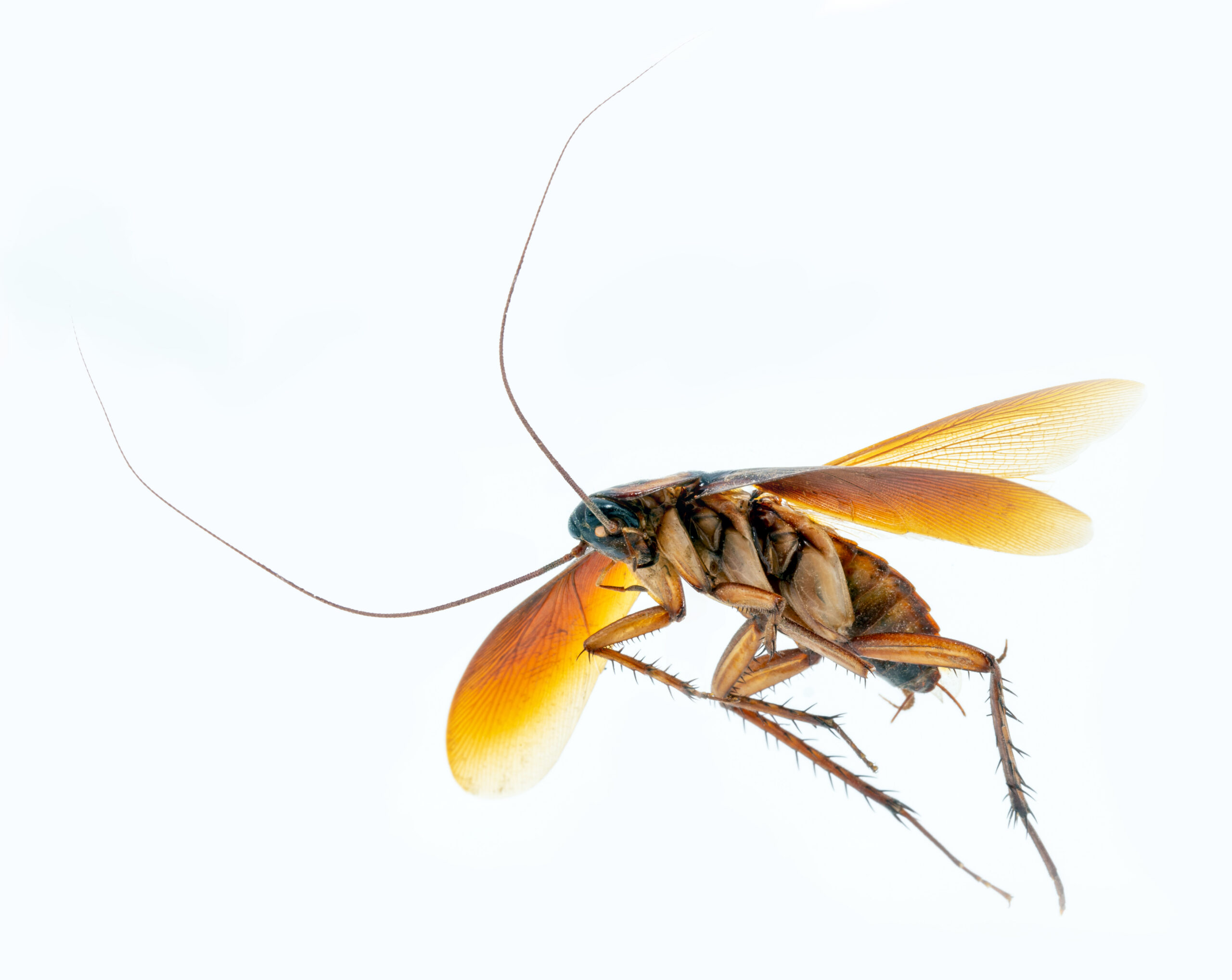
If you’ve watched a large roach fly toward your porch light on a warm Sacramento or Fresno evening, you’ve likely wondered what brought it there and whether more are hiding nearby.
Several types of cockroaches in California can fly, including American, smokybrown, and male Turkestan cockroaches. Some are strong fliers, while others make short flights or glide from higher surfaces. German cockroaches have wings but rarely fly. Identifying the species, understanding what attracts it, and checking for signs of indoor activity can help you decide what to do next.
Key Takeaways
- Not every winged cockroach can fly well. Smokybrown cockroaches are strong fliers, American cockroaches can fly or glide, and German cockroaches rarely use their wings.
- Outdoor conditions often explain nighttime sightings. Lights attract certain species, while moisture, warmth, and sheltered landscaping bring cockroaches close to homes.
- Recurring indoor sightings deserve attention. Sealing entry points and removing food and water sources can help, but droppings, egg cases, or young cockroaches may indicate a problem that needs professional treatment.
Which Cockroaches Can Actually Fly in California?
Several cockroach species in California have developed wings, but their flight abilities differ considerably. Some regularly take flight outdoors, while others rely on running and only fly under certain conditions.
According to the University of California Integrated Pest Management Program, German cockroaches primarily live indoors, while species such as American and oriental cockroaches often occupy damp areas around buildings. These habitat differences can help you identify where a cockroach may have come from, especially when combined with its size, appearance, and flying ability.
| Cockroach Species | Approximate Adult Length | Flight Ability |
| American cockroach | 1.5 to 2 inches | Can fly, often making short flights or gliding from elevated surfaces |
| Smokybrown cockroach | 1.25 to 1.5 inches | Strong flier, particularly active outdoors at night |
| Turkestan cockroach | 0.75 to 1 inch | Males can fly; females have reduced wings |
| German cockroach | 0.5 to 0.625 inches | Has wings but rarely flies |
| Oriental cockroach | 1 to 1.25 inches | Can’t fly |
American Cockroaches Can Fly and Glide
American cockroaches have reddish-brown bodies and a pale yellowish marking behind the head. Although their wings are fully developed, they generally prefer running. They can fly short distances or glide from elevated surfaces, particularly when disturbed.
These large roaches favor warm, damp locations such as sewers, drainage systems, and protected utility spaces. Finding one near your bathroom or garage may point to an entry opening rather than an established indoor population.
Smokybrown Cockroaches Are Stronger Fliers
Smokybrown cockroaches have uniformly dark brown bodies and long wings extending beyond their abdomens. They’re more willing to fly than American cockroaches and often become active after sunset.
They usually occupy outdoor hiding places, including trees, leaf litter, and sheltered areas around buildings. Their flight ability allows them to reach upper windows, exterior walls, and lighted entryways.
Other Cockroaches Have Limited Flight Abilities
Male Turkestan cockroaches have developed wings and can fly, while females have shorter wings that limit their flight ability. German cockroaches also have wings but rarely use them, and oriental cockroaches can’t fly.
That means seeing wings on a cockroach doesn’t tell you whether it can take off. Body markings, size, and where you found the insect provide better clues to its identity.
Why Do Flying Cockroaches Appear Around California Homes at Night?
Flying roaches in California often become noticeable around porch lights, garages, and illuminated windows. Certain outdoor species respond to artificial lighting, which can bring them close to doors and other openings after sunset. Smokybrown cockroaches are especially associated with nighttime flight and lighted areas.
The University of Florida notes that these cockroaches commonly shelter in trees, leaf litter, and other outdoor hiding places, and adults are attracted to lights at night. This explains why you might see them flying around your porch even when there’s no cockroach infestation inside your home.
Moisture and Outdoor Hiding Places Attract Cockroaches
Cockroaches need water and protected places to rest during the day. Damp mulch, leaf piles, leaking faucets, and dense shrubs can provide suitable conditions close to exterior walls. Outdoor pet food and garbage residue may give them additional reasons to stay nearby.
For homeowners in Fresno and Sacramento, irrigated landscaping can create moist hiding places during otherwise dry summer weather. Even a well-maintained home can attract outdoor cockroaches when the surrounding yard offers food, water, and shelter.
Warmth and Openings Bring Them Indoors
Flying cockroaches can enter through open patio doors, torn window screens, and gaps around exterior fixtures. Some land on walls before crawling inside, so you may never see them fly through an opening.
Warm, sheltered indoor spaces can also provide refuge when outdoor conditions change. Bathrooms, laundry rooms, and garages are worth checking because they often contain plumbing, utility openings, or accessible moisture.
How Are Flying Cockroaches Different From German Cockroaches?
One major difference between flying cockroaches and German cockroaches is where they usually live and reproduce. American and smokybrown cockroaches are often associated with outdoor habitats, although they can enter buildings. German cockroaches are primarily indoor pests that establish breeding populations close to food, water, and warmth.
German cockroaches are relatively small, usually around half an inch long, with light brown bodies and two dark stripes behind their heads. They move quickly and hide inside narrow spaces around refrigerators, kitchen cabinets, and appliances.
Why the Difference Matters for Infestations
Finding a large American cockroach near an open patio door doesn’t necessarily mean it’s reproducing inside your house. Finding several small German cockroaches behind a refrigerator presents a different concern, especially when you see adults and young cockroaches together.
German cockroach infestations can persist when food, moisture, and protected nesting spaces remain available. Because these insects reproduce indoors, controlling them generally requires more detailed treatment than removing an occasional outdoor roach.
Why Treatment Depends on the Species
Outdoor cockroach control often focuses on removing exterior hiding places, correcting moisture problems, sealing entry points, and applying targeted treatments where activity occurs.
German cockroaches typically require a coordinated indoor approach using monitoring, appropriate baits, and insect growth regulators when warranted. Identifying the species first helps prevent wasted effort and directs treatment toward the areas where cockroaches are actually living.
Are Flying Cockroaches Dangerous to Your Health?
The ability to fly doesn’t make a cockroach more dangerous than one that runs. The concern is what happens when cockroaches enter living spaces after moving through drains, garbage areas, or other unsanitary environments. They may contaminate exposed food or food preparation surfaces through contact.
Cockroach allergens also deserve attention, particularly in households with asthma or allergies. The American College of Allergy, Asthma & Immunology explains that proteins associated with cockroach saliva, droppings, and body parts can trigger symptoms in sensitive people.
When Does an Occasional Visitor Become a Health Concern?
One flying cockroach that enters through an open door doesn’t carry the same implications as an indoor cockroach infestation. When cockroaches repeatedly occupy kitchens, bathrooms, or food storage areas, their droppings and shed material can accumulate.
Clean and sanitize surfaces that cockroaches have contacted, and discard exposed food you believe was contaminated. Pay closer attention if you find droppings, egg cases, or immature cockroaches indoors, since these can indicate ongoing activity that needs investigation.
How Can You Prevent Flying Cockroaches From Entering Your Home?
Keeping flying cockroaches outside requires more than removing the insects you happen to see. If your yard provides moisture and shelter while doors and windows have gaps, other cockroaches can continue entering. The most useful prevention steps address those conditions together.
Seal Entry Points and Manage Outdoor Lighting
Inspect window screens, door sweeps, garage seals, and openings around plumbing or utility lines. Repair damaged materials and close gaps with suitable sealants, taking care not to block required ventilation.
You can also try warm-colored outdoor bulbs or position fixtures farther from frequently opened doors. These changes may reduce encounters with light-attracted insects, although lighting adjustments alone won’t eliminate cockroaches.
Remove Food, Water, and Outdoor Shelter
Check the areas where cockroaches can hide without being disturbed, including beneath shrubs, behind outdoor storage containers, and around irrigation equipment. Keeping these spaces dry and free of debris makes them less attractive.
| Area to Inspect | Prevention Step |
| Exterior doors and windows | Repair screens, replace worn seals, and close visible gaps |
| Faucets and irrigation lines | Fix leaks and prevent standing water near the foundation |
| Mulch and landscaping | Remove leaf buildup and trim dense vegetation away from walls |
| Patios and outdoor eating areas | Clean food scraps, grease, and spills |
| Garbage containers | Keep lids closed and remove residue around bins |
| Garages and storage areas | Reduce cardboard clutter and inspect sheltered corners |
Inside, store food in sealed containers, wipe up crumbs and spills, and repair plumbing leaks. Good sanitation reduces the resources cockroaches need if they find their way indoors.
Know When Professional Cockroach Control Makes Sense
Seeing an occasional outdoor roach near a porch doesn’t automatically call for treatment. Repeated indoor sightings, cockroaches appearing in multiple rooms, or evidence of breeding deserve a closer look.
A professional inspection can determine whether you’re dealing with outdoor cockroaches entering through gaps or a population established inside the building. That distinction helps identify the appropriate treatment and the conditions that need correcting.
Keeping Flying Cockroaches Out of Your California Home
A flying cockroach around your porch isn’t always a sign of an infestation, but repeated sightings shouldn’t be ignored. Identifying the species, reducing outdoor moisture and hiding places, and sealing openings can help keep these pests from entering. Droppings, egg cases, or young cockroaches indoors are stronger reasons to investigate further.
Official Pest Prevention can help identify cockroach species, inspect likely entry points and hiding places, and recommend treatments suited to the activity found on your property. This matters because outdoor-invading roaches and German cockroach infestations require different approaches, and treating the wrong area can leave the problem unresolved.
If you’re repeatedly seeing a flying cockroach in California, contact Official Pest Prevention to arrange an inspection. Identifying where cockroaches are coming from is the first step toward keeping them from returning.
Flying Cockroach in California: FAQs
Do all cockroaches in California fly?
No. American and smokybrown cockroaches can fly, although their flight habits differ. Male Turkestan cockroaches can also fly, while females have reduced wings. German cockroaches have wings but rarely use them, and oriental cockroaches can’t fly. Identifying the species helps explain the behavior you’re seeing.
Why do flying cockroaches come into houses at night?
Certain species are attracted to artificial lights, bringing them near doors and windows after dark. Cockroaches may also enter while searching for moisture, food, or shelter. Open doors, damaged screens, and gaps around utility lines provide access. Keeping those openings sealed helps reduce unwanted visitors.
Does seeing one flying cockroach mean an infestation?
Not necessarily. A single outdoor cockroach may enter through an open door or window without establishing a population indoors. Repeated sightings, especially alongside droppings, egg cases, or immature cockroaches, suggest more persistent activity. If you notice those signs, a professional inspection can help identify the source.
How do you get rid of flying cockroaches in California?
Start by repairing screens, sealing exterior gaps, fixing leaks, and removing debris around the house. Keep garbage closed and avoid leaving pet food outdoors overnight. If cockroaches continue appearing indoors, professional cockroach control can identify the species and target the areas supporting its activity.
