
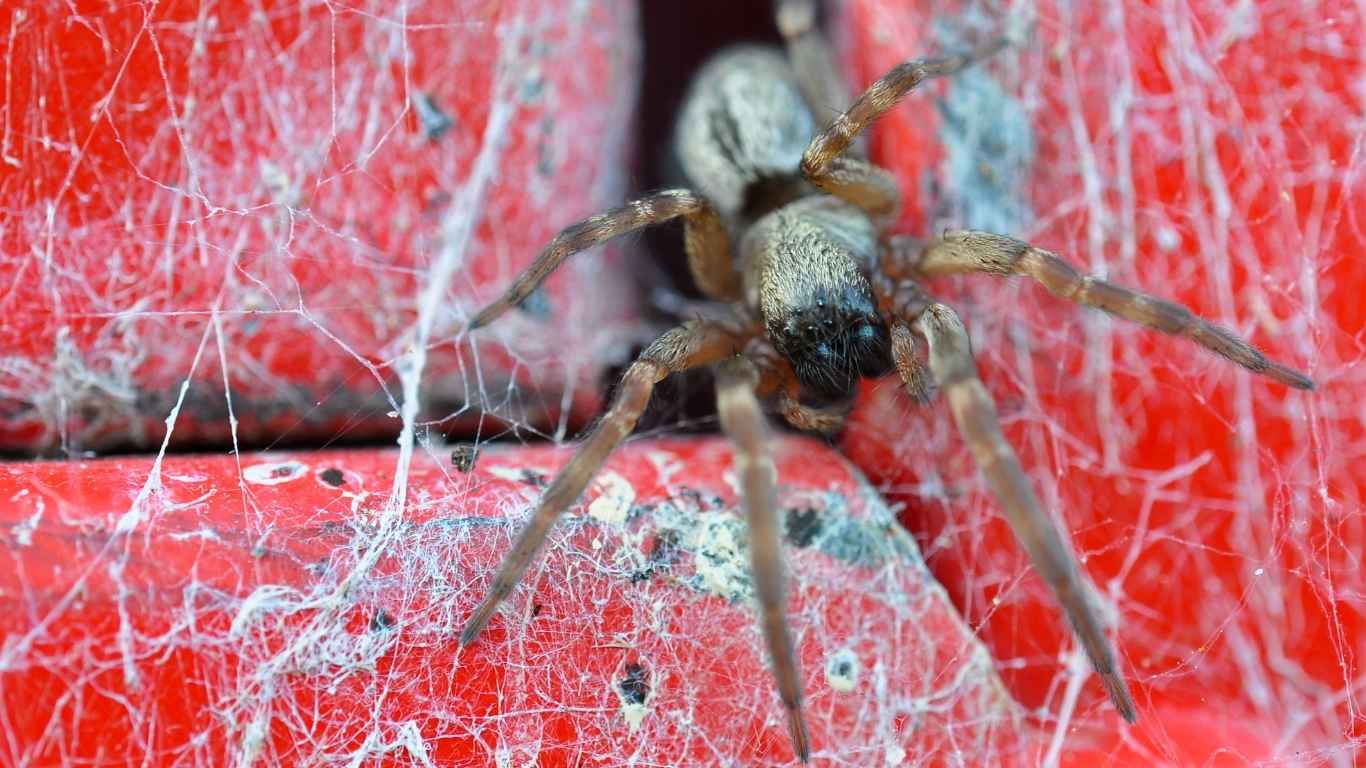
Summer is almost here, and most of us are dreaming of longer and warmer days spent blissfully by the water, or playing in the shade. We aren’t anticipating the unwanted guests who want to move in during this time of year: spiders!
If you’ve noticed more than a few creepy crawlies hanging around your home, you might wonder, “Why are there so many spiders in my house?” Today, we’re sharing a few of the most common reasons they come indoors during this time of year, and what you can do about it.
Common Summertime Spiders
When spiders move indoors
This timeline tracks when spiders come inside homes. Summer heat drives them in for shelter, water, and food. Some species mate in August and August. Cold winters also push a few indoors. Darker segments mean heavier activity.
As the weather warms up, it helps to know which spider species are most likely to enter your home. A few of the most common types include:
- Common house spiders
- Jumping spiders
- Daddy long-leg spiders
- Cellar spiders
- Wolf spiders
- Black widow spiders
- Yellow sac spiders
If you notice an infestation of any of these, go ahead and contact your local pest control experts for a more thorough inspection!
Spiders Seeking Shelter
 Think about what you like to do when it gets too hot outside. You seek shelter, where you can find refreshingly cooler temperatures and a place to chill out.
Unfortunately, spiders have the same mentality. When it heats up around their outdoor home, they’ll look for any way possible to sneak into yours. Here, they can find relief from the pounding sun and unbearable heat.
Likewise, in the winter, they travel indoors to escape the brutal cold. In both seasons, they’ll visit your home in search of narrow gaps and piles of clutter, where they can hide out and regulate their body temperature.
In addition, spiders will also make this journey if it gets too wet or too dry this summer. They like their homes to be comfortable at all times, so heavy rains will send them packing, as will periods of drought.
Spiders Looking for Water
Another reason you might need spider control this summer? The arachnids need a steady supply of water. They will often travel indoors to look for any areas of standing water that they can drink.
Most of the time, they can locate an outdoor water source with ease. However, in excessively hot summers, those areas can become scarcer and more difficult to find. Spiders need water to survive, and they’ll travel anywhere to find it.
Spiders Looking for Food
Spiders feed primarily on insects and other small arthropods, not the food stored in your kitchen. If flies, ants, or other insects are common indoors, spiders may find enough prey to remain nearby.
Food crumbs and uncovered trash can attract insects, which may then attract spiders. Cleaning up spills and addressing other household pests can help reduce that food supply.
Spiders Trying to Find a Mate
Some spider species become more noticeable when males begin searching for mates. The timing varies by species, and this movement can bring wandering spiders into areas of the home where people are more likely to see them.
When female spiders sneak inside of your home, they can begin to send out mating calls to male spiders nearby. For your part, you won’t be able to hear or discern the call, because it won’t be audible.
Rather, these mating calls are sent via pheromones. These are special chemicals that insects secrete in an effort to attract a potential mate. Each bug species releases pheromones in its own way, and female spiders are no exception.
These spiders release theirs in an airborne manner, sending out strongly-scented cuticular or silk-based pheromones. When those chemicals come into contact with a male spider’s chemoreceptors, the male spider will trace the scent back to the source.
In his quest to find a mate, this might mean that a male spider inadvertently makes his way into your home! It’s common for just a few female spiders to attract the attention and presence of many more male suitors.
Following Other Bugs
A home with plenty of insects can also provide food for spiders. Flies gathering near windows or insects attracted to outdoor lights may create hunting opportunities.
Spiders use different senses to detect nearby prey, including vibrations and movement. However, they aren’t known to detect insects throughout a house from long distances and then deliberately move indoors to follow them.
So, how does it work?
When the bugs inside of your home begin to move, they create a subtle vibration in the air. Spiders can sense this vibration through the sensitive hairs on their legs. Called trichobothria, these hairs detect even the most minor shifts in vibration, and they can lead the spider to the source of the activity.
If you already have flies, ants, or other insects inside your home, then don’t be surprised to find spiders there in the near future, too.
How to Keep Your Home Spider-Free
You may be a hospitable host, but it’s unlikely that you want to live with spiders this summer. Here are a few easy tips to help keep your home clean and safe:
- Remove piles of leaves and debris from your yard.
- Seal gaps and cracks around your home.
- Keep your doors closed when you’re not using them.
- Eliminate any other bug species inside your home.
If these methods don’t solve the issue, it might be time to call a professional pest control expert to take care of your spider situation for you! At Official Pest Prevention, our residential services are gentle yet effective, giving you and your family peace of mind.
Spiders in My House: Who to Call
Summer can bring more insects around doors, windows, and outdoor lighting, giving spiders places to hunt. If webs keep appearing near entrances or you’re finding spiders in several rooms, it helps to address the insects attracting them as well as the spiders themselves.
Spider removal for homes is part of the recurring home pest plan, which also covers the insects spiders feed on: ants, crickets, earwigs, centipedes and silverfish.
Official Pest Prevention offers home pest control for recurring spider and household insect activity. Homeowners in Sacramento, Elk Grove, Fresno, or other nearby California communities can find local pest control services suited to their properties. Contact us today to get started!
