
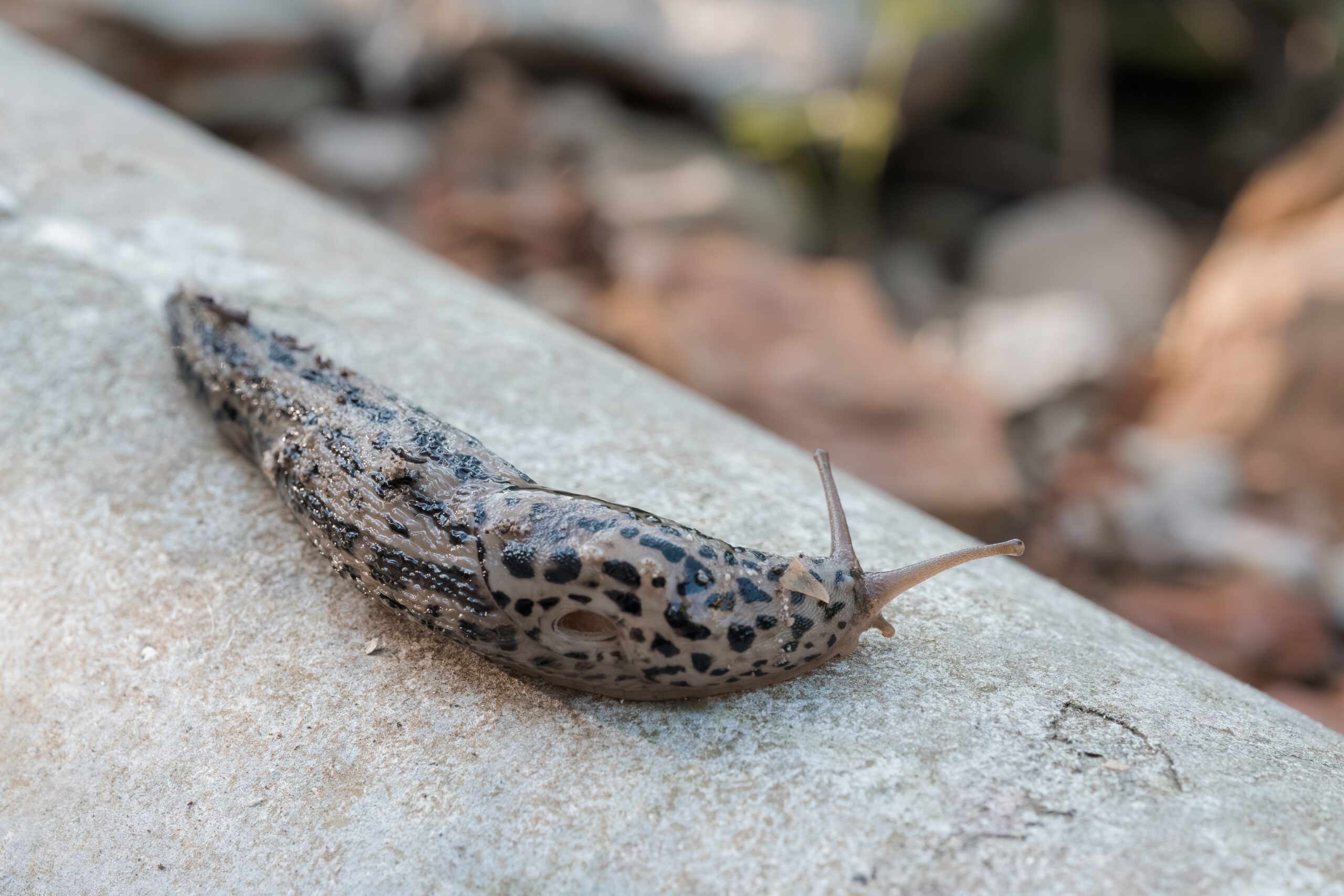
A California slug is a shell-less mollusk commonly found in damp gardens, shaded landscaping, and other sheltered outdoor areas. Species such as the gray garden slug and leopard slug live throughout parts of California, although their appearance and feeding habits differ. Some feed on vegetables and young plants, leaving irregular holes and shiny slime trails behind.
In California communities, such as Sacramento and Fresno, even a dry summer doesn’t rule out slug activity. Regular irrigation and thick garden mulch can keep soil moist enough for slugs to hide during the day and feed after dark. Recognizing the species, checking for damage, and correcting these conditions can help keep them away from vulnerable plants.
Key Takeaways
- Not all California slugs cause the same problems. Gray garden slugs commonly damage seedlings and tender leaves, while leopard slugs also consume fungi, decaying material, and sometimes other slugs.
- Moisture and shelter encourage slug activity. Shaded planting beds, thick mulch, irrigation leaks, and garden debris give slugs places to hide. Silvery slime trails and fresh nighttime feeding damage can reveal their presence.
- Prevention starts with yard maintenance. Adjusting watering schedules, clearing debris, and removing slugs by hand can reduce activity. Persistent garden damage may require professional advice, especially when pets limit treatment choices.
Common Types of California Slugs
Several types of slugs live in California, including introduced garden species and native woodland slugs. The gray garden slug and leopard slug are two recognizable examples, but their feeding habits are different enough that identification matters before you decide to treat your yard.
Both lack the prominent external shell found on garden snails. Beyond that similarity, their markings, size, and usual hiding places can help you tell them apart.
Gray Garden Slug
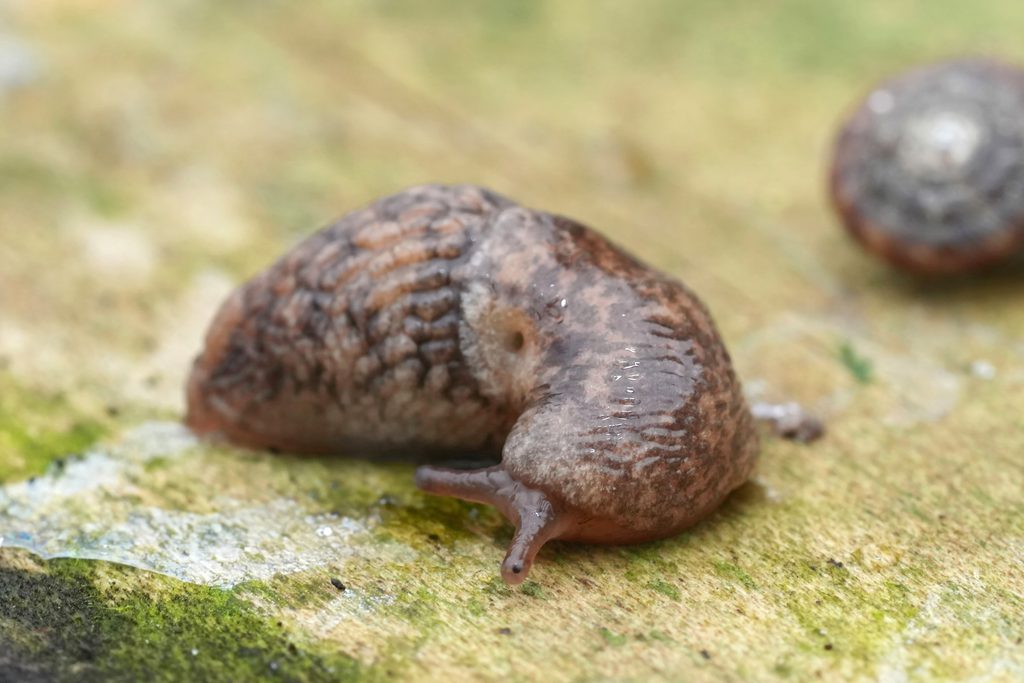
Gray garden slugs have relatively small, soft bodies with gray or brown coloring and darker mottled markings. They’re often found beneath mulch, among low-growing plants, or near the soil surface in vegetable gardens.
These slugs feed on tender plant material, including lettuce, cabbage, and young seedlings. A newly planted vegetable bed can suffer considerable damage because small plants have little foliage to spare.
Leopard Slug
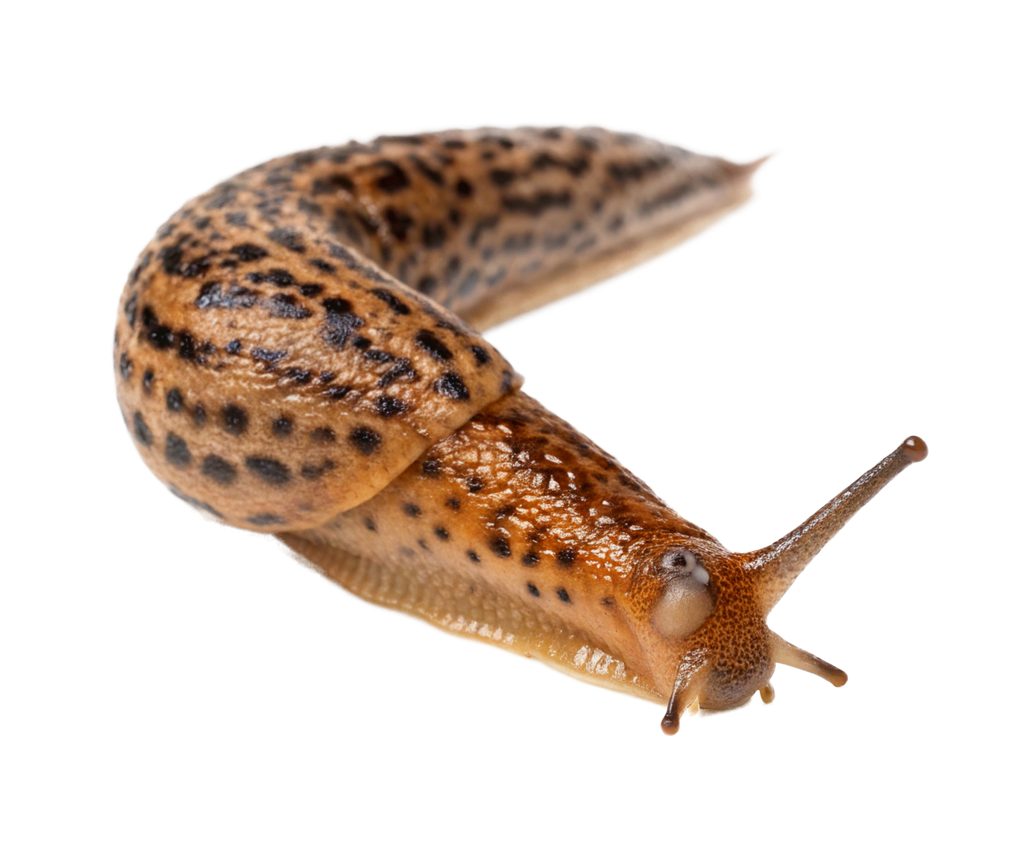
Leopard slugs are much larger, with dark spots or stripes scattered across a pale gray or brown body. You’re more likely to notice their size when they stretch out across a walkway or garden surface after dark.
Their diet includes fungi, decaying vegetation, and occasionally other slugs. They can also feed on living plants, but a leopard slug beneath a flowerpot isn’t necessarily the cause of nearby leaf damage.
| Feature | Gray Garden Slug | Leopard Slug |
| Appearance | Gray or brown with mottled markings | Pale gray or brown with dark spots or stripes |
| Relative size | Smaller and slender | Larger and longer-bodied |
| Common habitat | Vegetable beds, mulch, and damp soil | Compost areas, logs, and shaded landscaping |
| Feeding habits | Tender leaves and seedlings | Fungi, decaying matter, other slugs, and some plants |
| Garden concern | Can seriously damage young plants | Plant damage varies with feeding activity |
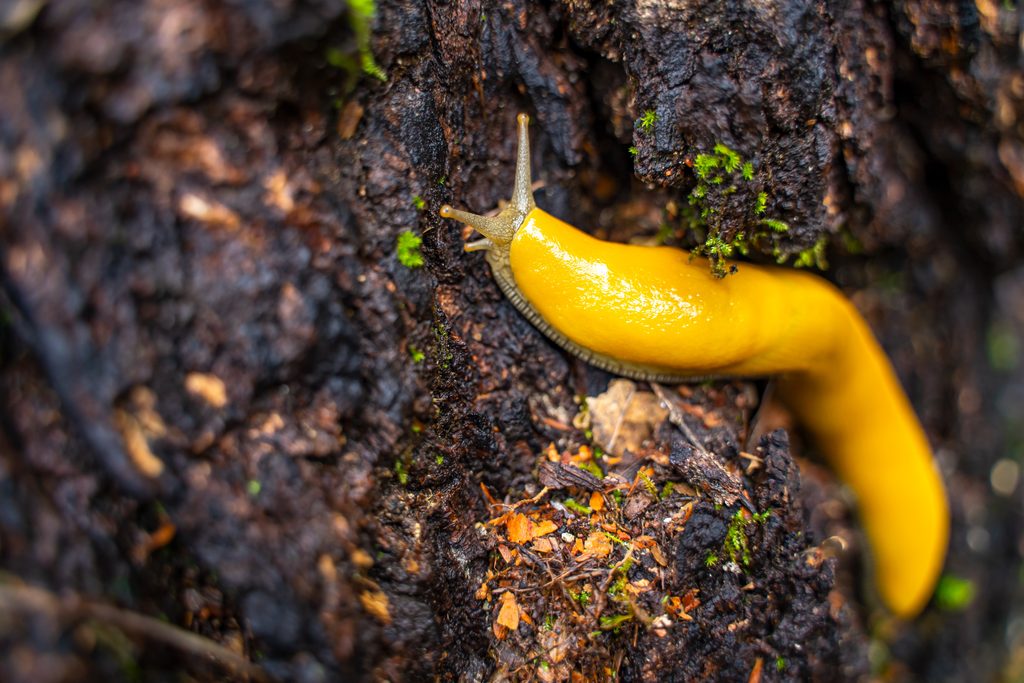
California also has native banana slugs, commonly associated with moist coastal and woodland habitats. These slugs help break down organic material and generally aren’t the focus of residential garden pest control.
Why California Slugs Thrive in Damp, Shaded Yards
California slugs rely on moisture because their soft bodies lose water when exposed to hot, dry conditions. To avoid drying out, they spend much of the day beneath vegetation, garden objects, or damp organic material. Once conditions become cooler and more humid, they can move across exposed surfaces to search for food.
A Fresno yard doesn’t need rainy weather to support slug activity. A leaking drip irrigation line beneath dense groundcover can keep a small area damp even when nearby soil is dry. Similar conditions develop around shaded flower beds and overwatered gardens throughout the Sacramento region.
Common Places Slugs Hide
Slugs prefer sheltered areas where moisture remains longer than it does on exposed soil. Mulch, fallen leaves, wooden boards, and garden containers can all provide cover, particularly when they sit against damp ground.
Dense plantings create another hiding place by blocking sunlight and limiting airflow near the soil. Checking these areas during routine yard maintenance can help you locate slugs before they cause further damage.
Why Slugs Become Active at Night
Most garden slugs feed after sunset, when lower temperatures and higher humidity make it easier to move without drying out. Rainfall or evening irrigation can also encourage activity.
That explains why you may discover damaged lettuce in the morning without seeing anything feeding on it. For a closer look, inspect affected plants with a flashlight after dark, especially around the base of seedlings and beneath nearby leaves.
How to Recognize California Slug Damage
Slug damage often appears as irregular holes in foliage, ragged leaf edges, or missing sections of tender growth. These pests scrape plant tissue while feeding, which can leave damage that looks different from the clean cuts made by some other garden pests.
According to the University of California Integrated Pest Management Program, slugs and snails can damage seedlings, leaves, flowers, and ripening fruit. Young plants are particularly vulnerable because extensive feeding can remove much of their available foliage.
Look for Slime Trails
One of the easiest signs to recognize is a shiny trail across soil, paving, or plant leaves. Slugs produce mucus that helps them move, and the residue can appear silvery once it begins to dry.
Look along raised garden beds, patio edges, stepping stones, and containers near damaged plants. A slime trail confirms slug or snail movement, although it doesn’t identify the exact species.
Check Which Plants Are Being Damaged
Lettuce, strawberries, tender vegetable seedlings, and ornamental flowers can all attract feeding slugs. Fruit resting against damp soil is especially accessible, while newly sprouted plants may lose entire leaves.
Don’t rely on leaf holes alone to identify a slug problem. Caterpillars, beetles, and other insects can produce similar damage. Fresh slime trails combined with nighttime sightings offer stronger evidence that slugs are responsible.
How to Get Rid of California Slugs
The best starting point for California slug control is to reduce the moisture and shelter that support repeated activity. Removing visible slugs may protect a few plants immediately, but the problem can return when nearby soil remains constantly wet and hiding places are left undisturbed.
Concentrate on the beds showing fresh damage rather than changing your entire landscape. A few targeted adjustments may be enough to make those areas less attractive to slugs.
Adjust Watering and Manage Mulch
Water your garden early in the morning so exposed surfaces have time to dry before nightfall. Check sprinkler coverage, hoses, and drip irrigation fittings for leaks that keep soil unnecessarily wet.
Mulch still serves a useful purpose in California gardens by helping soil retain moisture during dry weather. You don’t need to remove it entirely. Instead, avoid excessive buildup around tender seedlings and inspect thick, damp layers where slugs may be hiding.
Remove Debris and Collect Slugs
Discarded boards, empty plant containers, and piles of decaying leaves provide sheltered spaces close to feeding areas. Removing unnecessary debris can make these spots less favorable while also making future slug activity easier to notice.
For smaller problems, collect slugs during evening inspections while wearing gloves. Check beneath movable objects and around affected plants. Avoid spreading salt over garden soil because excess salt can damage plants and interfere with healthy soil conditions.
Which Slug Control Methods Are Safer for Pets?
If your dog spends time sniffing around garden beds, begin with slug prevention methods that don’t require pest control bait. Repairing irrigation leaks, cleaning up debris, and collecting slugs by hand can limit activity without introducing products that pets may investigate.
Some commercial slug baits contain iron phosphate, while others contain metaldehyde. These ingredients have different safety risks. The National Pesticide Information Center warns that metaldehyde-based slug and snail baits can cause serious poisoning in dogs and other animals if ingested.
| Control Method | Pet Safety Considerations |
| Moisture management | Reduces slug-friendly conditions without applying pest control solutions |
| Garden debris cleanup | Removes hiding places without introducing bait |
| Hand collection | Avoids pest control bait, but collected slugs should be kept away from pets |
| Iron phosphate bait | Generally lower in toxicity than metaldehyde, but not harmless if misused or ingested |
| Metaldehyde bait | Can cause severe poisoning in dogs if swallowed |
No slug bait should be considered completely pet-safe. Always read the entire product label, follow application directions, and prevent pets from accessing treated areas when required. If you suspect your pet has swallowed slug bait, contact a veterinarian immediately and keep the packaging available.
Keeping California Slugs Under Control in Your Garden
An occasional slug beneath a planter doesn’t necessarily require treatment. Repeated seedling damage, fresh slime trails, and continued nighttime feeding are stronger reasons to act. Start with species identification, better moisture management, and cleanup around the areas where slugs keep appearing.
If the damage continues despite those changes, professional pest control advice can help you identify contributing conditions and choose an appropriate response. Official Pest Prevention offers pest control services in Northern California and Central Valley communities. Various common pests are covered.
If California slug activity keeps damaging your yard in Sacramento, Fresno, or a nearby community, contact Official Pest Prevention to discuss your pest concerns and available service options. Its experienced local team can help you address persistent pest problems while you maintain the yard conditions that make future slug activity less likely.
Frequently Asked Questions About California Slugs
Are slugs common in California gardens?
Yes. Several slug species occur in California, including the gray garden slug and leopard slug. They’re often found in shaded landscaping, vegetable beds, and areas with consistently moist soil. Their presence depends on local conditions, so regularly irrigated gardens may support slug activity even during dry weather.
What attracts slugs to your yard?
Slugs are attracted to places that provide moisture, shelter, and food. Common conditions include overwatered soil, thick mulch, dense vegetation, fallen leaves, and garden debris. Tender vegetables and young seedlings can provide food nearby. Reducing excess moisture and unnecessary hiding places helps make your yard less favorable.
Why do slugs come out at night?
Slugs are more active at night because cooler temperatures and higher humidity reduce moisture loss from their bodies. They often leave their hiding places after sunset to feed on plants or decaying material. Checking affected garden beds with a flashlight can help you confirm their presence.
How do you get rid of slugs without harming pets?
Start by adjusting watering schedules, removing debris, and collecting slugs by hand. These methods avoid pest control bait. If you need a commercial product, check its active ingredients and follow the label carefully. Iron phosphate baits generally have lower toxicity than metaldehyde, but no bait should be treated as completely harmless to pets.
