
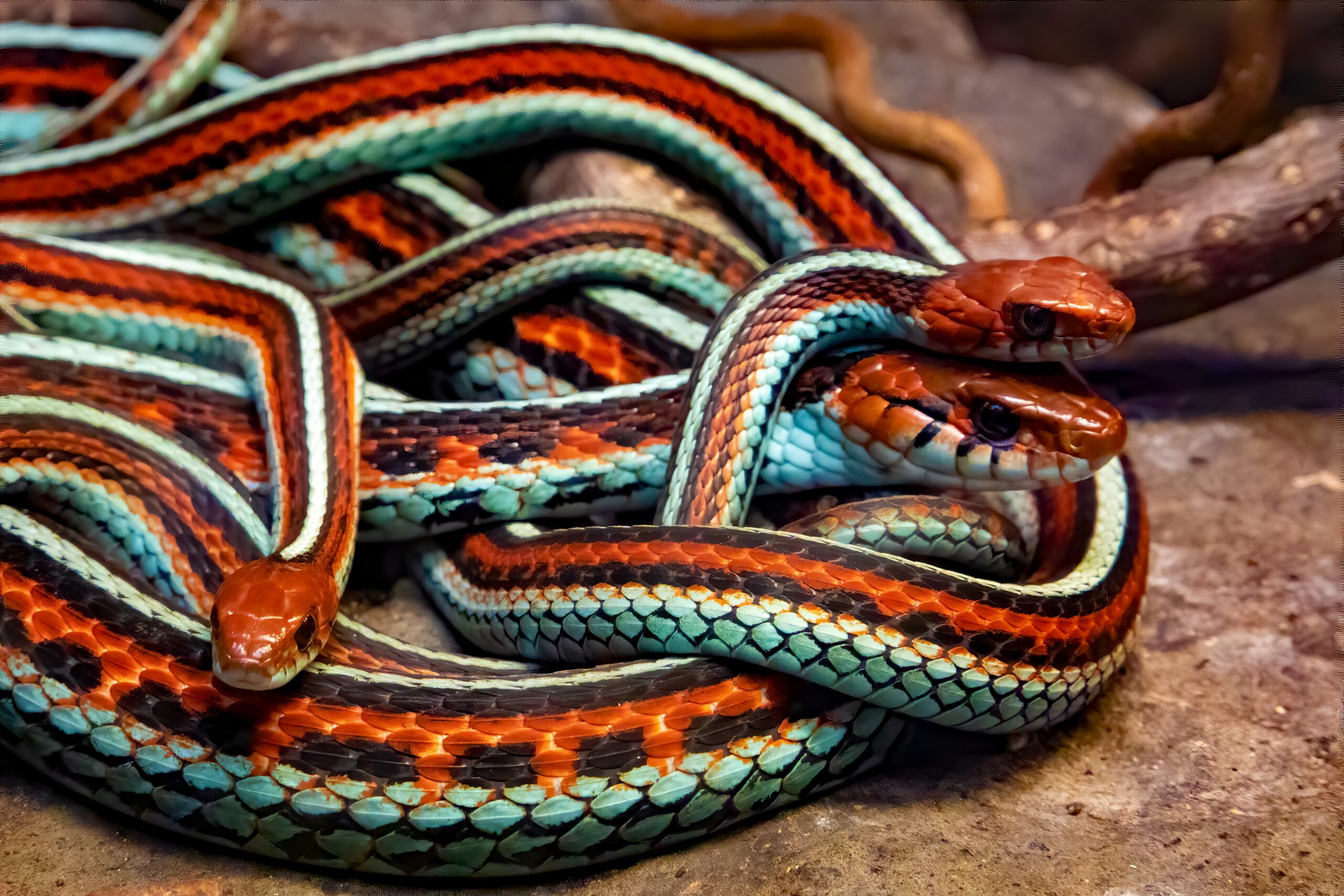
A garter snake in California is generally harmless to people and can benefit gardens by feeding on slugs, earthworms, and other small animals. You might spot one slipping beneath a shrub in Sacramento or moving through a damp flower bed in Fresno, especially where irrigation provides moisture and shelter.
Most garter snakes are best left alone, but knowing how to distinguish them from rattlesnakes matters. Their appearance, feeding habits, preferred hiding places, and legal protections can help you decide whether to leave a snake undisturbed or contact a wildlife professional.
Key Takeaways
- Garter snakes are generally safe to have around. They rarely threaten people, although they can bite defensively when handled. A striped snake should never be assumed harmless without reliable identification.
- Moisture, shelter, and available prey attract garter snakes. Gardens, irrigation canals, dense vegetation, and damp soil can provide suitable habitat. Some species help control slugs, insects, and small rodents.
- Most sightings don’t require removal. Leave the snake alone, keep children and pets away, and contact a qualified wildlife professional if it’s trapped, potentially venomous, or creating a safety concern. Some California garter snakes are legally protected.
What Does a Garter Snake in California Look Like?
Most garter snakes have slender bodies, relatively narrow heads, and long tails. Many have three pale stripes running lengthwise along their backs and sides, although the colors vary from yellow and cream to blue-green. Dark checkered markings sometimes appear between the stripes.
California has several garter snake species and subspecies, and not all share the same appearance. Common garter snakes often have noticeable stripes, while western terrestrial garter snakes can vary considerably in color and pattern. The giant garter snake is more closely associated with Central Valley wetlands than typical residential landscaping.
How Can You Tell a Garter Snake From a Rattlesnake?
Garter snakes and rattlesnakes usually have different body shapes and markings. However, a quick glimpse isn’t always enough for a reliable identification.
| Feature | Garter Snake | Rattlesnake |
| Body shape | Usually slender with a long tail | Generally heavier-bodied |
| Markings | Often has lengthwise stripes | Typically has blotches, bands, or diamond patterns |
| Tail | No rattle | Usually has a segmented rattle |
| Venom | Mild venom in many species, with low risk to humans | Venom capable of causing serious injury |
| Typical response | Often retreats into nearby cover | May retreat or defend itself when threatened |
A rattlesnake doesn’t always rattle before striking. Young rattlesnakes may have only a small tail button, and older snakes can lose rattle segments. Never approach an unidentified snake to inspect its head, markings, or tail.
Are Garter Snakes in California Dangerous?
Garter snakes are not considered dangerous to most people. They usually retreat when someone approaches, although they can bite when grabbed, cornered, or stepped on. Some also release a strong-smelling defensive secretion when threatened.
Unlike rattlesnakes, garter snakes have mild venom that helps certain species capture prey. Their bites generally aren’t medically serious, but the teeth can puncture skin and cause localized irritation. Children and pets should still be kept away from wild snakes.
What Happens if a Garter Snake Bites You?
A garter snake bite can leave small punctures, minor bleeding, or swelling around the wound. If you’re certain of the identification, wash the area thoroughly with soap and running water. Seek medical advice if symptoms worsen, swelling becomes significant, or signs of infection develop.
If you’re unsure which snake caused the bite, don’t assume it was harmless. A suspected rattlesnake bite requires immediate emergency medical attention. Call 911, avoid unnecessary movement, and never cut the wound, apply a tourniquet, or attempt to suck out the venom.
Why Do Garter Snakes Appear in California Yards?
A garter snake in your yard is usually looking for food, shelter, or a suitable place to regulate its body temperature. Even well-maintained properties can provide these conditions, particularly where landscaping stays moist and vegetation offers cover.
In Sacramento and Fresno, irrigation can create damp areas during otherwise dry weather. A leaking hose, shaded garden bed, or regularly watered lawn may support earthworms, slugs, and other animals that attract hungry snakes.
What Attracts Garter Snakes to Your Yard?
| Yard Condition | Why It Attracts Garter Snakes |
| Dense shrubs and tall grass | Provide shelter from predators and exposure |
| Damp mulch and moist soil | Support earthworms, slugs, and other prey |
| Rock piles and stacked lumber | Create protected hiding places |
| Ponds and drainage areas | Provide aquatic habitat and access to prey |
| Rodent activity | Offers potential food for some species |
Why Are Garter Snakes Often Found Near Water?
Many California garter snakes use streams, marshes, ponds, and other wet areas because they provide access to frogs, tadpoles, and small fish. The giant garter snake, for example, depends heavily on suitable aquatic habitats in the Central Valley, including wetlands and agricultural canals.
Other species live in grasslands, forests, and relatively dry environments. Finding a snake away from water isn’t unusual, and a single backyard sighting doesn’t mean several snakes are living beneath your home.
What Do Garter Snakes Eat, and Are They Good for Gardens?
Garter snakes help maintain local food webs by eating small animals found in soil, vegetation, and waterways. Their diets vary by species, size, and habitat. Earthworms, slugs, amphibians, and fish are common foods for different garter snakes, while some also consume insects and small rodents.
That feeding behavior can benefit homeowners, particularly when snakes consume plant-feeding slugs or mice. However, garter snakes shouldn’t be treated as a substitute for pest control. One snake won’t eliminate an established rodent problem or prevent insects from entering your house.
| Food Source | Role in the Garter Snake’s Diet |
| Slugs | Eaten by certain species and may contribute to natural slug control |
| Earthworms | Common prey for several garter snake species |
| Frogs and tadpoles | Important food for many snakes associated with water |
| Small fish | Consumed by aquatic-feeding species |
| Insects | Occasional prey for some species |
| Small rodents | Taken by some species, particularly larger individuals |
What Should You Do if You Find a Garter Snake in Your Yard?
If a garter snake is crossing your lawn or resting beneath a plant, leave it alone. Keep children and pets away and allow the animal to move on naturally. Don’t pick it up, spray it with pest control treatments, or attempt to relocate it.
You can reduce unwanted snake encounters by maintaining landscaping near commonly used areas. Trim overgrown vegetation, organize woodpiles, fix leaking irrigation lines, and address ongoing rodent activity. According to the University of California Integrated Pest Management Program (UC IPM), dense vegetation, woodpiles, and other sheltered areas provide hiding places for snakes, while rodent activity can attract snakes searching for food.
Are Any California Garter Snakes Legally Protected?
Some native California garter snakes have federal protections because habitat loss and other pressures have affected their populations.
| Species | Federal Status | Year Listed | California Habitat |
| Giant garter snake | Threatened | 1993 | Central Valley wetlands and suitable agricultural waterways |
| San Francisco garter snake | Endangered | 1967 | Restricted areas of the San Francisco Peninsula |
According to the U.S. Fish and Wildlife Service, only about 5% of the giant garter snake’s historical wetland habitat remains, with habitat loss and fragmentation continuing to threaten the species. The San Francisco garter snake is recognizable by its distinctive red, black, and blue-green stripes, although its coloring can vary between individuals.
Not every California garter snake is endangered, but native reptiles remain subject to applicable wildlife regulations. Don’t capture or move a snake if its identity or legal status is uncertain.
When Should You Contact a Wildlife Professional?
A snake inside an occupied room, trapped in a location where it can’t safely escape, or suspected to be a rattlesnake deserves professional attention. Keep your distance and contact a qualified wildlife removal specialist rather than attempting to handle it yourself.
If you suspect a protected species, contact the California Department of Fish and Wildlife for guidance. For an ordinary garter snake moving through the yard, professional removal usually isn’t necessary.
Keep Your California Yard Comfortable Without Harming Wildlife
Finding a garter snake in California doesn’t automatically mean something is wrong with your property. Most are passing through or looking for food and shelter. Understanding their appearance, feeding habits, and preferred hiding places makes it easier to respond without disturbing native wildlife.
Repeated snake sightings may be a reason to check for excess moisture, clutter, or rodent activity around your home. Official Pest Prevention helps homeowners throughout Sacramento, Fresno, and surrounding communities manage rodents, slugs, snails, and other covered pests. With locally based technicians and ongoing pest prevention services, our team can help address pest activity that may attract unwanted wildlife.
You don’t need to remove every native snake to make your outdoor space more comfortable. If recurring pest problems are contributing to wildlife activity, contact Official Pest Prevention to discuss a pest control plan for your property.
Frequently Asked Questions
Are garter snakes active at night in California?
Many garter snakes are primarily active during daylight, especially when temperatures are suitable for hunting and movement. Activity varies by species, season, and weather. During very hot periods, some may shift their activity to cooler hours. Seeing a snake after sunset doesn’t automatically mean it’s dangerous.
Can garter snakes get inside your house?
Garter snakes can occasionally enter garages, crawl spaces, or homes through accessible openings. They may be seeking shelter or following prey, but a sighting indoors doesn’t necessarily indicate an infestation. Keep the snake isolated from people and pets if you can do so safely, and contact a qualified wildlife professional for help.
Can garter snakes swim?
Yes. Garter snakes can swim, and several California species regularly use aquatic habitats to find food. You might see one crossing a pond or moving along the edge of a stream or irrigation canal. The giant garter snake is especially dependent on wetland environments, while other species spend more time on land.
Do garter snakes keep mice away?
Some garter snakes eat small rodents, but mice aren’t a major food source for every species. A snake moving through your yard won’t reliably control a rodent population. If you’re finding droppings, gnaw marks, or recurring mouse activity, address access points and food sources rather than depending on wildlife to solve the problem.
