
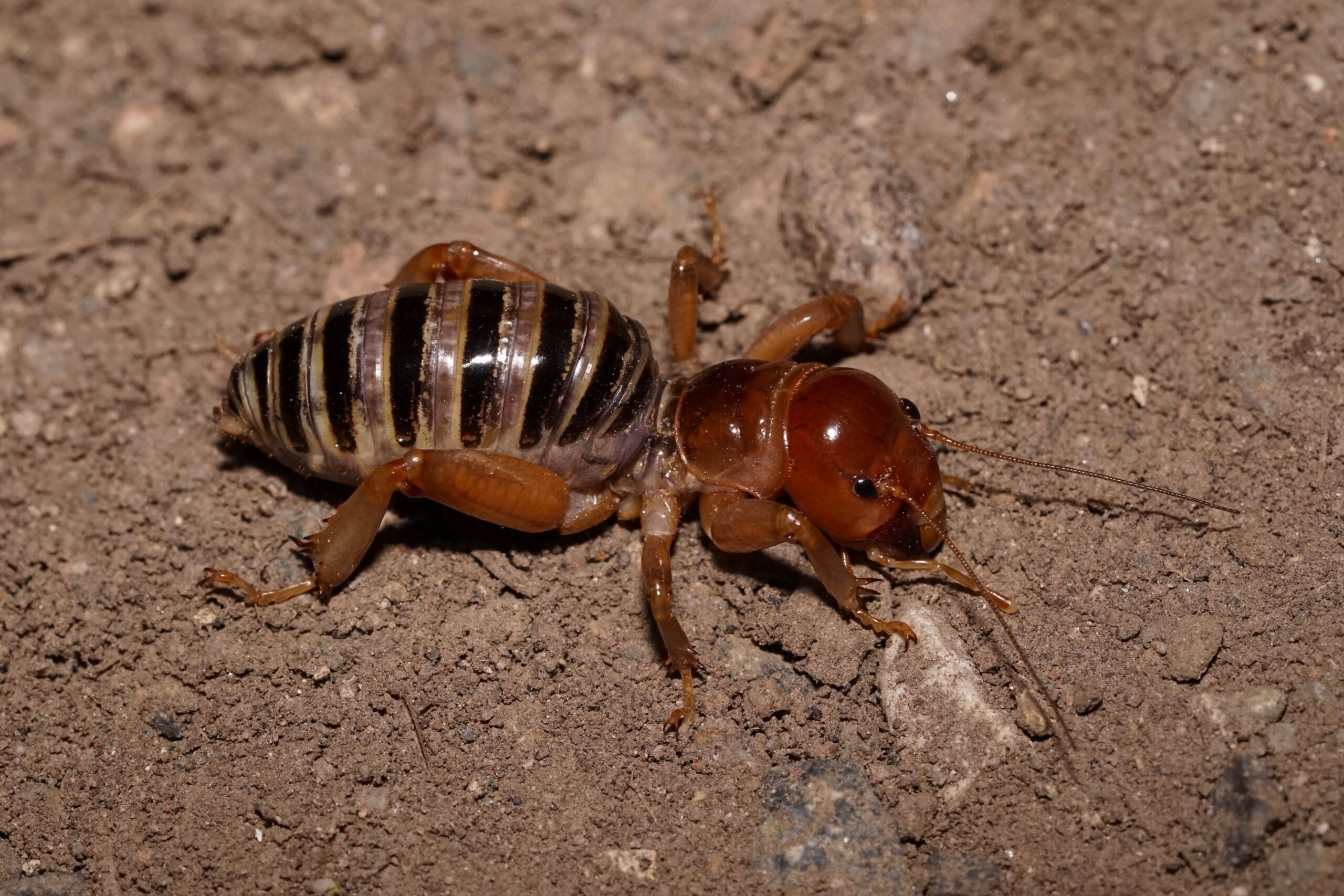
Jerusalem crickets in California are large, wingless insects that live mostly underground and sometimes appear in gardens after rain or watering. They look intimidating, but they’re generally harmless unless handled, when they can deliver a painful bite.
You might discover one beneath a flowerpot in Sacramento or see one crossing your Fresno patio after the sprinklers run. Their oversized heads and striped bodies are hard to miss. Knowing where Jerusalem crickets hide, what brings them into yards, and how to discourage them can help you handle these encounters without unnecessary treatment.
Key Takeaways
- Jerusalem crickets are generally harmless to people and homes. They aren’t venomous and don’t have stingers, although their strong jaws can deliver a painful defensive bite.
- Moist soil and sheltered landscaping provide suitable habitat. These nocturnal insects spend much of their time underground and may become more visible after rain, irrigation, or gardening.
- Prevention starts with moisture control and fewer hiding places. Adjusting irrigation, clearing debris, and sealing exterior gaps can reduce unwanted encounters. Repeated indoor sightings may warrant professional inspection.
What Are Jerusalem Crickets in California?
Jerusalem crickets are large, ground-dwelling insects found throughout parts of western North America, including California. Despite their name, they aren’t from Jerusalem. They’re also commonly called potato bugs, although that nickname refers to several unrelated insects.
Unlike ordinary crickets that chirp outside your window, Jerusalem crickets don’t have wings and can’t fly. Their unusual proportions make them easy to recognize once you know what you’re looking at.
Why Do Jerusalem Crickets Look So Alarming?
Their oversized, rounded heads are often the first thing homeowners notice. Strong jaws, thick legs, and a striped abdomen make these insects look more threatening than they are. When disturbed, they may move awkwardly across the ground or adopt a defensive posture. These insects are known for their large heads, wingless bodies, and underground habits.
| Identification Feature | What You’ll Notice |
| Body | Thick, rounded abdomen with darker bands |
| Head | Large, smooth, and rounded |
| Legs | Six legs adapted for movement along and through the ground |
| Antennae | Long and slender |
| Wings | None; adults can’t fly |
| Movement | Crawling and walking rather than sustained flight |
Their size and coloring can vary, so appearance alone isn’t always enough for a definite identification. If you’re unsure what you’ve found, take a clear photograph rather than handling the insect.
Do Jerusalem Crickets Bite or Harm People?
Jerusalem crickets aren’t venomous, and they don’t have stingers. They also don’t hunt people or actively seek confrontations. Most encounters happen accidentally when someone digs in a garden bed, lifts a rock, or moves an object where an insect is hiding.
They can bite when restrained or squeezed, however. Their strong jaws can pinch skin and cause pain, which is a good reason to avoid picking them up. A Jerusalem cricket crawling through your yard presents little reason for concern if you leave it undisturbed.
What Happens if a Jerusalem Cricket Bites You?
A defensive bite can cause localized pain, and the jaws may occasionally break the skin. If bitten, wash the area with soap and water and apply a cool compress to ease discomfort. Seek medical attention if you experience severe swelling, worsening pain, signs of infection, or an allergic reaction.
Children and pets may be curious about these insects because of their unusual appearance. Keep pets from playing with them, and encourage children to observe them without touching. If one needs to be moved, gently guide it into a container and release it outside.
Can Jerusalem Crickets Damage Your Home or Garden?
Jerusalem crickets aren’t wood-destroying insects and aren’t known for damaging structural timber. They also don’t establish large household colonies like ants or some cockroaches.
They feed on organic material, including plant matter and small invertebrates. Feeding on roots or other plant material can sometimes cause localized garden damage, but an occasional sighting doesn’t establish that your plants are being harmed.
Where Jerusalem Crickets Live
Jerusalem crickets spend much of their lives underground, where soil provides shelter from sunlight and dry surface conditions. They can also be found beneath logs, rocks, planters, and other objects that protect them from exposure.
These insects are primarily nocturnal. You may have them in your garden for months without noticing one, then suddenly encounter one during evening yard work or while moving landscaping materials.
What Attracts Jerusalem Crickets to Your Yard?
Moist soil, mulch, and sheltered ground offer favorable places for Jerusalem crickets to live. Garden beds with regular irrigation can maintain these conditions even during California’s dry summers.
This matters in Sacramento, Fresno, and other Central Valley communities, where homeowners often rely on sprinklers or drip irrigation to maintain their landscaping. Irrigated flower beds may provide suitable shelter when the surrounding ground is dry.
| Yard Condition | Why It Matters |
| Moist garden soil | Provides a more sheltered underground environment |
| Mulch around plants | Helps retain soil moisture and offers cover |
| Rocks and decorative borders | Create protected hiding spaces |
| Fallen logs and yard debris | Offer shelter near the soil surface |
| Irrigated landscaping | Maintains moisture during dry weather |
| Loose soil | Allows insects to move or burrow underground |
Finding Jerusalem crickets in these locations doesn’t mean your yard is poorly maintained. Gardens naturally support insects, especially when soil moisture and shelter are available.
Why Do Jerusalem Crickets Come Out After Watering?
You might notice a Jerusalem cricket crawling across your patio shortly after the sprinklers finish. The insect may have been living in the nearby soil before you ever saw it.
Watering changes underground conditions. When the soil becomes heavily saturated, an insect may leave its hiding place or move through areas where it becomes easier to spot. Digging and shifting wet mulch can also uncover insects that were already present.
Rainfall can lead to similar encounters, particularly when water collects in garden beds or beneath outdoor objects. However, there is no established California-wide statistic showing how much Jerusalem cricket activity increases after rain. More sightings don’t necessarily mean a larger population.
How to Keep Jerusalem Crickets Away
You don’t need to eliminate Jerusalem crickets from every part of your yard. The more useful goal is to discourage them from gathering near doors, patios, and other areas your family regularly uses.
Start with places that stay damp or provide cover. Check whether sprinkler heads are soaking the soil against your foundation, and repair irrigation leaks that create persistently wet patches. You can also move unused boards, empty containers, and unnecessary yard debris away from exterior walls.
Landscaping Changes That Help Prevent Jerusalem Crickets
Keeping mulch from piling directly against exterior walls can reduce sheltered spaces next to your home. You don’t need to remove it from established planting beds, but avoid excessive layers where moisture accumulates.
Check weatherstripping around doors and the bottom seal of your garage. Ground-dwelling insects can enter through accessible gaps, especially when exterior shelter sits close to an opening.
Do Outdoor Lights Attract Jerusalem Crickets?
Jerusalem crickets are nocturnal, but there’s no strong evidence that ordinary porch lighting directly attracts them. Finding one beneath an illuminated doorway doesn’t establish that the light brought it there.
Still, lighting adjustments can help manage general insect activity near your house. Motion-activated fixtures and turning off unnecessary lights may reduce the number of other insects gathering around entrances. Combine these changes with sealing gaps and maintaining the surrounding landscaping rather than relying on lighting alone.
The U.S. Environmental Protection Agency’s integrated pest management guidance recommends identifying pests, monitoring their activity, and addressing conditions that support them before deciding whether pest control treatment is necessary.
Keeping Jerusalem Crickets Away From Your California Home
Jerusalem crickets in California can be unsettling to encounter, but most don’t require treatment. They spend much of their lives beneath soil and outdoor shelter, and occasional sightings after watering or rain are usually part of their natural activity. Managing excess moisture, reducing hiding places near entrances, and sealing gaps can help keep them outside.
If you repeatedly find unfamiliar insects indoors, the challenge is identifying what’s entering and why. Official Pest Prevention offers cricket control services in Northern California and the Central Valley. Our local technicians can identify insects, inspect potential entry points, and recommend appropriate pest control and prevention measures.
A professional inspection can help determine whether you’re dealing with an occasional outdoor visitor or a recurring problem. Contact Official Pest Prevention to discuss your concerns and arrange a pest inspection for your property.
Frequently Asked Questions About Jerusalem Crickets
Are Jerusalem crickets poisonous to dogs?
Jerusalem crickets aren’t poisonous or venomous, but they can bite defensively if a dog tries to pick one up or chew it. Keep pets from playing with unfamiliar insects. If your dog swallows one or develops vomiting, swelling, or other symptoms, contact your veterinarian for advice.
Why are Jerusalem crickets called potato bugs?
Jerusalem crickets are often called potato bugs because they live underground and have sometimes been found around potato plants and other cultivated areas. The nickname can be confusing because people use it for other insects as well. Their large heads and striped abdomens are more reliable identification clues than the common name.
Do Jerusalem crickets make noise?
Yes. Jerusalem crickets can produce sounds by rubbing parts of their bodies together and may communicate through vibrations transmitted through the ground. They don’t produce the familiar nighttime chirping associated with many ordinary crickets. Their underground lifestyle makes them easier to overlook even when they’re present in your yard.
Are Jerusalem crickets attracted to water?
Jerusalem crickets use soil habitats where moisture can provide favorable conditions, but they aren’t seeking standing water in the way mosquitoes do. Irrigation and rainfall can change where these insects move and when homeowners notice them. Avoiding excessive moisture near your foundation may help reduce encounters.
Should I kill a Jerusalem cricket if I find one?
Usually, no. A single Jerusalem cricket outdoors is rarely a reason for treatment. You can leave it alone or relocate it gently using a container if it’s near an entrance. If insects repeatedly appear indoors, professional identification can help determine whether an entry-point or pest-management problem needs attention.
