
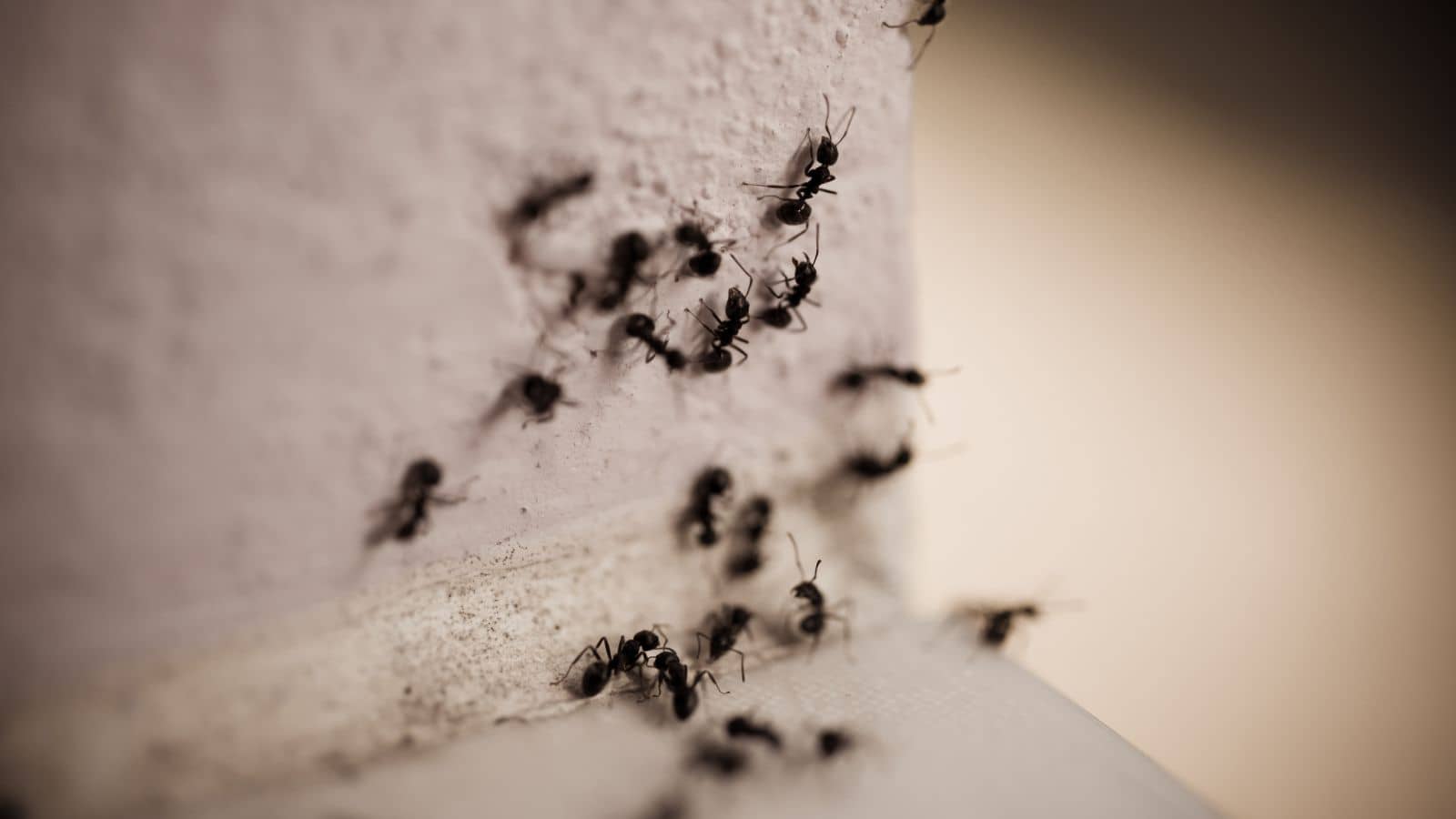
It usually starts small. Maybe you notice a few tiny ants near the sink or one crawling across the counter while you make coffee. At first, it does not feel like a big deal. Still, an ant problem in a house situation rarely stays small, especially in California, where warm weather keeps ants active most of the year.
An ant problem in house settings often begins quietly. One ant along the baseboards or a light trail near a window may seem easy to ignore.
A single ant doesn’t necessarily mean there’s an infestation. However, repeated sightings or a steady trail can indicate an active colony nearby, particularly around foundations, wall openings, or outdoor nesting areas. If you live anywhere in Northern California or the Central Valley, this probably sounds familiar. Changes in temperature, irrigation, and older construction give ants everything they need to move in fast. Knowing what to watch for makes all the difference before the situation turns into a full ant infestation.
Key Takeaways
- Early signs of an ant problem in house situations often appear before large numbers show up
- Different types of ants require different treatment approaches
- Food, moisture, and entry points drive most ant infestations
- Professional treatment stops recurring ant invasions more reliably than diy fixes
Video: Common Ant Species Explained
This short video breaks down 10 common types of ants you may run into around your home. It explains how different ant species behave, what they look like, and why proper identification matters when choosing the right treatment and prevention plan.
1. Why Seeing A Single Ant Indoors Matters
When you see a single ant inside, it is rarely alone. In most cases, that ant is a scout. Worker ants are sent out to look for a food source, and once they find one, they lay down a pheromone trail back to the ant colony. From there, things move quickly. What starts as one ant can turn into dozens following the same path within hours.
2. Ant Trails Along Walls And Baseboards
One of the most common signs homeowners notice is an ant trail running along baseboards or walls. Pavement ants and odorous house ants are especially known for this behavior.
A visible trail means ants have found a route between their colony and a food or water source. It doesn’t necessarily mean the colony is nesting inside your home, but repeated trails are a reason to check where the ants are coming from.
3. Ants Gathering Around Pet Food
Pet food is a huge attractant. Open pet food or unattended food bowls give ants a steady food source they can rely on. Even homes that stay clean can attract ants if pet food is left out overnight, especially when sugar ants or tiny ants are active.
4. Ants Entering Through Cracks And Crevices
Ants do not need much space to get inside. Small crevices, foundation gaps, and aging caulk around windows or doors all become easy entry points. Over time, ants memorize these access routes and use them repeatedly, especially during hot afternoons.
5. Ant Activity Near Windows And Doors
Ants can enter through gaps around window frames, door thresholds, and damaged seals. If you notice activity in the same place repeatedly, check for trails leading outside and nearby nesting areas. Identifying the species can help determine how to address the problem.
Fire ants and pavement ants often use these areas as direct access routes. Once they establish a path, they tend to stick with it.
6. Small Dirt Piles Or Ant Nests Outside
Outdoors, small piles of dirt near sidewalks, patios, or foundations often signal ant nests. Fire ants and pavement ants commonly build in these areas. When nests sit close to the home, indoor ant invasions are rarely far behind.
7. Sawdust Or Wood Debris Indoors
Finding fine sawdust indoors raises a different concern. Carpenter ants push out wood shavings as they tunnel through damp or damaged wood. While they do not eat wood like termites, carpenter ants can still cause structural damage if left unchecked.
8. Ants Showing Up In Bathrooms Or Laundry Rooms
Kitchens are not the only target. Bathrooms and laundry rooms often attract ants because of moisture. Odorous house ants are commonly found near sinks, drains, and small leaks, especially during dry seasons when water becomes harder to find outdoors.
9. Ants Keep Coming Back After You Kill Ants
Spraying ants may feel productive, but it usually only removes the ants you can see. When you kill ants without addressing the ant colony, worker ants simply replace them.
Some ant species, including Argentine ants, can respond to certain treatments by relocating or splitting into smaller groups. The results depend on the species and treatment method, which is why identifying the ants matters before choosing a control approach.
10. Ant Baits That Do Not Work As Expected
Ant baits can be helpful, but only when matched to the correct ant species. Some ants prefer sugar, while others go after protein. Using the wrong ant baits often leads to frustration when ants ignore them or spread even further.
11. Strong Odor When Ants Are Crushed
Odorous house ants release a noticeable odor when crushed, often described as similar to rotten coconut. The smell can help with identification, but it doesn’t indicate how large a colony is or whether the infestation is established indoors.
12. Seasonal Ant Activity In The Same Spots
When ants appear in the same areas year after year, it usually means outdoor ant nests survived previous seasons. Seasonal patterns suggest that entry points and nests were never fully addressed.
13. Ants Mistaken For Termites Or Wasps
Winged ants often get mistaken for termites. While both swarm, ants have bent antennae and narrow waists. Confusing the two can delay proper treatment, especially when termites are a concern.
Common Ant Species Found In California Homes
Several ant species are found in California homes, and identifying them can help you understand where they’re nesting and why they keep returning. Size, color, movement patterns, and nesting locations offer useful clues, although some species look similar without closer inspection.
| Ant Species | How to Recognize Them | Where They’re Commonly Found |
| Argentine ants | Small, light to dark brown ants that often travel in long, organized trails. Their colonies can contain multiple queens. | Kitchens, bathrooms, foundations, and outdoor areas with moisture or food sources. |
| Odorous house ants | Small, dark brown to black ants that release a noticeable odor when crushed. They often seek sugary foods. | Near sinks, inside wall spaces, beneath flooring, and around outdoor vegetation. |
| Pavement ants | Small, brown to black ants that sometimes leave little piles of excavated soil near pavement cracks. | Beneath sidewalks, driveways, patios, and concrete slabs. |
| Carpenter ants | Generally larger than many household ants, although size varies by species and worker. They excavate wood and may leave coarse, sawdust-like debris. | Damp or damaged wood, wall voids, tree stumps, and other sheltered nesting sites. |
| Pharaoh ants | Very small, yellowish to light brown ants that can be difficult to identify without magnification. | Heated indoor spaces, wall voids, cabinets, and areas near food or moisture. |
Homeowners also use names like “black ants” and “sugar ants,” but these are general descriptions rather than reliable species identifications. Fire ants occur in parts of California as well, although they are not equally common throughout the state. Because different ants respond to different treatments, identifying the species is particularly helpful when activity continues after cleaning or using ant bait.
Why Ants Keep Coming Back Indoors
Ants keep returning when they can find food, water, shelter, or a reliable way into your home. Crumbs beneath appliances, pet food left out overnight, and moisture around sinks can attract foraging workers. Even after you clean these areas, ants from a nearby colony may continue searching for food.
Small openings around windows, doors, plumbing lines, and foundations give ants access to indoor spaces. When workers find food, many species use chemical trails to guide other ants to the same location. Wiping away trails can interrupt their movement, but it doesn’t eliminate the colony supplying them.
Weather can also affect ant activity in Northern California and the Central Valley. During hot, dry periods, ants may search more actively for moisture, while heavy rain can disturb outdoor nesting sites. If ants return to the same areas each season, inspect nearby entry points, check for leaks, and look for food sources that may be attracting them.
DIY vs. Professional Ant Control: When to Get Help
A few ants near a food spill don’t automatically call for professional treatment. Cleaning the area and removing accessible food may be enough to reduce occasional activity. If ants return every day, follow the same trails, or appear in several rooms, you’ll need to look beyond the ants you can see.
DIY Ant Control and Its Limits
Start with basic prevention. Wipe up crumbs and spills, store food in sealed containers, remove uneaten pet food, and repair leaking faucets or pipes. Clean visible ant trails with soapy water and seal accessible gaps around windows, doors, and plumbing openings.
Ant bait can help control certain species when the product and bait type suit the ants involved. Follow the label instructions, and avoid spraying insecticide directly onto bait stations or nearby foraging trails, as this can interfere with bait collection. Some ant species, including pharaoh ants, may form additional colonies in response to disruptive treatments, so using the wrong approach can make control more difficult.
When Professional Ant Control Makes Sense
Once ants appear daily or in multiple rooms, professional pest control becomes the safer option. An experienced exterminator identifies the ant species, locates nests, and applies targeted treatments designed to stop reproduction, not just surface activity.
This is especially true for homeowners searching for ant control in Fresno, CA, or ant control in Stockton, CA, where ant pressure stays high most of the year. Local experience makes a real difference.
Making The Right Ant Control Choice For Your Home
Wiping away an ant trail removes the insects you can see, but it does not necessarily address the colony. If ants keep following the same route through your kitchen, bathroom, or along the baseboards, identifying the species and locating the source of activity can help determine the right treatment.
Official Pest Prevention focuses on long-term prevention, not quick fixes. Our approach targets nests, entry points, and future ant invasions, helping homeowners finally get rid of ants for good instead of dealing with repeat issues. Ant control is included in the recurring home pest control plan, which also covers spiders, crickets, earwigs, silverfish, and centipedes.
Recurring ant activity is a familiar concern for homeowners across California. Official Pest Prevention offers local ant control in Sacramento, Fresno, and Stockton, with treatment recommendations based on the species and conditions found at the property. If ants keep showing up despite your efforts, reaching out to Official Pest Prevention puts a clear plan in place.
Ant Infestation Signs: FAQs
How fast can an ant infestation grow inside a home?
Once ants locate a steady food source, populations can grow quickly. In warm California conditions, an ant infestation can spread rapidly within weeks, especially if the colony remains undisturbed.
Are ants dangerous to people or pets?
Most ants are more of a nuisance than a danger. However, fire ants can sting, carpenter ants can cause structural damage, and all ants can contaminate food and surfaces.
Should you try DIY methods before calling an exterminator?
DIY methods may help with very minor issues. When ants return repeatedly or spread across rooms, professional treatment is usually needed to address hidden nests and prevent reinfestation.
