
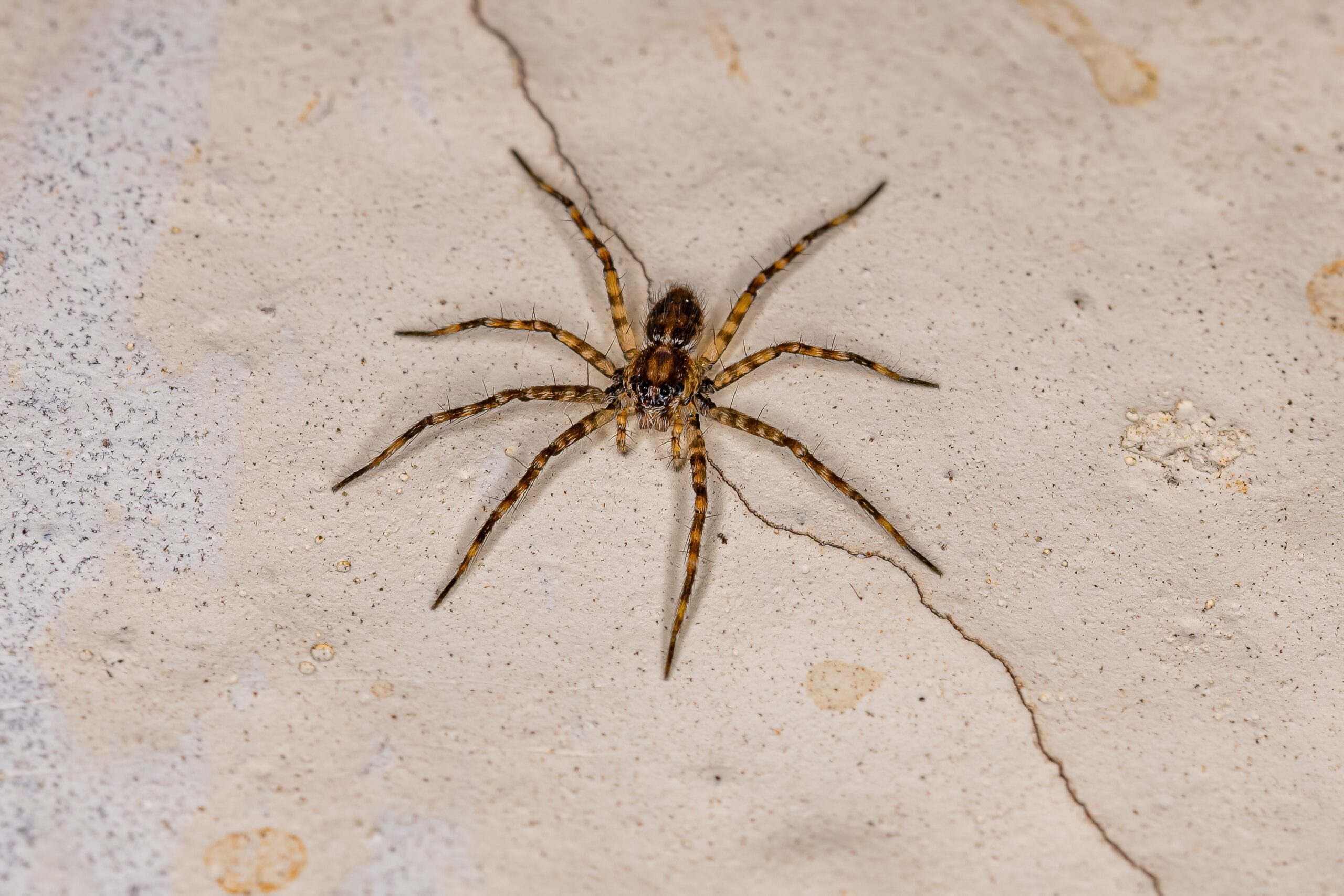
Wolf spiders in California are ground-hunting spiders that sometimes wander into garages, basements, and living spaces. They can bite when threatened, but most bites cause only temporary discomfort and aren’t medically serious.
Their size and speed make them difficult to identify at a glance. Knowing what sets wolf spiders apart, why they enter homes, and how to reduce the conditions that attract them can help you decide what to do next.
Key Takeaways
- Wolf spiders are active hunters, not web-building household pests. They chase insects along the ground and sometimes wander indoors through gaps around doors and foundations.
- Wolf spider bites are rarely medically serious. They can cause localized pain, redness, and swelling, but these spiders usually bite only when handled or trapped.
- Prevention starts outside your home. Sealing entry points, reducing clutter, and managing insects around exterior lights can help limit indoor encounters.
How Can You Identify Wolf Spiders in California?
Wolf spiders have sturdy, hairy bodies with brown, gray, or tan coloring. Many have darker stripes or markings that help them blend into soil, gravel, and dry vegetation. Their size varies by species, so color and body size alone aren’t reliable identification methods.
One of their most distinctive features is their eye arrangement. Wolf spiders have eight eyes in three rows, with two noticeably large eyes in the middle row. You may need a clear, close-up photograph to see this pattern, but don’t pick up an unfamiliar spider just to examine its eyes.
Wolf Spider vs. Tarantula vs. Brown Recluse
A quick look at the spider’s body can help narrow down what you’ve found. Wolf spiders are generally smaller and less heavily built than tarantulas, while brown recluses have a different eye arrangement and typically lack the bold body markings seen on many wolf spiders.
| Feature | Wolf Spider | Tarantula | Brown Recluse |
| Body | Hairy, compact, often patterned | Large, heavy, and noticeably hairy | Relatively slender, usually more uniform in color |
| Eyes | Eight eyes in three rows | Eight eyes grouped closely together | Six eyes in three pairs |
| Movement | Runs after ground-dwelling prey | Generally slower, often hunts from cover | Moves through sheltered areas |
| Hunting method | Actively pursues prey | Primarily ambushes prey | Hunts or scavenges |
| Medical concern | Usually localized bite symptoms | Painful bites and potentially irritating hairs | Some bites cause serious skin injury |
The University of California explains that brown recluse spiders aren’t established as common residents throughout California. Many suspected recluse sightings turn out to involve other species.
Do Wolf Spiders Bite, and Are They Dangerous?
Wolf spiders have venom that helps them subdue insects. While their appearance can be intimidating, they don’t actively pursue people, and most encounters pose little medical risk.
A bite can happen when someone accidentally presses a spider against their skin, reaches into an occupied hiding place, or tries to handle it. Most wolf spider bites cause localized pain, redness, or mild swelling, although individual reactions vary.
What Should You Do if a Wolf Spider Bites You?
Wash the affected area with soap and water, then apply a clean, cool compress to help relieve discomfort. Avoid scratching the wound, and monitor the skin for changes.
Seek medical attention if you experience worsening pain, spreading redness, fever, or signs of infection. Difficulty breathing or significant facial swelling requires emergency care. Because many skin conditions are mistaken for spider bites, a wound alone doesn’t confirm that a wolf spider caused it.
Are Wolf Spiders Dangerous to Children and Pets?
Wolf spiders don’t seek out children or household pets. However, a curious child or pet may corner one, causing it to bite defensively.
Teach children not to handle unfamiliar spiders, and avoid letting pets play with them. If your pet develops swelling, persistent discomfort, or unusual symptoms following a suspected bite, contact your veterinarian.
Why Do Wolf Spiders Come Inside California Homes?
Unlike spiders that build webs to catch insects, wolf spiders actively search for prey. They travel along the ground, beneath vegetation, and through sheltered areas where insects and other small invertebrates live.
According to the UC IPM, wolf spiders hunt during the day and at night and may shelter beneath debris or in burrows. Their ground-dwelling habits help explain why homeowners sometimes spot them running across open floors rather than remaining in webs.
Why Are Wolf Spiders More Noticeable in Fall?
You may encounter wandering spiders more often as summer gives way to fall. Seasonal movement can involve mating activity, changes in outdoor conditions, and spiders searching for prey.
However, wolf spiders don’t all enter houses to escape cold weather. Many remain outdoors in protected places, and activity patterns vary among species and locations.
Open garage doors, damaged weatherstripping, and ground-level gaps provide opportunities for spiders moving through surrounding landscapes to enter. An occasional indoor sighting doesn’t necessarily mean they’re breeding inside your house.
What Attracts Wolf Spiders to Your Yard?
Food availability is a major factor. Wolf spiders hunt insects and other small invertebrates, so properties with regular insect activity provide opportunities to feed.
Outdoor lighting can contribute indirectly. Porch lights attract moths, flies, and other insects, which may bring hunting spiders closer to entrances. The spiders aren’t necessarily attracted to the light itself.
Clutter creates another opportunity. Stacked firewood, unused flowerpots, cardboard boxes, and dense vegetation provide shelter for spiders and their prey. A garage filled with stored materials also offers more hiding places than an uncluttered space.
How Can You Prevent Wolf Spiders From Entering Your Home?
Preventing wolf spiders starts with limiting their access to indoor spaces. You don’t need to eliminate every spider outdoors, especially since they feed on other insects.
Instead, focus on the places where spiders can move from the yard into your house. These improvements can also help reduce encounters with crickets, ants, and other occasional indoor pests.
Seal Gaps Around Doors and Foundations
Inspect exterior doors, particularly the garage door. Replace worn weatherstripping, install door sweeps where needed, and check whether daylight is visible beneath closed doors.
Look for cracks around the foundation and openings where pipes or utility lines enter the building. Repair damaged screens and make sure exterior vents have appropriate covers without obstructing ventilation.
Reduce Clutter and Outdoor Insect Activity
Keep storage boxes off garage floors when practical, and use sealed containers for belongings you rarely need. Move firewood, unused boards, and other materials away from exterior walls.
Trim vegetation that presses against the house, and address leaking faucets or persistent moisture problems. These changes make the area around your foundation easier to inspect while reducing shelter for various pests.
If insects regularly gather around porch lights, consider directing fixtures away from doors or using lighting that attracts fewer insects. Turning off unnecessary outdoor lights can also reduce the concentration of prey near entrances.
What Should You Do When You Find One Indoors?
If you can approach the spider safely, place a container over it and slide a firm piece of cardboard underneath. Carry it outdoors without touching it directly.
Avoid spraying every spider you encounter. According to Penn State Extension, these spiders are often occasional visitors rather than pests that require extensive indoor treatment.
If sightings continue, note where they occur and check nearby openings. Repeated activity may warrant a closer inspection, particularly when other insects are also present.
When Should You Call for Professional Wolf Spider Control?
Finding one wolf spider in your garage usually doesn’t require professional treatment. However, repeated indoor sightings, uncertainty about identification, or ongoing insect activity can make an inspection worthwhile.
Official Pest Prevention helps homeowners throughout Sacramento, Fresno, and surrounding Northern California and Central Valley communities address spiders and other household pests. We can inspect the property, find out what conditions support pest activity, and recommend the right treatment and prevention measures.
Professional service is especially useful when spiders keep returning despite sealing obvious gaps and reducing clutter. We also provide ongoing pest control services. Contact Official Pest Prevention to schedule an inspection and find a practical way to keep unwanted spiders and other pests outside your home.
Wolf Spiders in California: FAQs
Are wolf spiders common in California?
Wolf spiders occur throughout California in a variety of habitats, including gardens, lawns, natural areas, and landscaped properties. Different species favor different conditions. Because they’re active hunters, you may spot them running across soil or pavement rather than sitting in webs.
Can wolf spiders jump at you?
Wolf spiders can move quickly, and some can make short jumps or lunges while hunting or escaping danger. However, they don’t deliberately jump at people to attack them. Sudden movements are usually part of their normal hunting or defensive behavior.
Do wolf spiders infest houses?
Wolf spiders can enter homes, but many indoor sightings involve individual spiders that wandered inside. Finding one doesn’t establish an infestation. If you regularly see multiple spiders, check entry points, hiding places, and the insects that may be providing food.
Should you kill a wolf spider in your house?
You usually don’t need to kill a wolf spider found indoors. If it’s safe to do so, capture it with a container and release it outside. If spiders appear repeatedly, focus on sealing entry points and reducing insect activity rather than relying on individual removal.
