
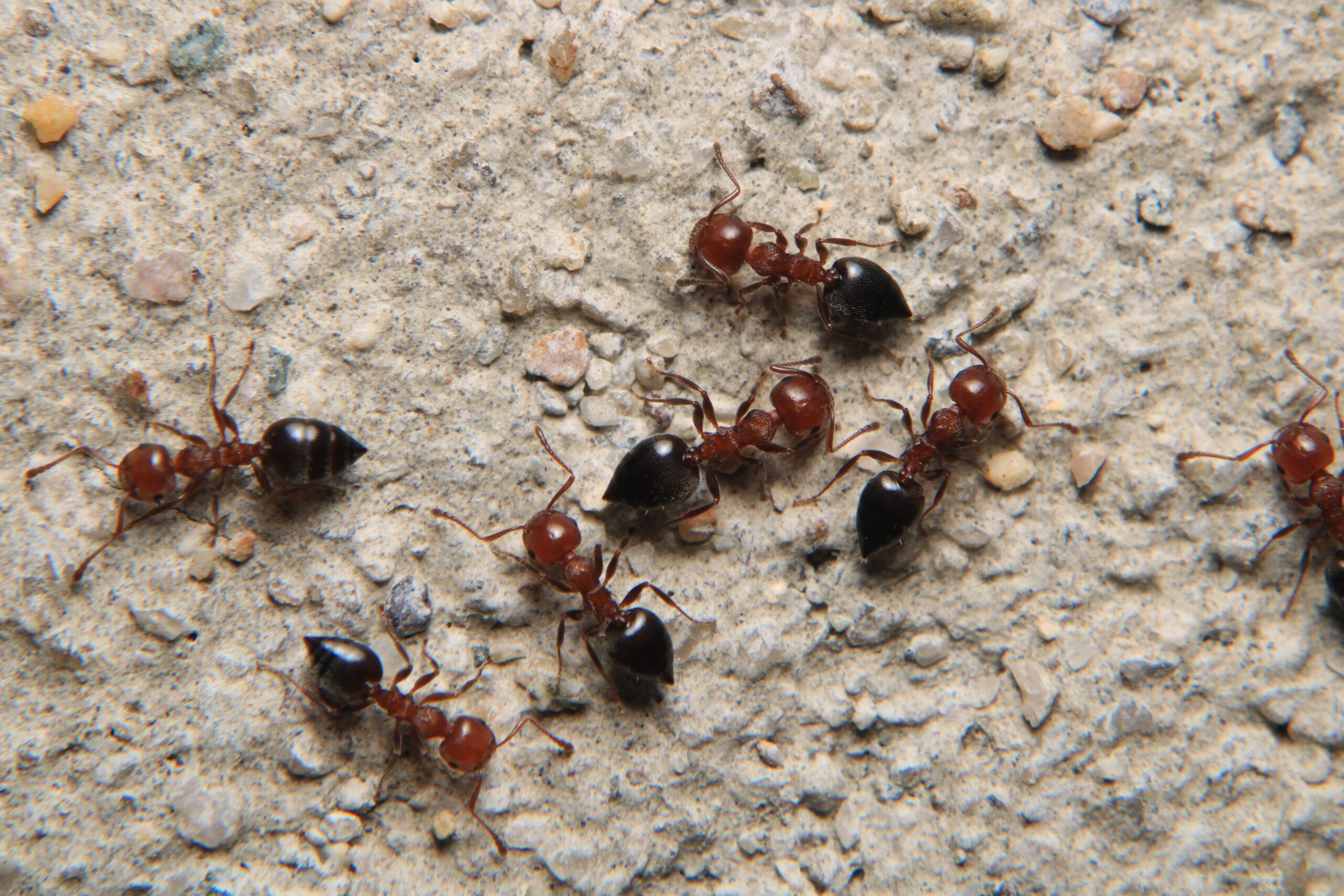
Carpenter ants in California can nest inside trees, damp wooden structures, and even the walls of your home. They don’t eat wood like termites, but they excavate tunnels that can weaken affected structures over time. Moisture-damaged wood is particularly attractive because it’s easier to excavate.
If you’ve spotted large black ants indoors at night or found sawdust-like debris near a window frame, an active nest could be nearby. Knowing how to identify carpenter ants, recognize damage, and locate their nests helps you determine what needs attention before the problem grows.
Key Takeaways
- Carpenter ants excavate wood rather than eat it. They often nest in moisture-damaged wood, but established colonies can also tunnel into sound wood.
- Frass piles, rustling sounds in walls, and repeated nighttime sightings are warning signs. These clues can indicate nesting activity, although none confirms an infestation on its own.
- Finding the nest is essential for effective carpenter ant control. Outdoor parent colonies and indoor satellite nests may require different treatment approaches, along with repairs to moisture problems.
What Are Carpenter Ants in California?
Carpenter ants are among the larger ant species found around California properties. Workers vary in size, with some reaching half an inch or more. Many appear black, although some have reddish-brown coloring or a combination of both. Their bodies have a narrow waist and elbowed antennae, which help distinguish them from other insects.
You might encounter carpenter ants around trees, fences, decks, or wooden siding. They feed on insects, honeydew, and other food sources while using wood for shelter. Spotting one outdoors is normal, but repeated sightings inside deserve a closer look.
Carpenter Ants vs. Termites: What’s the Difference?
Both insects can damage wood, but their feeding habits and physical features are different. Carpenter ants remove wood to build nesting galleries, while termites consume cellulose.
| Feature | Carpenter Ants | Termites |
| Antennae | Elbowed | Generally straight and beadlike |
| Waist | Narrow and pinched | Broad |
| Wings | Front wings longer than hind wings | Two pairs of similar-length wings |
| Wood activity | Excavate smooth galleries | Consume cellulose |
| Visible evidence | Coarse frass and excavated tunnels | Varies by species; may include mud tubes or fecal pellets |
Wing characteristics apply to reproductive insects. If you only find damaged wood, identifying the pest can be harder because several wood-destroying insects leave similar evidence.
Signs of a Carpenter Ant Infestation
A carpenter ant infestation isn’t always obvious. Workers can move through concealed wall openings or forage outdoors while their nesting galleries remain hidden. The most useful clues are recurring ant activity and evidence of wood excavation.
Frass Piles Near Wooden Structures
Carpenter ant frass resembles coarse sawdust and often collects beneath small openings in wood. According to the University of Minnesota Extension, this material may contain wood fragments and insect remains.
Check beneath window frames, along baseboards, and around damaged wooden trim. Fresh debris appearing repeatedly in one location suggests ongoing activity worth investigating, although frass alone doesn’t establish which insect caused it.
Rustling Sounds and Large Black Ants at Night
Faint rustling inside walls can occur when ants move through hidden galleries. The sound is often difficult to hear and can be confused with other household noises, so it shouldn’t be used as the only sign of an infestation.
Many carpenter ants forage after sunset, making nighttime sightings another useful clue. If large black ants repeatedly appear near the same window or travel along a consistent route, observe where they enter and disappear. Those movements can help identify a nearby nesting area.
Where Carpenter Ants Nest Around California Homes
Carpenter ants favor protected nesting sites, particularly wood softened by moisture or decay. California’s hot, dry summers don’t prevent problems when irrigation, plumbing leaks, or damaged gutters keep small areas damp.
Sprinklers soaking wooden fences or siding can create favorable conditions during dry weather. Winter rain may expose problems around roof edges, window frames, and poorly drained areas. Established ants can also excavate sound wood, so visible moisture damage isn’t always present.
Outdoor Parent Colonies and Indoor Satellite Nests
A parent colony commonly develops in a hollow tree, decaying stump, or another protected wooden cavity. It typically houses the queen, eggs, and young larvae. Workers leave the nest to search for food and may enter nearby homes without nesting inside them.
Some established colonies form satellite nests that house workers and older developing ants. These may occupy wall voids, attic framing, or sheltered spaces beneath roofing. Because the colony can occupy several locations, activity indoors may continue even when workers near one opening have been treated.
Can Carpenter Ants Cause Structural Damage?
Carpenter ant damage occurs when workers remove wood to enlarge nesting galleries. The risk depends on the colony’s development, the location of the tunnels, and the wood’s existing condition.
| Affected Area | Potential Concern |
| Window and door frames | Galleries inside trim or surrounding wood |
| Fascia boards and eaves | Excavation in wood affected by roof leaks |
| Wall framing | Internal tunnels that may weaken affected members |
| Deck supports | Additional damage to deteriorating wood |
| Fence posts | Nesting inside softened or decaying sections |
Damage to decorative trim isn’t the same as damage to a load-bearing beam. There’s no universal timeline for serious structural damage, and a few indoor ants don’t prove that framing has been weakened. Have a qualified professional assess suspected damage to structural wood.
How to Prevent Carpenter Ants Around Your California Home
Carpenter ant prevention begins with reducing moisture, removing decaying wood, and limiting access to the house. These steps make nesting less attractive and help you spot problems before ants establish concealed galleries.
Step 1: Repair Leaks and Improve Drainage
Check beneath sinks, around outdoor faucets, and along roof edges for moisture. Repair leaking pipes, clear clogged gutters, and direct runoff away from wooden structures.
Inspect sprinkler coverage during California’s dry season. Water repeatedly hitting siding, fence posts, or deck supports can keep wood damp long enough to encourage deterioration.
Step 2: Trim Trees and Shrubs
Cut back branches touching your roof, windows, or exterior walls. Carpenter ants can use vegetation as a route between outdoor nesting sites and your home.
Keep shrubs from pressing against wooden siding. This creates room to inspect for damaged wood, ant trails, and moisture problems.
Step 3: Remove Decaying Wood
Clear unwanted stumps, rotting boards, and wood debris near your foundation. Keep firewood away from exterior walls and elevated off the ground when practical.
Inspect wooden fences, sheds, and decks for soft areas. Replace deteriorated sections rather than allowing them to remain attractive nesting sites.
Step 4: Seal Exterior Entry Points
Look for openings around windows, doors, pipes, and utility connections. Seal appropriate gaps once you’ve checked for active nesting.
If ants repeatedly enter through one opening, document their activity before closing it. Sealing an entrance without locating the nest may leave the colony active elsewhere.
Step 5: Monitor for New Activity
Check previously affected areas for fresh frass or recurring nighttime ant trails. Photograph insects and debris when possible, especially if you plan to request a professional inspection.
These measures reduce conditions that favor carpenter ants. An established colony, however, may still need targeted treatment.
Protecting Your California Home Starts With Finding the Nest
Spraying visible carpenter ants may reduce activity temporarily, but it doesn’t necessarily reach the colony. Workers seen indoors may belong to an outdoor parent nest or a satellite nest hidden inside the building. Treating the wrong location can leave the source untouched.
Effective carpenter ant control starts with identifying the insects, tracing their routes, and inspecting likely nesting areas. The University of California Integrated Pest Management emphasizes identification, monitoring, prevention, and appropriate treatment methods. Locating the nest also helps determine which moisture problems or damaged wooden areas need attention.
If you’re concerned about carpenter ants in California, Official Pest Prevention can help. Our local technicians can help investigate pest activity and recommend suitable control options. Contact Official Pest Prevention to schedule an inspection.
Carpenter Ants in California: FAQs
Are carpenter ants common in California?
Carpenter ants occur throughout California wherever suitable nesting habitats exist, including wooded areas and residential properties. Trees, old stumps, damp wood, and sheltered building spaces can provide nesting opportunities. Their presence outdoors doesn’t automatically mean your home has an infestation, but recurring indoor activity warrants investigation.
Does seeing carpenter ants indoors mean there’s a nest in the walls?
Not necessarily. Workers may enter from an outdoor colony while searching for food or water. However, repeated sightings near the same wall, window, or wooden structure can suggest a nearby nesting site. Frass, concealed ant activity, and moisture damage provide additional clues.
Do carpenter ants eat wood?
No. Carpenter ants excavate wood to create nesting chambers and tunnels. They feed on insects, sugary substances, and other available foods instead. Although they don’t consume wood like termites, their excavation can damage wooden structures when nesting activity becomes extensive.
Will carpenter ants go away on their own?
Carpenter ant activity may decrease with changes in weather, food availability, or nesting conditions. That doesn’t necessarily mean an established colony has disappeared. If ants repeatedly return indoors, locating their nest and correcting contributing conditions offers a more reliable approach than waiting for sightings to stop.
