
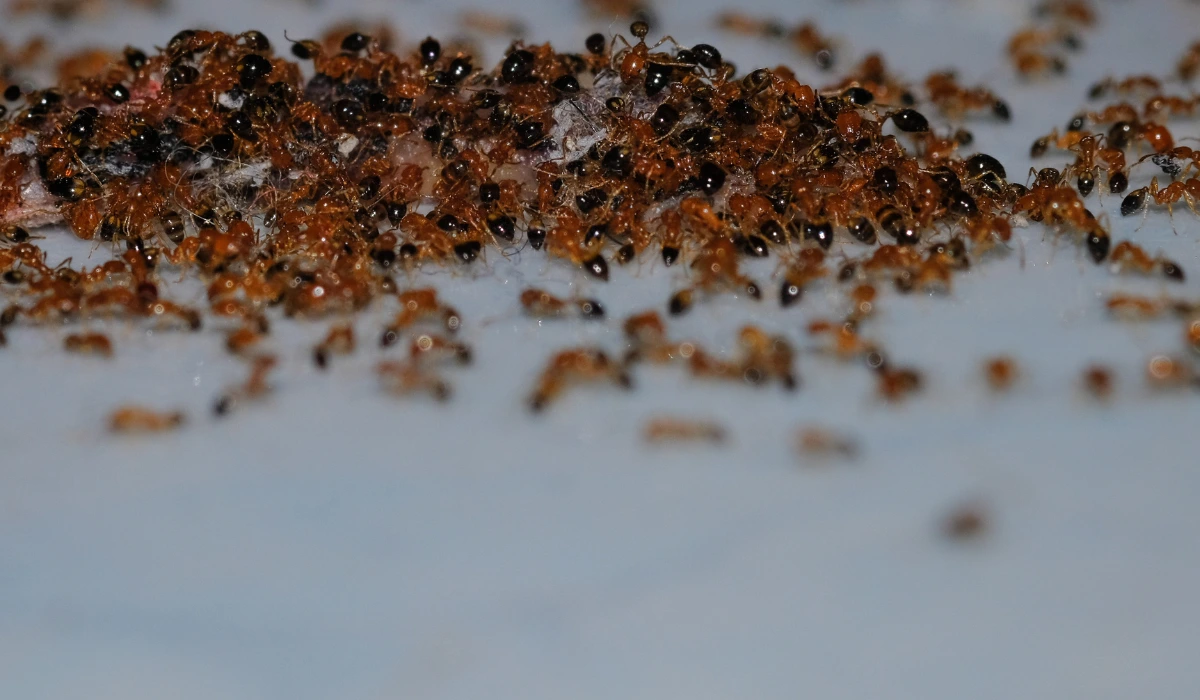
An ant trail across the kitchen counter can seem to appear out of nowhere. But usually, the colony has been nearby for some time. The workers you see have found something worth returning for, such as water beneath a sink, crumbs along a cabinet edge, or an opening that gives them an easy route indoors.
That pattern is familiar across Sacramento, Fresno, and other parts of Northern California and the Central Valley. Dry summer weather exists alongside irrigated lawns, gardens, and foundation plantings, so ants can find very different moisture conditions within a small area.
A few ants don’t automatically mean you have a major infestation. The useful questions are which species you’re seeing, what’s drawing it toward the house, and whether the colony is actually indoors. Those answers make ant prevention much more effective.
Key Takeaways
- Argentine ants, odorous house ants, and pavement ants are three of the common ants California homeowners may encounter around kitchens, bathrooms, patios, and foundations.
- Food, moisture, irrigation, and weather shifts can all change where ants forage and how often they enter homes.
- Cleaning, fixing leaks, sealing entry points, and adjusting landscaping can reduce recurring activity, but persistent trails may require professional ant control.
Why Ants Commonly Enter California Homes
Most household ant problems begin with workers looking for resources rather than a colony suddenly establishing itself in the kitchen. The UC Statewide Integrated Pest Management Program explains that ants often nest outdoors and enter buildings while searching for food and water.
That’s why a clean house can still have ants. A leaking irrigation fitting outside, condensation around plumbing, pet food on the floor, or a small amount of syrup under an appliance can support repeated foraging. Ants also need very little space to enter, so gaps around pipes, doors, windows, and utility lines can become regular travel routes.
California Weather Can Change Ant Activity
California weather adds another variable. During long dry periods, dependable water around a house can become more attractive. Rain can temporarily disturb soil nests or change established travel routes.
Neither heat nor rain guarantees ants indoors. The point is that changing outdoor conditions can alter where workers search for food, water, and shelter.
| Condition Around the Property | What Ants May Find |
| Drip irrigation near the foundation | Reliable moisture and damp soil |
| Leaking plumbing or hose connections | A steady water source |
| Fallen fruit or sticky recycling | Sugar-rich food |
| Pet bowls and food residue | Accessible indoor food |
| Shrubs touching the house | A direct route toward the structure |
| Cracks around pipes and utility lines | Protected entry points |
Common Types of Ants in California Homes
Tiny brown ants can look nearly identical while moving across a countertop. Their trails, nesting locations, and behavior often tell you more than color alone.
Argentine ants, odorous house ants, and pavement ants are three types of ants in California that frequently cause problems around residential properties. Each can enter structures, but their nesting habits differ.
| Ant | Appearance | Where Activity Often Starts | Helpful Clue |
| Argentine ant | Small, light to medium brown | Soil, landscaping, irrigation areas, foundations | Large, steady trails with many workers |
| Odorous house ant | Small, brown to dark brown | Moist areas, wall spaces, soil, landscaping | Crushed workers can release a noticeable odor |
| Pavement ant | Small, brown to nearly black | Beneath concrete, stones, patios, and foundations | Activity often appears near cracks in pavement |
Argentine Ants
Argentine ants are especially relevant in California. They often form busy trails along foundations, fences, irrigation tubing, baseboards, and kitchen edges. Large numbers may travel along the same route.
Their colonies can contain multiple queens and connected nesting areas, according to UC Riverside. This helps explain why treating a single visible trail may have little effect on the larger population.
They also feed readily on sweet materials. Outdoors, honeydew produced by aphids and other plant-feeding insects can support heavy ant activity around shrubs and trees.
Odorous House Ants
Odorous house ants often turn up near kitchens, bathrooms, plumbing, and other areas where moisture is available. They may nest outside or use protected spaces associated with a building.
Their common name comes from the noticeable odor released when workers are crushed, often compared with rotten coconut. That clue can help narrow down the species, although appearance and nesting location should also be considered.
Pavement Ants
Pavement ants favor protected nesting sites beneath hard surfaces. Patios, driveways, sidewalks, slabs, and foundation edges are all common places to inspect when workers repeatedly appear indoors.
The University of Minnesota Extension notes that pavement ants commonly nest beneath pavement, stones, and building foundations. Workers may move through nearby cracks while looking for sweet or protein-rich foods.
What Attracts Ants to California Homes
Ant activity usually makes more sense once you look beyond the trail itself. Food, water, landscaping, and weather often explain why one part of a property has far more activity than another.
Moisture
A major plumbing leak isn’t necessary. Slow drips beneath sinks, damp cabinet wood, condensation, hose connections, and irrigation emitters can provide water day after day.
Outdoor moisture matters just as much. In Sacramento or Fresno, a summer yard may look dry while soil beneath mulch or beside a drip line stays damp. That small patch can sit only inches from a foundation opening.
Food
Indoors, ants may find juice residue, grease, crumbs, pet food, or spills beneath appliances. Trash and recycling bins can also provide food when sticky containers sit for several days.
Outside, fallen fruit and honeydew can support colonies close to the house. If ants repeatedly climb the same shrub or tree, check for aphids or scale insects rather than assuming the structure is the original food source.
Weather Shifts
A sudden increase in ants doesn’t always mean the colony suddenly became larger. Conditions outside may simply have changed.
A stretch of hot, dry weather can make dependable moisture more useful. Rain can change soil conditions or existing foraging routes. That’s why ants in a house may seem to appear after a weather change even when nothing obvious has changed inside.
How to Prevent Ants From Entering Your Home
Effective ant prevention starts with removing the resources ants are repeatedly finding. After that, focus on the routes they use to reach the structure.
Remove Food and Water Sources
Clean sticky residue from counters and floors, including spaces beside and beneath appliances. Store open pantry foods in closed containers, rinse food packaging before recycling it, and pick up pet food after feeding.
Check water sources at the same time. Repair dripping faucets and pipe connections, inspect hose fittings, and look for irrigation that keeps soil wet against the foundation.
Seal Common Ant Entry Points
Inspect the places where pipes, cables, doors, and windows meet the structure. Seal practical gaps, replace worn door sweeps, and repair screens where ants and other pests can enter.
Small openings matter because ants can repeatedly use the same narrow route once they find it. Sealing those gaps won’t eliminate an established colony, but it can make indoor access more difficult.
Adjust Landscaping Near the Foundation
Trim branches and shrubs that touch siding or rooflines. Avoid piling damp mulch or leaf litter directly against the house.
Irrigation deserves special attention. If an emitter is dripping beside the foundation, repairing or repositioning it may remove one of the conditions supporting nearby ant activity.
| Area to Check | Look For | What You Can Do Now |
| Under sinks | Drips or damp cabinet surfaces | Repair leaks and dry the area |
| Kitchen floor | Food beneath appliances or cabinets | Vacuum and clean residue |
| Pet feeding area | Food left between meals | Store food and clean bowls |
| Foundation | Gaps around pipes and utilities | Seal accessible openings |
| Landscaping | Branches touching the house | Trim vegetation back |
| Irrigation | Wet soil beside the structure | Adjust leaking or misplaced emitters |
| Trash and recycling | Sticky containers or open lids | Rinse containers and close bins |
When DIY Ant Control Stops Working
Killing the workers you can see is different from controlling the colony that keeps supplying them. If the nest remains active, another group of workers may eventually use the same route or find a new one nearby.
Signs the Problem Is Bigger Than One Trail
Pay attention when ants return after repeated cleaning, appear in several rooms, emerge from wall gaps, or form heavy trails around more than one side of the house. Those patterns suggest the source isn’t limited to one spill or one entry point.
Surface sprays can make activity disappear temporarily, but that doesn’t necessarily mean the colony is gone. This is especially relevant with Argentine ants, which can maintain connected nesting areas outside the structure.
Use DIY Products Carefully
Avoid combining several pesticide products in an attempt to get faster results. Some treatments can interfere with one another, particularly when a repellent spray is applied close to an area where ants are expected to feed on bait.
If you use any pesticide yourself, follow the product label exactly. Keep products away from food, children, and pets according to the label directions.
When to Call a Professional
Professional ant control is worth considering when sanitation, moisture correction, and exclusion don’t change the pattern. Species identification and an exterior inspection can help determine whether the activity is tied to landscaping, irrigation, foundation gaps, or colonies that are difficult to reach.
Keeping Ant Problems From Becoming a Routine
Ants are common around California properties, but recurring indoor trails usually have an identifiable cause. Checking food, water, landscaping, and entry points gives you several practical ways to reduce activity before the problem becomes routine.
If ants continue returning after those conditions have been corrected, a professional inspection can help identify the species, locate likely nesting and foraging areas, and choose treatment based on what is actually happening around the property.
Official Pest Prevention provides ant control for homes throughout Northern California and the Central Valley. If ants keep coming back despite the steps above, contact Official Pest Prevention to have the property assessed and discuss a treatment plan aimed at the source of the activity.
Ants in California: FAQs
What are the most common ants in California homes?
Argentine ants, odorous house ants, and pavement ants are three common household species worth recognizing. Argentine ants often form large trails, odorous house ants are associated with moisture and a noticeable odor when crushed, and pavement ants commonly nest beneath concrete and similar hard surfaces.
Why do ants suddenly show up in my house?
Ant activity can increase when workers find a new food or water source or when outdoor conditions change. Hot, dry weather may make indoor moisture more attractive, while rain can affect soil nests and established travel routes. A new trail doesn’t always mean the colony itself is new.
What attracts ants indoors?
Food, moisture, and easy access are the main factors. Crumbs, grease, pet food, plumbing leaks, condensation, and irrigation near the foundation can all support ant activity. Outdoor food sources, including fallen fruit and honeydew from plant-feeding insects, can also keep colonies close to the house.
How can I keep ants out of my home?
Start by cleaning food residue, storing food securely, fixing leaks, and adjusting irrigation near the foundation. Then seal accessible gaps around pipes, doors, windows, and utility lines. Trimming vegetation away from the structure can also remove routes ants use to reach the house.
When should I call pest control for ants?
Call a professional when ants return after repeated cleaning and exclusion, appear in several rooms, emerge from walls, or form heavy trails around multiple parts of the property. Those patterns can point to a larger colony or nesting area that is difficult to reach with basic DIY methods.
