If you live in California and see clusters of black bugs with red markings around your home, you are not alone. Boxelder bugs appear across California every year, especially when seasons change and temperatures shift. Homeowners often see them on sunny walls, near windows, or clustered around doors, which quickly becomes frustrating.
At first, a boxelder bug may not seem like a serious problem. When they appear in large numbers, the situation feels overwhelming fast. They do not bite or damage buildings, but they still earn a reputation as a nuisance pest. Once they get inside, they become hard to ignore.
Knowing why boxelder bugs appear in California, how to identify them, and when boxelder bug control in California makes sense helps you stay ahead of the problem. With proper prevention steps, you can stop these insects from taking over your space.
Key Takeaways
- Boxelder bugs are a common nuisance pest across California, especially near host trees.
- Proper identification helps distinguish them from stink bugs and other true bugs.
- Sealing entry points and reducing attractants lowers the risk of infestation.
- Professional pest control provides long-term protection when pests appear in large numbers.
Video: Boxelder Bug Facts
This short video breaks down boxelder bug behavior, appearance, and habits in a clear, easy-to-follow way. It explains why these insects gather on homes and trees and how their life cycle affects seasonal activity. Homeowners often find it helpful for quick visual identification and better understanding of what they are dealing with.
What Boxelder Bugs Are and Why They Show Up in California
Boxelder bugs belong to the Rhopalidae family and are part of the true bug group known as Hemiptera. The most common species in California is the western boxelder bug, known as Boisea rubrolineata. A related species lives mostly in the eastern United States.
These insects rely on certain trees to survive. They feed on seedpods and seeds from boxelder trees, maple, and ash trees. The boxelder maple attracts them more than most trees, especially female trees that produce seeds.
As the weather cools in late summer, adult boxelder bugs start looking for warm places to spend the winter. That search often leads them to homes, garages, and buildings, where they gather on sunny walls before slipping inside.
How To Identify A Boxelder Bug
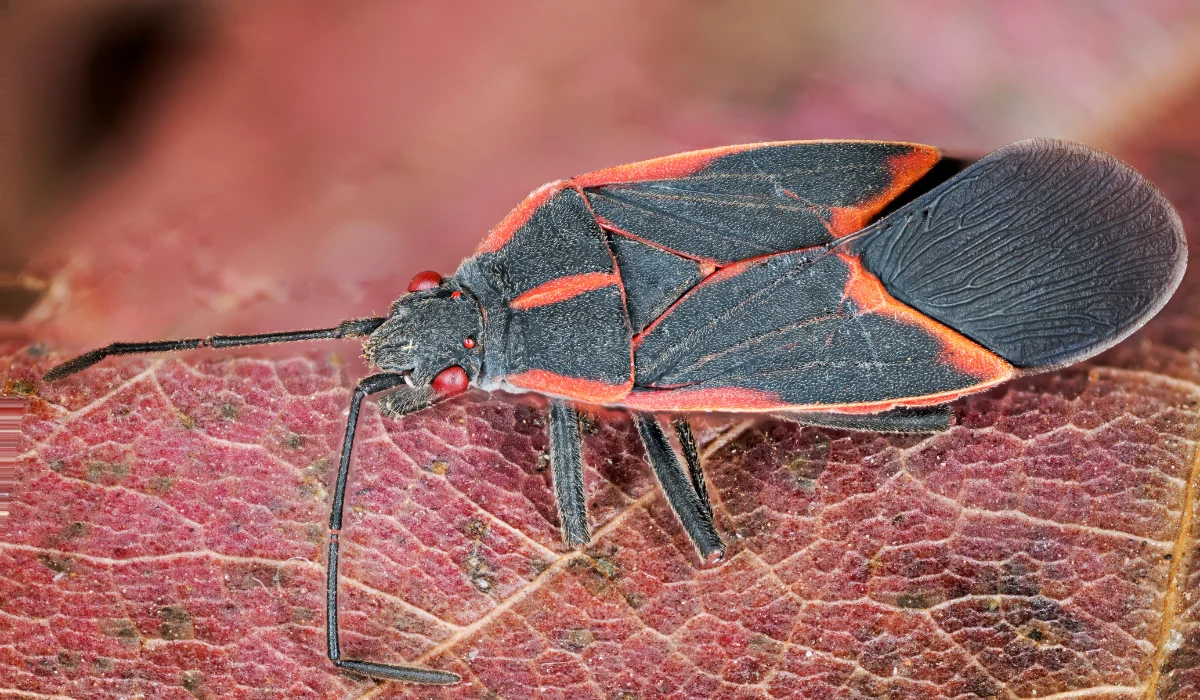
Spotting a boxelder bug is easier when you know what to look for. Adult boxelder bugs grow to about half an inch long and have flat, narrow bodies. Their black bodies stand out with bright red lines on their wings. The underside often appears brighter red.
They use their mouthparts to feed on plants, not people or pets. Younger nymphs look smaller and rounder and appear bright red before darkening as they grow.
Homeowners sometimes confuse them with stink bugs, but boxelder bugs do not release strong odors. Their habit of gathering in large groups around buildings helps confirm their identity.
Understanding The Boxelder Bug Life Cycle
The boxelder bug life cycle explains why infestations appear and disappear. In spring, adults leave hiding spots and return to host trees to lay eggs on bark and leaves. The eggs hatch into nymphs that feed and grow through several stages.
By late summer, nymphs become adults and populations peak. At this stage, homeowners often notice a boxelder bug infestation as the bugs search for shelter. When temperatures drop, they overwinter inside wall voids, soffits, and other protected spaces.
They do not reproduce indoors, but their presence during colder months is hard to ignore. When warm weather returns, they try to leave and often appear near windows and light fixtures.
Why Boxelder Bugs Become A Problem Indoors
Boxelder bugs do not damage property, but they still cause problems indoors. When crushed, they leave stains and feces on walls, curtains, and furniture. Their presence can feel unsettling, especially when many appear at once.
They squeeze through small cracks, crevices, gaps in siding, and other openings. Once inside, they hide in wall voids, behind baseboards, and in attics. A vacuum cleaner can remove visible bugs, but it does not fix the source of the problem.
Because sealing gaps and removing visible bugs does not stop the source of the problem, many homeowners turn to professional help.
Practical Ways To Keep Boxelder Bugs Out
Preventing boxelder bugs in California starts with sealing entry points. Sealing cracks around windows, doors, and foundations with caulk makes a big difference. Adding weatherstripping and fixing damaged screens reduces easy access.
Check soffits, vents, and utility openings, since homeowners often miss these areas. Reducing clutter and trimming plants near the home helps limit hiding spots.
Some homeowners try pesticides, but surface treatments only provide short-term relief. Chemical control without proper inspection often misses hidden areas where bugs overwinter.
When Professional Pest Control Makes Sense
When boxelder bugs return year after year, professional pest control is often the best option. A trained pest control service focuses on inspection, targeted treatment, and long-term prevention instead of quick fixes.
Homeowners searching for boxelder bug control often face recurring problems tied to nearby host trees. In these cases, professionals identify risk areas and treat them carefully.
Our technicians focus on limiting entry, reducing populations, and preventing future infestations. Their approach goes beyond basic spraying and focuses on prevention.
Making The Right Choice For Long-Term Prevention
Seasonal boxelder bug activity can be frustrating, especially when it continues year after year. Taking action early helps reduce recurring issues and limits how often these insects return to your living spaces.
At Official Pest Prevention, we focus on stopping repeat invasions by addressing the conditions that allow boxelder bugs to keep coming back, rather than relying on short-term fixes.
Contact us today to schedule an inspection and take the next step toward long-term protection.
FAQs
What attracts boxelder bugs to homes in California?
Boxelder bugs are drawn to warmth and nearby host trees, especially boxelder and maple trees. As temperatures cool, they move toward sunny walls and slip inside through small openings to overwinter.
Are boxelder bugs dangerous to people or pets?
No, boxelder bugs do not bite, sting, or spread disease. They are considered a nuisance pest because of their numbers, staining, and tendency to invade indoor spaces.
Do pesticides permanently eliminate boxelder bugs?
Pesticide and insecticide treatments can reduce visible bugs but rarely solve the problem on their own. Long-term control depends on sealing entry points and addressing overwintering areas with professional help.