You spot a spider dashing across the bathroom tile at night, or notice a fat, round-bodied one sitting still in a web behind the water heater. Maybe you’re clearing out the shed and freeze halfway through, unsure if the dark shape in the corner is worth backing away from. In any of these moments, the first useful step is knowing exactly which spider you’re looking at.
California spiders include several species that look and behave differently enough to tell apart once you know what to check. This guide walks through the ones you’re most likely to run into around a home, how to identify each one, and when a sighting is worth a closer look from a professional.
Key Takeaways
- California is home to several spider species, but black widows, wolf spiders, orb weavers, and house spiders are the ones you’re most likely to find in and around your home.
- A shiny black body with a red or orange hourglass marking is the single feature that confirms a black widow, while a fast-moving, web-free hunter on the ground is almost always a wolf spider.
- Clutter, gaps around doors and windows, and outdoor lighting near entryways create the conditions that let spiders settle in and keep coming back even after you clear out webs.
- Brown recluse spiders aren’t established in California, so most bites blamed on them are actually from other species, and a professional inspection can confirm what’s really in your home.
Common Spiders Found in California
California hosts dozens of spider species, but only a handful show up regularly around houses and yards. Here’s what each one looks like and how it typically behaves.
Black Widow Spiders
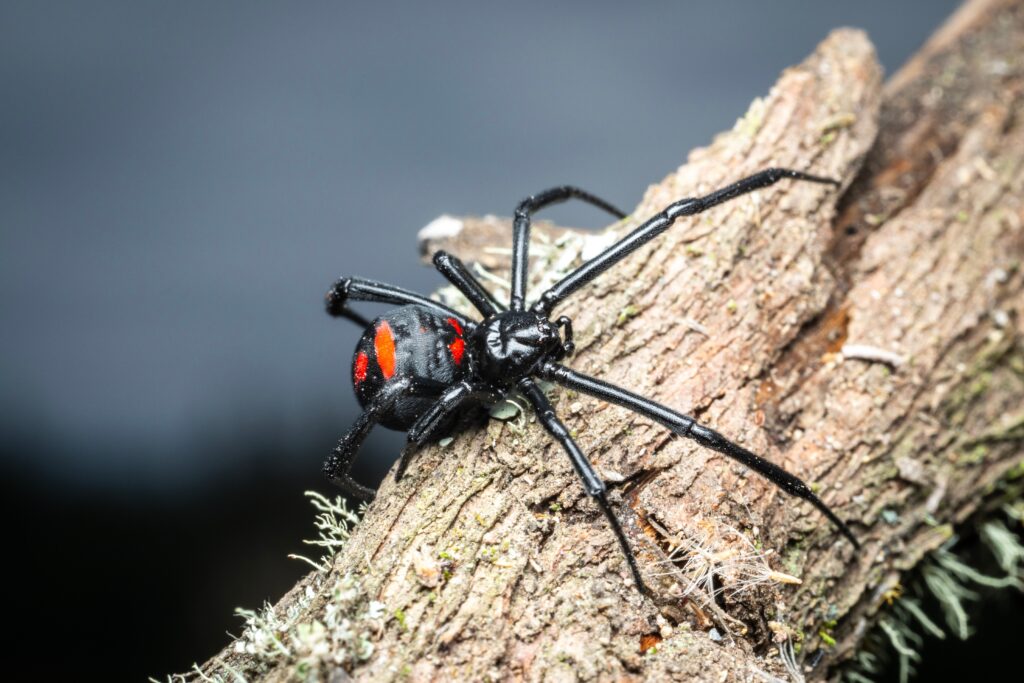
The black widow is the species most homeowners want to identify correctly. Adult females have a shiny black, round abdomen with slender black legs and a red or orange hourglass mark on the underside. Males and immature females look different: they’re smaller, with tan abdomens and white stripes, and are rarely noticed.
Black widows build irregular, tough, sticky webs and hang upside down in them, which is when the hourglass marking becomes visible. If you’re noticing more webbing than usual around the same spot, these black widow infestation signs can help you gauge whether it’s an isolated sighting or something more established.
Wolf Spiders
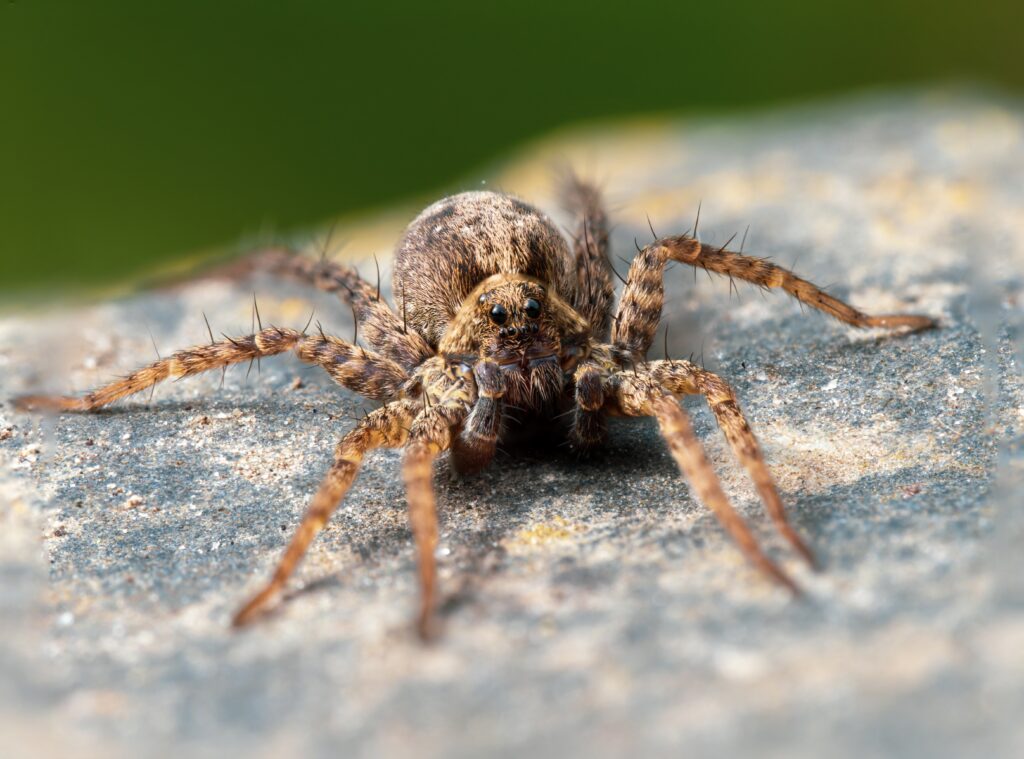
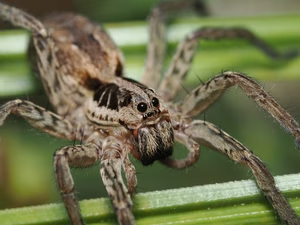
Wolf spiders are ground-dwelling hunters rather than web-builders. They’re brown to tan, often with darker markings, and have long, hairy legs that make them look larger than they are. Because they don’t spin webs to catch prey, you’re more likely to spot one running across a floor or garage at night than to find evidence of one hiding. A flashlight can help: their eyes reflect green light.
Orb Weavers and Other Web-Building Spiders
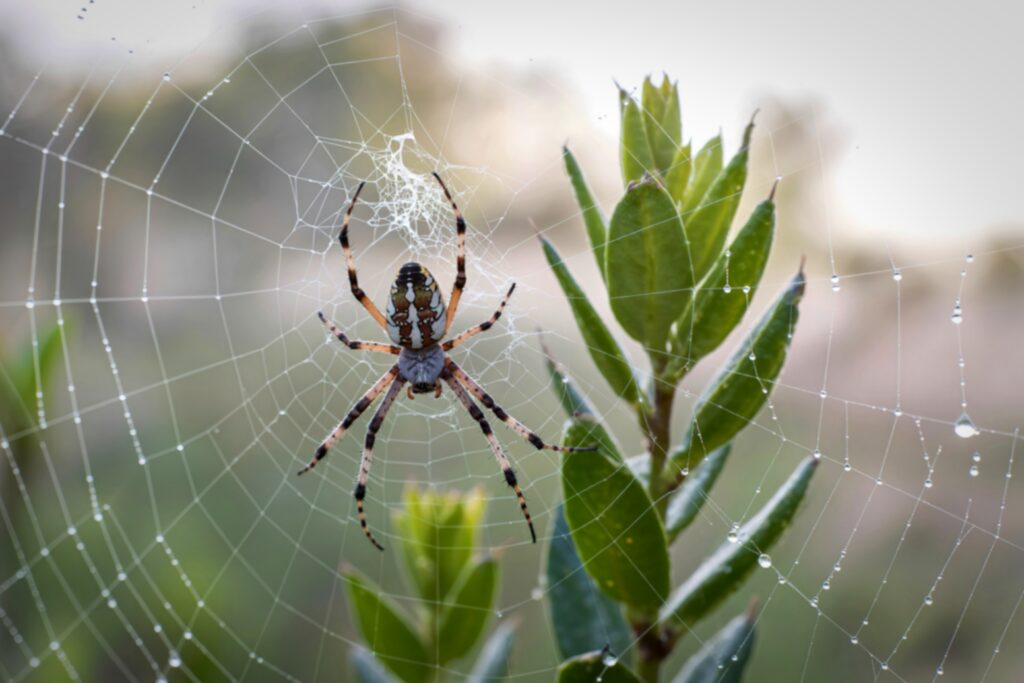
Orb weavers spin the large, wheel-shaped webs most people picture when they think of a spider web, typically strung between plants, along eaves, or near outdoor lighting. These spiders have poor eyesight and rely on vibrations in the web to detect prey, so they tend to stay put once a web is built.
Female orb weavers often rebuild their web fresh each evening, which is why a web that seemed to vanish overnight is probably just a new one going up nearby. They’re not aggressive toward people and rarely end up indoors.
House and Cellar Spiders

Common house spiders build cobwebs in corners, windows, and other undisturbed indoor spots. Cellar spiders have long, thin legs and small bodies. Both groups are considered only marginally capable of biting people, since their fangs are usually too short to break skin. Their main impact is cosmetic: messy webs in corners and along baseboards.
How to Identify and Locate California Spiders
Once you know the basic types, telling them apart comes down to a few visual cues and knowing where each one tends to turn up.
Key Identification Cues
Body shape and web style are the fastest ways to sort one spider from another:
- A shiny black spider with a round abdomen hanging in a tangled web is worth a closer look for the hourglass marking.
- A fast-moving brown spider with no web nearby is more likely a wolf spider.
- A large, symmetrical wheel-shaped web outdoors points to an orb weaver.
- Loose cobwebs tucked into corners usually mean a house or cellar spider has moved in.
Common Hiding Spots
Outdoors, look for webs along eaves, fences, porch railings, and garden structures. Black widows favor dry, sheltered, undisturbed places such as woodpiles, storage sheds, and cluttered garage corners. Wolf spiders tend to stay near ground level, often in litter and low vegetation close to landscaped borders. Orb weavers set up near outdoor lighting, since the insects those lights attract are their main food source.
Indoors, gaps around doors, windows, and utility openings give spiders a way in. Foundation cracks and the space beneath garage doors are common access points as well. Once inside, most spiders head for quiet, low-traffic areas that mimic the dark, dry spots they prefer outdoors.
Spiders Worth Extra Caution
Most spiders you find around a California home are harmless. A few bites are worth knowing about so you can tell when a sighting calls for more than a shrug.
Black Widow Bites
The black widow is the one exception that deserves real caution. Its bite can cause reactions ranging from mild discomfort to more serious internal symptoms, though UC’s Statewide IPM Program notes that death from a black widow bite is very unlikely, especially with prompt medical attention. Anyone bitten should stay calm and seek medical advice rather than waiting to see how symptoms develop.
Other Bites to Know About
Brown recluse spiders are often mistaken for the cause of bites in California, but the species does not maintain breeding populations here. Penn State Extension’s research on the species notes that even in areas where brown recluse are established, confirmed bites are rare and most cause no reaction beyond a small, healing bump. One occasionally arrives inside firewood, furniture, or a vehicle from another state, but ongoing infestations aren’t a realistic concern here.
Wolf spider bites, when they do occur, usually cause no more than mild, short-lived discomfort, similar to a bee sting. If you experience an unusual or worsening reaction to any spider bite, contact the California Poison Control System at 1-800-222-1222.
Keeping Spider Activity Down
Reducing what draws spiders to a property works better than reacting to individual sightings. TheEnvironmental Protection Agency recommends focusing on prevention by removing the conditions pests need to survive, such as food, water, and shelter, rather than waiting until a problem takes hold.
Outdoor Prevention Steps
- Trim vegetation and clear debris away from the foundation to remove hiding spots.
- Move outdoor lighting away from doorways when possible, since fewer insects nearby means less reason for spiders to build webs close to your house.
- Remove webs and egg sacs from siding and eaves on a regular basis to keep populations from building up over time.
Indoor Prevention Steps
- Clear clutter in garages, sheds, and closets so fewer undisturbed corners are available.
- Seal cracks around the foundation, doors, and windows to cut off entry points.
- Vacuum or sweep storage areas, corners, and other seldom-used spaces on a regular basis.
California Spiders: Bottom Line
Most of what turns up around a California home doesn’t call for anything beyond a broom and a bit of patience: house spiders in the corners, an orb weaver’s web by the porch light, a wolf spider making a run for the garage. The one to take seriously is the black widow, and now that you know its markings, a sighting doesn’t have to mean guesswork.
What’s harder to manage on your own is a pattern that keeps repeating: fresh webs within days of clearing them out, egg sacs collecting on the siding, or spiders turning up indoors more than once or twice a season. That usually means something about the property, like a gap near the foundation or an insect population nearby, is drawing them back faster than you can clean.
Official Pest Prevention has been family-owned and serving Northern and Central California since 2000. Our local technicians work across Fresno, Sacramento, and the surrounding communities and can inspect your property, identify what’s contributing to recurring spider activity, and recommend a treatment plan based on your home’s conditions. If spiders keep showing up despite your best efforts, schedule an inspection to learn what’s attracting them and how to help keep them from coming back.
Frequently Asked Questions
How can I tell if a spider in my house is a black widow?
Look for a shiny black, round abdomen and a red or orange hourglass mark on the underside. Only adult and larger immature females have this marking; males and young spiders look different and are far less likely to bite.
Are brown recluse spiders a real concern in California?
Not typically. Brown recluse spiders don’t have established breeding populations in the state, though one may occasionally arrive in firewood, furniture, or a vehicle from elsewhere. A true recluse has six eyes instead of the usual eight, which a pest professional can check under magnification if you’re unsure what you’re looking at.
Why do I keep finding wolf spiders in my garage?
Wolf spiders hunt on the ground rather than building webs, so they often wander into garages, sheds, and other ground-level spaces while searching for insects to eat. Clearing clutter and sealing entry points can reduce how often they show up.
When should I call a pest control company about spiders?
Consider professional help if you’re seeing black widows regularly, dealing with heavy web buildup, or finding spiders indoors more often than seems normal. A technician can identify the species involved and recommend treatment suited to your property.