Mosquitoes in California can create costly problems when early signs are missed. Learn what to look for, why it matters, and when to call Proforce.
Are There Mosquitoes in California?
Yes, mosquitoes are present across California, and they can be a concern for homeowners throughout much of the year. Several species live in the state, and some can bite both outdoors and indoors. Understanding which mosquitoes you may encounter, the risks they carry, and how to reduce breeding around your property can help you stay ahead of the problem.
In the sections below, we cover how to identify common mosquitoes in California, the health risks associated with their bites, practical prevention steps you can take at home, and how professional mosquito control from Official Pest Prevention can help protect your yard. If you are already dealing with mosquito activity around your home, contact Official Pest Prevention to request a quote.
How to Identify California Mosquitoes
California is home to multiple mosquito species, and telling them apart can help you understand what you are dealing with around your property. Different species vary in size, color, and markings, so a closer look at a landed mosquito can reveal useful details.
How to Tell Mosquito Types Apart in California
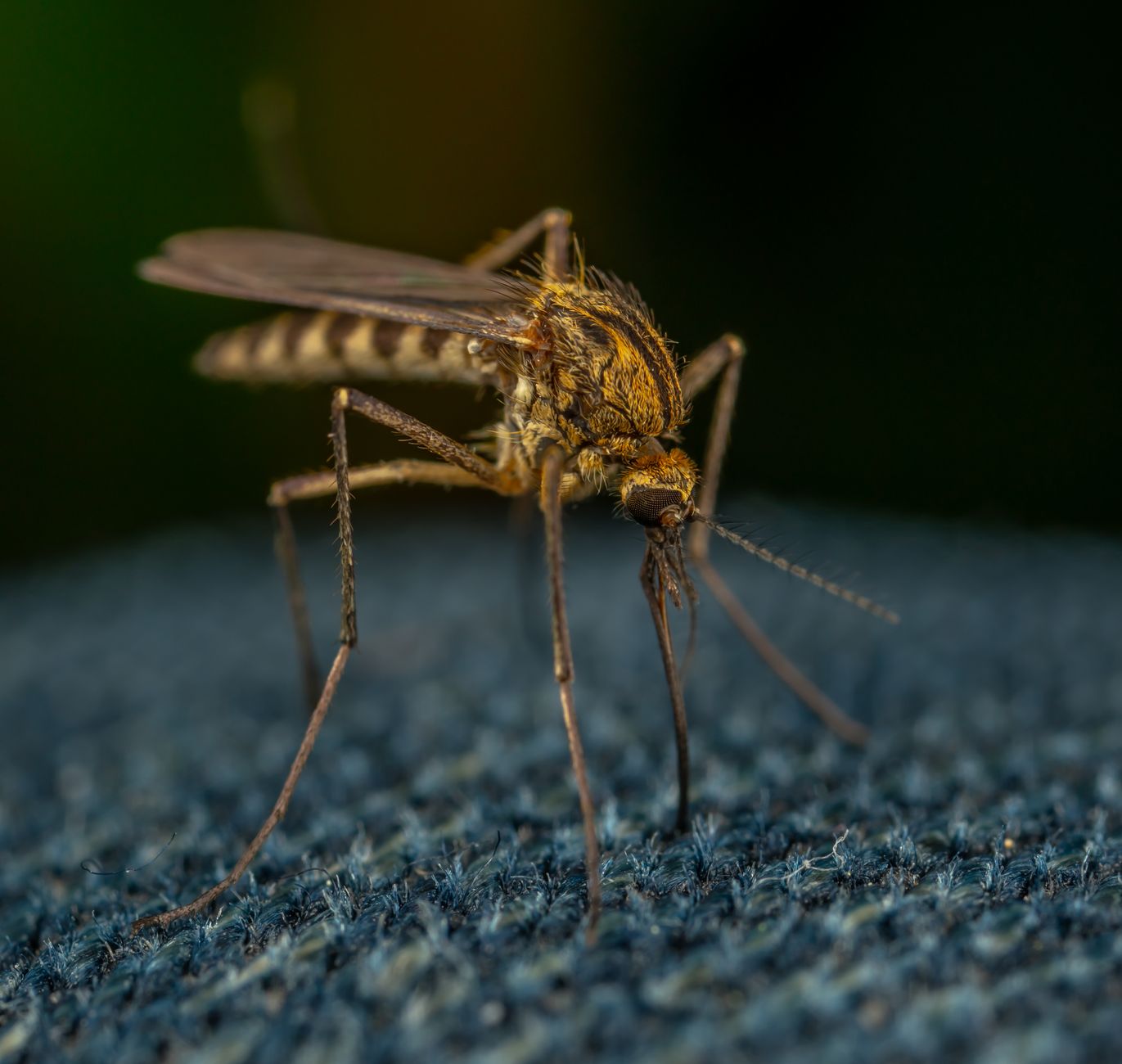
One way to distinguish mosquito species is by examining body markings. Aedes mosquitoes, for example, often display white banding on the basal section of their abdominal segments. According to UF/IFAS Extension, white coloration on the tip of the palps and a ring of white scales on the middle of the proboscis can also help separate Aedes species from similar-looking mosquitoes. Other species, such as Culiseta melanura and Culex erraticus, lack these bold white markings and tend to appear uniformly dark or brown.
How to Spot Mosquito Activity Inside Your California Home
Mosquitoes that find their way indoors often rest on walls, ceilings, or curtains between feedings. According to UC IPM, some mosquito species are active at dawn and dusk while others remain active throughout the day. If you notice biting activity at varied hours, more than one species may be present inside your home.
Listen for the high-pitched buzzing near your ears, especially after dark. Finding mosquitoes resting in dim corners or near interior doorways can also confirm indoor activity.
Where Mosquito Activity Shows Up Around California Homes
Outdoors, you may notice mosquitoes hovering in shaded, sheltered areas of your yard. Activity tends to concentrate near vegetation and any spot where standing water collects. Because different species keep different schedules, you may encounter biting pressure during early morning, evening, or even midday depending on the species present.
Exterior Entry Points Mosquitoes Use Around California Homes
Mosquitoes follow air currents through open doors, unscreened windows, and gaps around garage entries. Any opening large enough for a small flying insect can serve as an entry point. Keeping doors closed during peak activity hours and checking window screens for tears are simple ways to reduce the number of mosquitoes that make it inside.
Our local team serves Fresno, Elk Grove, West Sacramento, Stockton, Modesto, and surrounding communities.
Why Mosquito Problems Develop in California
Mosquitoes are present across the United States, and California is no exception. According to the EPA, the country hosts about 200 different species of mosquitoes, each adapted to specific environments. Several of those species thrive in the varied climates found throughout California, and understanding what draws them to your property is the first step toward managing them.
Outdoor Nesting Areas for Mosquitoes Around California Homes
Every mosquito species shares the same four-stage life cycle: egg, larva, pupa, and adult. The first three stages depend on water. Birdbaths, clogged gutters, plant saucers, and any container that holds standing water can become a nursery. Even a small amount of collected rainwater is enough for eggs to develop through the larval and pupal stages before adults emerge and disperse around your yard.
Food and Shelter That Attract Mosquitoes Around California Homes
Adult mosquitoes feed on nectar and other plant juices for energy. Lush landscaping, flowering shrubs, and shaded garden beds give them both food and resting spots during the hottest parts of the day. Female mosquitoes also require a blood meal to nourish and develop their eggs, which is why they seek out people and animals around your home.
How Mosquitoes Move Around California Homes
Once adults emerge from standing water, they fly toward nearby sources of nectar and sheltered vegetation. Because females need blood meals to reproduce, they follow carbon dioxide and body heat toward occupied outdoor spaces. This movement pattern means a single water source on or near your lot can lead to mosquito activity across your entire yard.
Trails and Entry Points Mosquitoes Use in California
Mosquitoes follow the path from breeding water to feeding areas, resting in shaded spots along the way. Open doors, unscreened windows, and gaps around entryways give them access to indoor spaces. Reducing standing water and maintaining screens are straightforward steps you can take. For additional support, contact Official Pest Prevention to request a quote for mosquito service in your area.
Risks From California Mosquitoes
Mosquitoes in California create more than a nuisance buzz. Certain species can carry diseases, bite indoors, and disrupt everyday comfort around your home. Understanding the risks helps you decide when to take action and when to call in a professional.
Health Risks Linked to California Mosquitoes
Some mosquito species can act as bridge vectors, transmitting diseases between infected birds and uninfected mammals, including humans. According to UF/IFAS Extension, the black salt marsh mosquito is one species capable of bridging diseases like Eastern Equine Encephalitis (EEE) from birds to people. When disease-transmitting mosquitoes are suspected in an area, larvae may be submitted to specialists for species identification, as Purdue Extension notes.
Aedes mosquitoes add another layer of concern because they frequently bite indoors, according to the EPA. That means the health risks from mosquitoes are not limited to your backyard. Indoor biting activity can catch homeowners off guard and increase your exposure to mosquito-borne diseases inside your own living space.
Property Damage From Mosquitoes in California
Mosquitoes do not cause structural damage to your home the way termites or rodents do. However, any site that accumulates standing water can become an active breeding ground. Birdbaths, clogged gutters, plant saucers, and other water-holding features on your property can sustain mosquito larvae. Sites identified as actively breeding mosquitoes should be noted for follow-up control efforts.
Food Areas and Mosquito Activity in California Homes
Because Aedes mosquitoes frequently bite indoors, kitchens, dining areas, and any space where your family gathers can see unwelcome mosquito activity. Standing water near food preparation or outdoor eating areas provides a convenient breeding site and keeps mosquitoes close to where you spend time. Inspecting these zones for accumulated water is a practical first step.
When to Look Closer at Mosquito Activity in California
Any site on your property that accumulates standing water should be inspected for possible mosquito breeding. If you notice persistent biting, especially indoors, it may signal that Aedes mosquitoes or other species are breeding nearby. When disease-transmitting mosquitoes are suspected, professional identification of larvae can help guide the right response.
Official Pest Prevention serves homeowners across Fresno, Elk Grove, West Sacramento, Stockton, Modesto, and other California communities. If mosquito activity around your home is growing, contact Official Pest Prevention to request a quote and learn about larvicide treatment options.
Professional Pest Control for Mosquitoes in California
Reducing mosquito pressure around your home involves a combination of habitat management, routine inspection, and professional treatment. Because mosquitoes can carry diseases that pass from birds to people through bites, according to Centers for Disease Control and Prevention, staying ahead of breeding activity is worth the effort. Here is what you can do and what to expect when you work with Official Pest Prevention.
How to Reduce Attractants for Mosquitoes in California
Mosquitoes need standing water to breed. Walk your yard and look for any container, depression, or fixture that holds water for more than a few days. Emptying or overturning those items removes potential breeding sites before larvae have a chance to develop.
Keep gutters clear so water drains freely, and check less obvious spots such as plant saucers and clogged drainage areas. Consistent upkeep between service visits helps extend the results of professional treatment and keeps your outdoor spaces more comfortable.
Why Mosquito Control in California Starts With Inspection
An inspection helps identify where mosquitoes are breeding and resting on your property. Our local service professionals look for standing water sources and conditions that support larval development so treatment can be directed where it matters most.
In some areas of California, local mosquito and vector control districts may also be available to assist with managing these insects, as UC IPM notes. Official Pest Prevention works alongside those public resources by focusing on the conditions specific to your yard and home.
What to Expect During Professional Mosquito Treatment in California
There is no need to prep your yard before our team arrives. Our service professionals apply Natular DT Larvicide to targeted water-holding areas on your property. This larvicide is designed to kill mosquito larvae and prevent breeding at the source.
Treatment focuses on the spots identified during inspection. By addressing larvae before they mature into biting adults, the approach targets the problem at its earliest stage. Your technician will walk through what was treated and answer any questions you have before leaving.
What to Expect From a California Mosquito Control Plan
Official Pest Prevention offers recurring mosquito service backed by a re-treat guarantee. If mosquito activity returns between scheduled visits, we come back to re-treat at no additional cost. Recurring service is especially useful during the March through May mosquito season, when breeding conditions are most favorable.
Our team serves homeowners in Fresno, Elk Grove, West Sacramento, Yuba City, Stockton, Modesto, Pleasanton, Livermore, Hayward, and Fremont. Because we are a local company with local technicians and local customer support, scheduling is straightforward and response times are quick. Contact Official Pest Prevention to request a quote and get started with a mosquito control plan tailored to your property.
Bottom Line on Mosquitoes in California
Yes, mosquitoes are present in California, and they can be more than a seasonal nuisance for homeowners. Standing water around your property gives mosquitoes a place to breed, so reducing those sources is one of the most practical steps you can take. When mosquito activity picks up, a targeted approach that addresses both larvae and adults helps keep your yard more comfortable. Contact the team to request a quote.
Frequently Asked Questions About Mosquitoes in California
When Is Mosquito Season in California?
Mosquito activity generally ramps up during warmer months. Official Pest Prevention focuses mosquito services from March to May, which is when many homeowners notice increased activity around their yards.
Do I Need to Prepare My Yard Before a Treatment?
No. Official Pest Prevention does not require you to prep your yard before a service visit. The team arrives ready to get started so the process stays simple on your end.
What Attracts Mosquitoes to My Property?
Standing water is the primary attractant. Any spot that collects water, such as birdbaths, clogged gutters, or plant saucers, can become a breeding site. Emptying or draining these areas regularly helps reduce mosquito numbers around your home.
Does Official Pest Prevention Offer a Guarantee for Mosquito Service?
Yes. Official Pest Prevention provides a re-treat guarantee with recurring service. If mosquito activity returns between scheduled visits, the team will come back to address the issue at no additional charge. Reach out to learn more about recurring service options.
Our methodology: how we research pest control topics
Every Official Pest Prevention article follows the same standard we hold our service work to: clear, accurate, and grounded in what actually works on a real Northern California home. Homeowners across the Sacramento metro and Bay Area communities count on us for honest pest information they can act on, and we treat the writing the same way.
We build our content from a combination of government guidance, peer-reviewed research, and the patterns our technicians see across thousands of homes in our service area. Here is how we approach each article:
Studying pest behavior
We start with how each pest actually lives — where it nests, how it spreads, and what conditions support it. Northern California’s seasonal rain and dry cycles change pest pressure in ways that matter for treatment, and getting the biology right is what tells us what will and will not work.
Reviewing health and home risks
We review research on how each pest affects human health and home structures. Some pests are a nuisance. Others trigger allergies, carry bacteria, or cause structural damage. Knowing the actual risk helps homeowners decide how urgently to act.
Using Integrated Pest Management
Our recommendations are grounded in Integrated Pest Management (IPM), the framework supported by the USDA and EPA. IPM combines monitoring, sanitation, exclusion, and targeted treatment to reduce pest populations while limiting unnecessary product use.
Prioritizing prevention and lasting protection
A pest problem rarely ends with one treatment. We focus on the conditions that allow infestations to start in the first place — moisture, food sources, gaps around the home, harborage zones — because long-term control depends on changing the environment, not just treating the symptoms.
Citing peer-reviewed and government sources
Whenever possible, we support our recommendations with peer-reviewed studies, university extension research, and guidance from agencies like the EPA, CDC, and USDA. Each source we cite is listed at the end of the article.
Why trust us
Official Pest Prevention is a local company with local technicians and local customer support. We serve homeowners across the Sacramento metro and into the Bay Area — Fresno, Elk Grove, West Sacramento, Yuba City, Stockton, Modesto, Pleasanton, Livermore, Hayward, and Fremont. When you call, you reach our team. When a technician shows up, they live and work in your area.
That same standard runs through our content. The information you read here reflects what our technicians see in the field, what current research supports, and what we have learned from servicing homes across our Northern California footprint.
Our credentials
- Service across the Sacramento metro and Bay Area — Fresno, Elk Grove, West Sacramento, Yuba City, Stockton, Modesto, Pleasanton, Livermore, Hayward, and Fremont
- Local technicians and local customer support
- Specialty services including dewebbing and power sprayer treatments
- General pest control, mosquito, rodent, termite, and seasonal pest programs
- Continuous review of research, regulations, and California-specific pest pressure
Sources and standards we reference
To keep our content accurate and up to date, we rely on established research and authority sources, including:
Environmental Protection Agency (EPA):
Guidelines on product use, labeling, and approved applications.
Centers for Disease Control and Prevention (CDC):
Public-health guidance on pests that affect human health, including mosquitoes, ticks, rodents, and cockroaches.
United States Department of Agriculture (USDA):
Integrated Pest Management standards and pest biology research.
National Pest Management Association (NPMA):
Industry standards, pest behavior research, and seasonal trend reporting.
University of California Cooperative Extension:
Peer-reviewed, region-specific research on Northern California pest biology and control methods.
Peer-reviewed journals:
Research published in entomology, public health, and environmental science journals to support specific claims about pest behavior, health risks, and treatment efficacy.
Article sources
The following sources were specifically referenced in the research and development of this article:
All information is accurate at the time of publication and is reviewed regularly to reflect current research and pest control standards.