Mosquito Season in California can create costly problems when early signs are missed. Learn what to look for, why it matters, and when to call Proforce.
Key Takeaways About Mosquito Season in California
- Mosquito activity in California rises after rainfall creates standing water, which serves as a primary breeding ground across residential properties.
- Reducing standing water around your yard and scheduling regular property checks are among the most practical steps to limit mosquito populations near your home.
- Several mosquito species can be present in California, and local vector control districts can help with identification and area-wide management.
- Official Pest Prevention offers larvicide treatments with recurring service and a re-treat guarantee. Contact our local team to request a quote for your property.
How to Identify California Mosquitoes
Knowing what to look for helps you act early during mosquito season in California. Several mosquito species may be present around your property, and each has subtle differences in appearance and behavior. Recognizing these traits and the signs of activity can help you determine when to reach out for professional support.
How to Tell Mosquito Types Apart in California
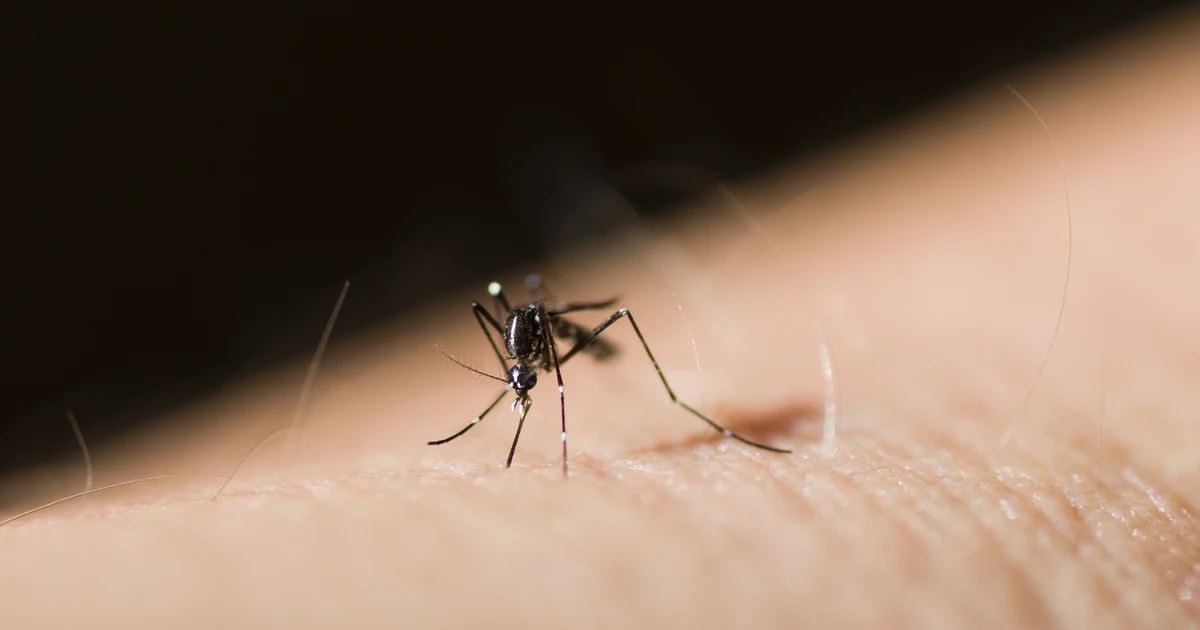
Culex species are among the most relevant mosquitoes in California. According to Centers for Disease Control and Prevention, female Culex tarsalis mosquitoes are documented vectors of St. Louis encephalitis virus. Culex tarsalis adults are black with a conspicuous white band across the middle of the proboscis and white bands on the legs at each joint.
Aedes species, by contrast, often display white banding on the basal section of their abdominal segments. White coloration on the tip of the palps and a ring of white scales on the middle of the proboscis can help distinguish certain Aedes species, such as Aedes taeniorhynchus, from similar mosquitoes.
How to Spot Mosquito Activity Inside Your California Home
Adult mosquitoes feed on nectar and plant juices for energy, but females of most species require a blood meal to develop their eggs. That blood-seeking behavior is what draws them indoors. You may notice them hovering near you during evening hours or hear a distinctive whining sound in bedrooms and living areas.
Where Mosquito Activity Shows Up Around California Homes
Mosquitoes complete four life stages: egg, larva, pupa, and adult. The first three stages are aquatic; the larval period alone typically lasts 4 to 14 days, with the pupal stage adding another 1 to 4 days before adults emerge. Any feature on your property that holds water can support these early stages, so check for pooled water in plant saucers, buckets, and clogged gutters.
Adult females in the field typically do not survive more than about two weeks. Even so, overlapping generations can keep activity steady throughout the season, making it important to address standing water early.
Exterior Entry Points Mosquitoes Use Around California Homes
Mosquitoes can enter homes through any available opening, especially during evening hours when they are most active. Open doors, unscreened windows, and gaps around weather stripping are common ways they get inside. Keeping entry points sealed is one of the simplest steps you can take during mosquito season in California.
If you are noticing consistent mosquito activity around your home, contact Official Pest Prevention to request a quote. Our local team serves Fresno, Elk Grove, Stockton, Modesto, and surrounding areas with targeted mosquito treatments.
Why Mosquito Problems Develop in California
According to the EPA, the United States hosts about 200 different species of mosquitoes, each inhabiting specific environments and displaying distinct behaviors. All share a four-stage life cycle that depends on standing water, which is why yard maintenance matters so much during mosquito season in California.
Outdoor Nesting Areas for Mosquitoes Around California Homes
Mosquitoes lay eggs in standing water, and different species prefer different sources. As the EPA notes, permanent bodies of water like ponds and streams often contain predators that help control larvae, but problematic breeding sites include clogged ditches, marshes, and temporary pools. Rain gutters, old tires, buckets, plastic covers, and toys that collect water can all become breeding spots around your home.
Food and Shelter That Attract Mosquitoes Around California Homes
Heavy rains saturate ground and create standing water that serves as breeding habitat. According to Texas A&M AgriLife Extension, mosquitoes emerge in predictable waves based on their preferred breeding environments. Any container that holds water, even briefly, gives females a place to lay eggs. Plastic pools left uncovered or undrained between uses are a common example.
How Mosquitoes Move Around California Homes
Once adults develop, they search nearby yards for additional standing water to continue the cycle. Each new wave of rainfall or irrigation runoff can restart egg-laying in fresh water sources. Removing or draining those water sources interrupts the cycle before the next generation develops.
Trails and Entry Points Mosquitoes Use in California
Mosquitoes follow moisture toward your home. Store containers upside down, cover them, or dispose of them so mosquitoes cannot lay eggs. Cover or drain plastic pools when not in use. If you notice rising mosquito activity around your property, contact Official Pest Prevention to request a quote for treatment during mosquito season in California.
Risks From California Mosquitoes
Health Risks Linked to California Mosquitoes
Only female mosquitoes bite, consuming blood from humans or animals. Those bites are more than a nuisance. According to Texas A&M AgriLife Extension, Culex species are the primary disease-carrying mosquitoes of concern to public health officials. These mosquitoes prefer stagnant water with high bacteria content and often breed in underground storm drains, making prediction and control challenging.
You can lower your chances of getting bitten by reducing standing water around your home, using repellents, and wearing protective clothing when you spend time outdoors. If disease-transmitting mosquitoes are suspected on your property, larvae can be submitted to specialists for species identification.
Property Damage From Mosquitoes in California
Mosquitoes do not cause structural or material damage to your home. The real cost is comfort. High mosquito activity can make patios and yards unusable during the warmer parts of the day. Any site that accumulates standing water should be inspected for possible breeding, since active sites need follow-up control efforts to keep populations from growing.
Food Areas and Mosquito Activity in California Homes
Outdoor dining and food-prep areas can draw mosquitoes closer to your living spaces. Even small water collections near grills or serving tables can support breeding. Removing standing water from these areas is a step the EPA recommends for managing mosquito populations and supporting disease prevention.
When to Look Closer at Mosquito Activity in California
Culex species typically appear as conditions dry, which means activity can shift with local weather patterns. Mark any site breeding mosquitoes and follow up with control efforts. Your local mosquito abatement or vector control district can provide area-specific guidance on what to watch for.
If you are noticing increased mosquito pressure around your home, Official Pest Prevention can help. Our technicians use Natular DT Larvicide to target mosquito larvae and prevent breeding on your property, and no yard prep is needed before we arrive. Contact us to request a quote or schedule a visit.
Professional Pest Control for Mosquitoes in California
Reducing mosquito pressure around your home takes a combination of yard maintenance, regular checks, and professional support. While store-bought products can help in the short term, their limited duration means most homeowners benefit from a structured approach that pairs prevention with ongoing treatment.
How to Reduce Attractants for Mosquitoes in California
The single most important step you can take is removing standing water from your property. Dumping out containers, clearing clogged gutters, and overturning unused pots can make a real difference. You can also apply larval control products like dunks to water features that cannot be drained.
Adult mosquito sprays sold at retail stores offer some relief, but according to Texas A&M AgriLife Extension, commercial products typically last about 24 hours. That short window means reapplication is constant, and coverage is rarely thorough enough to keep populations down on its own.
Why Mosquito Control in California Starts With Inspection
Moisture collects in places you might not think to check, from low spots in landscaping to forgotten buckets behind a shed. Inspecting your yard after each rain event helps you catch new water accumulations before they become breeding sites.
Making these walkthroughs a habit is key. Regular property inspections after rain are a recommended practice for keeping mosquito numbers manageable throughout the season.
What to Expect During Professional Mosquito Treatment in California
Official Pest Prevention uses Natular DT Larvicide to target mosquito larvae and help prevent breeding on your property. This product stops the next generation before adults develop, addressing the problem at its source rather than chasing flying mosquitoes one spray at a time.
No yard preparation is needed before your appointment. A local technician handles the application so you can skip the hassle of repeated DIY treatments that wear off within hours.
What to Expect From a California Mosquito Control Plan
Because professional barrier treatments also degrade over time, a single visit is not a long-term solution. Official Pest Prevention offers recurring service with a re-treat guarantee, so if mosquito activity picks back up between scheduled visits, the team will return to re-treat your property.
With local technicians serving Fresno, Elk Grove, Stockton, Modesto, and surrounding areas, scheduling is straightforward. Contact Official Pest Prevention to request a quote and set up a mosquito control plan that fits your property.
Bottom Line on Mosquito Season in California
Mosquito season in California is driven by warmth and standing water. As temperatures rise and rain leaves pools around your property, activity can spike. Routine yard checks, clearing anything that holds water, and professional larvicide treatments all help keep populations lower around your home. If you want ongoing support through the season, contact Official Pest Prevention for recurring service and a re-treat guarantee.
Frequently Asked Questions About Mosquito Season in California
When Does Mosquito Season Start and End?
Mosquito activity ramps up as temperatures warm and water collects outdoors. In many parts of California, homeowners may notice mosquitoes from spring into fall. The intensity varies based on rainfall and local conditions, so there is no single start or end date for every area.
Why Are There More Mosquitoes After It Rains?
Rain fills low spots, gutters, and containers with standing water. Those pools become breeding habitat. Even small amounts of collected water can support mosquito development, so clearing standing water after storms is one of the most useful steps you can take.
What Can I Do Around My Yard to Reduce Mosquitoes?
Focus on removing or draining anything that holds water. Walk the property regularly, tip out saucers and buckets, and keep gutters clear. Larvicide products applied to water features that cannot be drained can help control larvae before they become biting adults.
Does Official Pest Prevention Treat for Mosquitoes?
Yes. Recurring service includes a re-treat guarantee, so if activity returns between visits, the team will come back.
Our methodology: how we research pest control topics
Every Official Pest Prevention article follows the same standard we hold our service work to: clear, accurate, and grounded in what actually works on a real Northern California home. Homeowners across the Sacramento metro and Bay Area communities count on us for honest pest information they can act on, and we treat the writing the same way.
We build our content from a combination of government guidance, peer-reviewed research, and the patterns our technicians see across thousands of homes in our service area. Here is how we approach each article:
Studying pest behavior
We start with how each pest actually lives — where it nests, how it spreads, and what conditions support it. Northern California’s seasonal rain and dry cycles change pest pressure in ways that matter for treatment, and getting the biology right is what tells us what will and will not work.
Reviewing health and home risks
We review research on how each pest affects human health and home structures. Some pests are a nuisance. Others trigger allergies, carry bacteria, or cause structural damage. Knowing the actual risk helps homeowners decide how urgently to act.
Using Integrated Pest Management
Our recommendations are grounded in Integrated Pest Management (IPM), the framework supported by the USDA and EPA. IPM combines monitoring, sanitation, exclusion, and targeted treatment to reduce pest populations while limiting unnecessary product use.
Prioritizing prevention and lasting protection
A pest problem rarely ends with one treatment. We focus on the conditions that allow infestations to start in the first place — moisture, food sources, gaps around the home, harborage zones — because long-term control depends on changing the environment, not just treating the symptoms.
Citing peer-reviewed and government sources
Whenever possible, we support our recommendations with peer-reviewed studies, university extension research, and guidance from agencies like the EPA, CDC, and USDA. Each source we cite is listed at the end of the article.
Why trust us
Official Pest Prevention is a local company with local technicians and local customer support. We serve homeowners across the Sacramento metro and into the Bay Area — Fresno, Elk Grove, West Sacramento, Yuba City, Stockton, Modesto, Pleasanton, Livermore, Hayward, and Fremont. When you call, you reach our team. When a technician shows up, they live and work in your area.
That same standard runs through our content. The information you read here reflects what our technicians see in the field, what current research supports, and what we have learned from servicing homes across our Northern California footprint.
Our credentials
- Service across the Sacramento metro and Bay Area — Fresno, Elk Grove, West Sacramento, Yuba City, Stockton, Modesto, Pleasanton, Livermore, Hayward, and Fremont
- Local technicians and local customer support
- Specialty services including dewebbing and power sprayer treatments
- General pest control, mosquito, rodent, termite, and seasonal pest programs
- Continuous review of research, regulations, and California-specific pest pressure
Sources and standards we reference
To keep our content accurate and up to date, we rely on established research and authority sources, including:
Environmental Protection Agency (EPA):
Guidelines on product use, labeling, and approved applications.
Centers for Disease Control and Prevention (CDC):
Public-health guidance on pests that affect human health, including mosquitoes, ticks, rodents, and cockroaches.
United States Department of Agriculture (USDA):
Integrated Pest Management standards and pest biology research.
National Pest Management Association (NPMA):
Industry standards, pest behavior research, and seasonal trend reporting.
University of California Cooperative Extension:
Peer-reviewed, region-specific research on Northern California pest biology and control methods.
Peer-reviewed journals:
Research published in entomology, public health, and environmental science journals to support specific claims about pest behavior, health risks, and treatment efficacy.
Article sources
The following sources were specifically referenced in the research and development of this article:
All information is accurate at the time of publication and is reviewed regularly to reflect current research and pest control standards.