Termites in California can cause costly problems when early signs are missed. Learn the signs, risks, and when to call Official Pest Prevention.
Are There Termites in California?
Yes, termites are present in California, and they can pose a real concern for homeowners. Several types may affect your house, including subterranean termites, drywood termites, and dampwood termites. Formosan termites, while less common, have also been found in parts of the state. Understanding what to look for and how to respond can help you protect your home’s structure over time.
Throughout this guide, you will learn how to identify signs of termite activity, understand the risks termites can create for wood and other materials in your home, and explore both prevention steps and professional treatment options. Whether you are seeing something suspicious for the first time or want to stay ahead of potential problems, knowing the basics puts you in a stronger position.
Every home without preventative termite treatment may eventually deal with termites. A professional inspection remains the most reliable way to confirm whether termites are active and to determine which type you are dealing with.
How to Identify California Termites
Knowing what to look for is the first step toward catching termite activity early. Both subterranean and drywood termites can affect California homes, and a single building may host multiple colonies of the same species or even several different species at once. The signs each species leaves behind are distinct, so understanding those differences helps you figure out what you are dealing with.
How to Tell Termite Types Apart in California
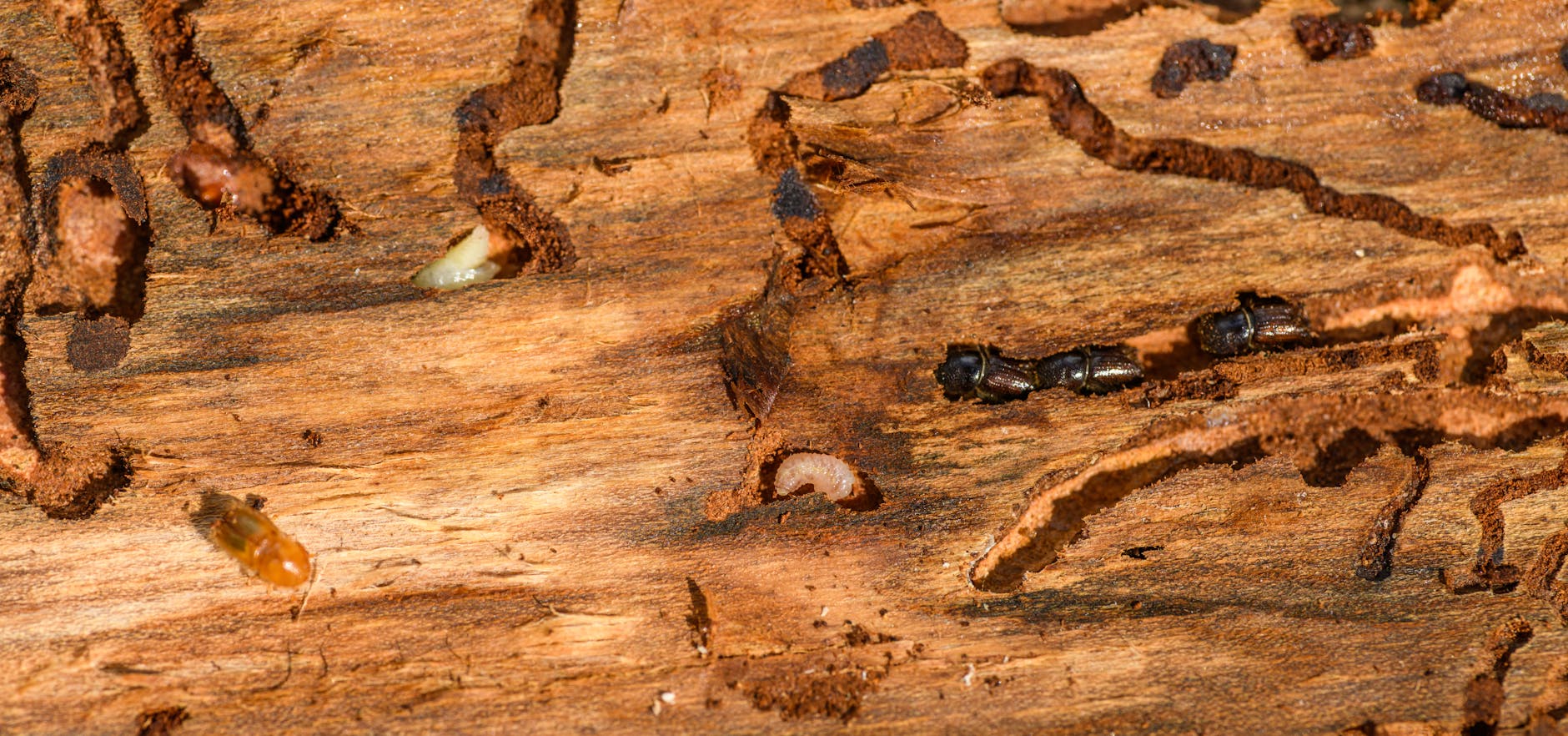
Subterranean termites feed along the grain of wood, attacking the softer springwood while leaving the harder summerwood largely intact. According to UC IPM, this creates a layered, almost honeycomb-like pattern inside damaged wood. That distinctive pattern can often be used on its own to positively distinguish subterranean termite activity from that of other species.
Drywood termite species behave differently. Nests of most drywood species remain entirely above ground and do not connect to the soil. Some species also deposit light-brown excrement within the cavities they create. These small pellets, often called frass, are one of the clearest signs of a drywood infestation.
How to Spot Termite Activity Inside Your California Home
Common signs of termite activity inside your home include mud tubes along walls or foundations, discarded wings near windows or doors, bubbling or blistered paint, and small piles of droppings. Wood that sounds hollow when tapped may also point to feeding damage beneath the surface.
If you notice wood with a layered damage pattern where softer sections have been consumed and harder sections remain, that is a strong indicator of subterranean termites. Drywood species tend to leave behind light-brown excrement pellets in or near the wood they occupy.
Where Termite Activity Shows Up Around California Homes
Subterranean termites typically build mud tubes to travel between soil and the wood they feed on. You may see these pencil-width tubes running along foundation walls or interior surfaces. Because their nests connect to the ground, signs often appear near the base of a structure.
Drywood termites nest entirely above ground. Their signs can show up in attic framing, interior trim, or any exposed wood that does not need soil contact. Finding frass piles below wood members is a common clue.
Exterior Entry Points Termites Use Around California Homes
On the outside, look for mud tubes along the foundation and discarded wings near door frames or windowsills. A building can be infested by multiple colonies or by several different termite species at the same time, so signs may appear in more than one area. A professional inspection can confirm which species are present and where they are active.
Why Termite Problems Develop in California
Termite colonies can grow from several hundred to several million individuals at maturity, according to the University of Georgia termite guide. Understanding where these colonies nest, what draws them to your home, and how they gain access helps you recognize the conditions that lead to termite problems around California properties.
Outdoor Nesting Areas for Termites Around California Homes
Subterranean termites live in the soil and forage outward into structures to reach wood. Any soil near your foundation can serve as a nesting zone. Drywood termites require no soil contact and obtain all the moisture they need from the wood itself and their own metabolic processes, so they can establish colonies entirely within above-ground wood.
Food and Shelter That Attract Termites Around California Homes
Wood is the primary draw. Subterranean termites tunnel from soil into structures, sometimes hollowing wood so thoroughly that only a thin exterior shell remains. Drywood termite colonies can thrive inside wood without any liquid moisture source, which means exposed or accessible wood on your home can support their colonies on its own.
How Termites Move Around California Homes
Native subterranean termite species begin swarming as early as January and are mostly finished by early June, according to the University of Georgia termite guide. These swarmers fly during the morning or early afternoon and are not attracted to lights. They are black to caramel colored and measure 1/4 to 3/8 inch in body length.
The Formosan subterranean termite, an invasive species native to China, produces swarmers that are larger, about 1/2 inch with wings included, and have a caramel-colored body. Formosan colonies also carry a higher proportion of soldiers, around 15%, compared to less than 5% in eastern subterranean termite colonies.
Trails and Entry Points Termites Use in California
Subterranean termites forage from their soil-based colonies into structures to access wood. Because drywood termites need no soil contact or liquid moisture, they can enter and infest wood at any level of your home. Ongoing monitoring matters for California homeowners since activity can develop at any time.
Risks From California Termites
Termites are wood-feeding pests that frequently become household problems. In California, both subterranean and drywood species can threaten your home’s structure and belongings. Understanding the risks these pests pose helps you recognize when to act.
Structural Risks From California Termites
Subterranean termites feed on wood and can compromise the structural integrity of your home over time. If left untreated, termite damage can lead to costly repairs. The two primary castes you may encounter are workers, which do the feeding, and swarmers, which signal a mature colony looking to expand.
Workers build shelter tubes between soil and wood structures, creating protected pathways directly into your home. According to UC IPM, these earth-hardened tubes are made using saliva mixed with soil and bits of wood or even drywall. These tubes allow termites to reach framing and other wood components without exposure.
Hidden Termite Damage in California Homes
One of the biggest risks from termites is how long they can feed before you notice. Termite damage often develops out of sight, inside walls or beneath flooring. By the time visible signs appear, the damage may already be extensive. Drywood termites are particularly difficult to detect because they live entirely within the wood they consume.
Careful inspection is needed so colonies are detected and damage contained. Without a thorough look, these pests can remain hidden for months or longer.
Belongings and Moisture Risks From California Termites
Subterranean termite shelter tubes can incorporate bits of drywall along with wood and soil. Any wood element connected to the ground is vulnerable to their activity. Awareness of these pests is a practical concern for all California homeowners.
When a Termite Problem in California Needs Action
If you spot any of the common warning signs described earlier, such as mud tubes, discarded wings, blistered paint, or frass piles, a professional inspection should be your next step.
According to UC IPM, careful inspection is needed to detect and contain termite damage and colonies in order to make best use of localized treatments, especially for drywood termites. Destroying shelter tubes can disrupt subterranean termite access between soil and wood. Early detection through inspection remains the most important step in limiting damage.
Professional Pest Control for Termites in California
Because termite infestations involve both subterranean and drywood species in California, a layered approach to prevention, inspection, and treatment gives your home the best chance of staying protected. Much of that work requires a licensed pest control professional, but there are steps you can take on your own to make your property less inviting.
How to Reduce Attractants for Termites in California
You can replace termite-damaged wood and correct conditions conducive to subterranean termite infestation on your own. Keeping wood debris away from your foundation and addressing moisture issues can help reduce conditions that attract these pests.
For drywood termite infestations, homeowner options are more limited. According to UC IPM, aside from removing infested wood, you should seek help from pest control professionals for drywood termites. Prevention on your end focuses on keeping exposed wood in good condition and watching for early signs of activity.
Why Termite Control in California Starts With Inspection
Applications of registered treatments for termites are highly regulated and require a licensed pest control professional to carry out both the inspection and the control program. A thorough inspection identifies the species present and maps out the scope of any infestation before treatment begins.
At Official Pest Prevention, the inspector will inspect and measure your property, mapping out linear footage to determine a plan based on the evidence found. This step is critical because subterranean and drywood termite infestations call for different treatment methods.
What to Expect During Professional Termite Treatment in California
Pest control companies treat your foundation and nearby soil or use bait to address termite colonies. For subterranean termites, Official Pest Prevention uses either a baiting system around the home or a liquid perimeter treatment. The liquid approach involves drilling concrete or trenching around the soil to create a barrier. Spot treatment may also be applied when termites are found indoors.
Drywood termite infestations in California may require full-structure fumigation, which involves tenting the entire structure. According to UC IPM, localized treatments for drywood termite infestations have also been evaluated in California. Official Pest Prevention subcontracts fumigation through verified vendors. Spot treatments are available for residents unable to vacate for medical reasons. Fumigation requires the property to be vacant for three to five days.
What to Expect From a California Termite Control Plan
Control of subterranean termites in your structure is best left to professional pest controllers. Official Pest Prevention offers a termite protection program priced per linear foot, then charged monthly at $34 per month for ongoing annual renewal treatments. The program includes setting bait stations or performing a liquid treatment around the base of the residence.
Regular inspections and ongoing monitoring help catch new activity early. Liquid treatments can last five to ten years, while bait systems require regular monitoring, and spot treatments may need follow-up if the infestation recurs.
Bottom Line on Termites in California
Yes, termites are present in California, and both subterranean and drywood species can affect homes in the state. Professional inspections remain the most reliable way to confirm activity, and treatment methods vary depending on the type of termite involved. If you suspect termite activity in your home, contact Official Pest Prevention for a professional inspection.
Frequently Asked Questions About Termites in California
How Can I Tell If Termites Are in My Home?
Look for mud tubes on walls or foundations, discarded wings near entry points, blistered paint, and small piles of frass. Because termites often stay hidden, a professional inspection is the best way to confirm whether they are present.
What Types of Termites Should California Homeowners Watch For?
Subterranean termites and drywood termites are the primary types homeowners may encounter. Official Pest Prevention also addresses Formosan termites, though they are rare and very uncommon. Each type behaves differently and may call for a different treatment approach.
Can Termites Return After Treatment?
Yes, termites can return, especially if conditions around your home remain conducive to activity. That is why ongoing monitoring and preventative measures are recommended. Official Pest Prevention offers a termite protection program with annual renewal treatments to help maintain coverage over time.
What Treatment Options Are Available?
For subterranean termites, options include baiting systems and liquid barrier treatments applied around the foundation. For drywood termites, full-structure fumigation through verified third-party vendors is the standard approach. Spot treatments may be an option for residents who cannot vacate. Your inspector will measure and map out the property to determine the best plan.
Our methodology: how we research pest control topics
Every Official Pest Prevention article follows the same standard we hold our service work to: clear, accurate, and grounded in what actually works on a real Northern California home. Homeowners across the Sacramento metro and Bay Area communities count on us for honest pest information they can act on, and we treat the writing the same way.
We build our content from a combination of government guidance, peer-reviewed research, and the patterns our technicians see across thousands of homes in our service area. Here is how we approach each article:
Studying pest behavior
We start with how each pest actually lives — where it nests, how it spreads, and what conditions support it. Northern California’s seasonal rain and dry cycles change pest pressure in ways that matter for treatment, and getting the biology right is what tells us what will and will not work.
Reviewing health and home risks
We review research on how each pest affects human health and home structures. Some pests are a nuisance. Others trigger allergies, carry bacteria, or cause structural damage. Knowing the actual risk helps homeowners decide how urgently to act.
Using Integrated Pest Management
Our recommendations are grounded in Integrated Pest Management (IPM), the framework supported by the USDA and EPA. IPM combines monitoring, sanitation, exclusion, and targeted treatment to reduce pest populations while limiting unnecessary product use.
Prioritizing prevention and lasting protection
A pest problem rarely ends with one treatment. We focus on the conditions that allow infestations to start in the first place — moisture, food sources, gaps around the home, harborage zones — because long-term control depends on changing the environment, not just treating the symptoms.
Citing peer-reviewed and government sources
Whenever possible, we support our recommendations with peer-reviewed studies, university extension research, and guidance from agencies like the EPA, CDC, and USDA. Each source we cite is listed at the end of the article.
Why trust us
Official Pest Prevention is a local company with local technicians and local customer support. We serve homeowners across the Sacramento metro and into the Bay Area — Fresno, Elk Grove, West Sacramento, Yuba City, Stockton, Modesto, Pleasanton, Livermore, Hayward, and Fremont. When you call, you reach our team. When a technician shows up, they live and work in your area.
That same standard runs through our content. The information you read here reflects what our technicians see in the field, what current research supports, and what we have learned from servicing homes across our Northern California footprint.
Our credentials
- Service across the Sacramento metro and Bay Area — Fresno, Elk Grove, West Sacramento, Yuba City, Stockton, Modesto, Pleasanton, Livermore, Hayward, and Fremont
- Local technicians and local customer support
- Specialty services including dewebbing and power sprayer treatments
- General pest control, mosquito, rodent, termite, and seasonal pest programs
- Continuous review of research, regulations, and California-specific pest pressure
Sources and standards we reference
To keep our content accurate and up to date, we rely on established research and authority sources, including:
Environmental Protection Agency (EPA):
Guidelines on product use, labeling, and approved applications.
Centers for Disease Control and Prevention (CDC):
Public-health guidance on pests that affect human health, including mosquitoes, ticks, rodents, and cockroaches.
United States Department of Agriculture (USDA):
Integrated Pest Management standards and pest biology research.
National Pest Management Association (NPMA):
Industry standards, pest behavior research, and seasonal trend reporting.
University of California Cooperative Extension:
Peer-reviewed, region-specific research on Northern California pest biology and control methods.
Peer-reviewed journals:
Research published in entomology, public health, and environmental science journals to support specific claims about pest behavior, health risks, and treatment efficacy.
Article sources
The following sources were specifically referenced in the research and development of this article:
All information is accurate at the time of publication and is reviewed regularly to reflect current research and pest control standards.