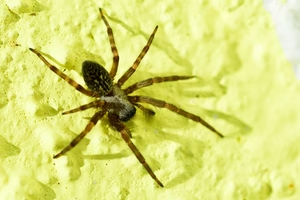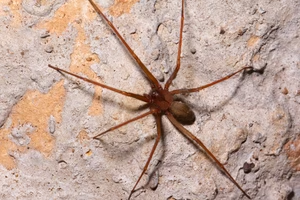
You spot a spider tucked in the corner of the garage or moving along a baseboard at night, and its size or color makes you pause. Could this be a brown recluse spider? In California, the answer is almost always no.
The brown recluse spider California residents occasionally report has no breeding population anywhere in the state, so what you’re looking at is far more likely to be a tarantula, a wolf spider, or a common house spider. Only one California species is actually dangerous, and telling it apart from the rest comes down to a few visual details. Here’s how to make that call, when a bite needs medical attention, and when it’s worth bringing in a professional.
Key Takeaways
- Reports of brown recluse bites in California usually turn out to be tarantulas, wolf spiders, or common house spiders instead.
- Checking eye pattern and where the spider was found is more reliable than color alone for ruling out a recluse.
- The one California spider actually capable of a serious bite is the black widow, not the brown recluse.
- Sealing entry points, clearing webs, and reducing clutter keep spider sightings from turning into a bigger problem.
Why Brown Recluse Reports Keep Showing Up in California
Brown recluse spiders live in a fairly narrow band of the country centered on the south-central Midwest, so a sighting in California usually has a different explanation.
How a Recluse Spider Could End Up in California
Brown recluse spiders don’t establish colonies in California, though individual spiders have occasionally hitched a ride in furniture, firewood, or a moving vehicle. A single spider showing up this way is an isolated event. It doesn’t reflect an established population in the state, according to UC IPM’s pest notes on recluse spiders.
Why So Many Bites Get Blamed on Recluses
Suspected recluse bites get reported in California more often than the spider’s actual presence would explain. A paper published through the University of California’s eScholarship repository looked into this pattern and found that unverified recluse bite reports in states like California have taken on the status of an urban legend, leading to overdiagnosis and inappropriate treatment.
Part of the problem is that a diagnosis is usually made from the appearance of a skin lesion alone, without anyone actually seeing or catching the spider responsible. Many skin conditions blamed on a “recluse bite” have other causes entirely, from infections to reactions from other insects.
What You’re Probably Seeing Instead
A few California residents do encounter native recluse species, but only in the state’s sparsely populated southeastern deserts, far from most homes. If you’re finding a spider indoors anywhere else in California, it’s worth getting familiar with the species that actually share your home.
Tarantulas
California tarantulas live in ground burrows and occasionally wander into yards or garages, especially when males go looking for mates. They’re large and hairy enough to alarm anyone, but a bite from one is typically no worse than a bee sting.
Wolf Spiders and House Spiders
Unlike tarantulas, wolf spiders don’t build webs at all. They hunt on the ground, which is part of why they’re often mistaken for something more dangerous when one turns up inside. Common house spiders and cellar spiders are smaller, build messy webs in corners and garages, and have fangs too short to break human skin in most cases.
The Eye Test
If you want a reliable way to rule out a recluse, look at the eyes with a hand lens. Recluse spiders have six eyes arranged in pairs, while most other spiders you’ll find in a California home have eight. It’s a small detail, but it’s more dependable than color or size alone.
The Spider That Actually Poses a Risk in California
Brown recluses aren’t a real concern here, but one local spider is worth taking seriously.
How to Recognize a Black Widow
An adult female black widow is shiny black with slender legs and a red or orange hourglass mark on the underside of her abdomen. They occur throughout most of the state and are drawn to dark, dry, undisturbed spots such as woodpiles, garages, and storage boxes.
What to Expect From a Bite
Black widow bites can range from mild to painful and, in some cases, serious, though death from a black widow bite is very unlikely. Anyone bitten should stay calm and seek medical advice.
What to Do If You Find an Unfamiliar Spider
What you do next depends on whether there’s an actual bite involved or just a spider you want identified.
When to Seek Medical Attention
If a spider bite causes an unusual or severe reaction, don’t wait it out. The California Poison Control System is available around the clock for guidance on bites and stings, including spider bites. For a spider sighting without a bite, capturing it in a jar or container makes identification much easier, whether you’re checking it yourself or having a professional take a look.
Reducing Spider Activity Around Your Home
A few habits reduce how often spiders show up at all:
- Seal cracks around the foundation and gaps under exterior doors.
- Keep boxes and stored items off the floor and away from walls.
- Sweep or hose down webs on eaves, corners, and garage ceilings on a regular basis.
- Clear clutter in garages, sheds, and crawl spaces where spiders like to hide.
If your home keeps attracting spiders despite these steps, that’s usually a sign the insects spiders feed on are already established nearby, which is worth addressing before the spider problem itself.
When to Call a Spider Control Professional
If prevention alone isn’t keeping spiders out, or if you keep finding spiders you can’t confidently identify, it’s a good sign to bring in a professional. A trained technician can inspect the interior and exterior of your home, confirm which species you’re actually dealing with, confirm which species you’re actually dealing with, and recommend a treatment plan based on the conditions they find.
Brown Recluse Spiders in California: Bottom Line
Brown recluse spiders aren’t the threat many California homeowners assume they are. Reports of bites vastly outnumber any confirmed presence, and the spider most people picture simply isn’t established in this state. What is here, including tarantulas, wolf spiders, house spiders, and the occasional black widow, is manageable once you know what you’re looking at.
The harder part is figuring out why spiders keep showing up in the first place, especially if the spider is already gone by the time you take a closer look. A professional inspection can identify the species, uncover the conditions attracting spiders to your property, and recommend the most appropriate treatment plan. Official Pest Prevention has helped homeowners across Northern and Central California prevent recurring spider problems since 2000.
If spiders keep appearing around your home, schedule an inspection with Official Pest Prevention. A local technician can identify what’s contributing to the activity and recommend a treatment plan tailored to your property’s needs.
Frequently Asked Questions
Do brown recluse spiders live in California?
No. There are no breeding populations anywhere in the state. On rare occasions, an individual spider is transported in through furniture, firewood, or a vehicle, but this doesn’t lead to an established population.
Is any spider in California actually dangerous?
Black widows are the main spider in California capable of a medically significant bite. They’re shiny black with a red or orange hourglass mark and tend to hide in dark, undisturbed spots like woodpiles and garages.
Should I call a professional if I see spiders indoors?
If spiders are showing up regularly, it’s worth having a technician inspect your home. They can identify the species you’re actually dealing with and recommend prevention or treatment based on what they find, rather than guessing from a single sighting.