Types Of Wasps in California can create costly problems when early signs are missed. Learn what to spot and when to call Official Pest Prevention.
Key Takeaways About Types of Wasps in California
Wasp types around California homes
California homes see several wasp species each season. Body shape, nest style, and behavior tell them apart.
- California is home to several wasp species, including social wasps like yellow jackets and paper wasps as well as solitary wasps like mud daubers, and telling them apart starts with body shape, nest style, and behavior.
- Not all wasp species pose the same level of risk. Some rarely sting, while others may defend their nests or become more assertive during certain times of year.
- Bee and wasp venom differ, so a reaction to one does not predict how you will respond to a sting from another type of wasp.
- If you spot a nest forming near your home, avoid disturbing it and contact a professional. Official Pest Prevention offers a free phone consultation to identify the pest and determine next steps.
How to Identify Common Types of Wasps in California
Telling one wasp type from another starts with a close look at body shape, coloring, and nest style. California homeowners may encounter several species around the home, and each one leaves different clues. Knowing what to look for helps you decide when to call a professional.
How to Tell Different Wasp Types Apart in California
Paper wasps have long, slender waists and smooth bodies. They build paper nests with many open cells, often tucked under eaves. According to UC IPM, paper wasps are rarely aggressive, which sets them apart from other species you may see around your property.
Bald-faced hornets are technically a type of yellowjacket, not a true hornet, though they look quite different from typical yellowjacket species. They display white and black coloring with distinct white markings on the face. These hornets build paper nests above ground, often in trees, and they defend those nests.
Solitary wasps behave differently from social species. Unlike paper wasps or social bees, solitary wasp females lay their eggs in individual nests that are not tended by any other individuals. You may notice single nests rather than large colonies.
How to Spot Wasp Activity Inside Your California Home
Wasps sometimes enter through gaps in your home’s exterior. Repeated buzzing near windows or ceiling corners can signal a nest nearby. Some wasp types are more aggressive than others and may fly several feet to sting someone near the nest site, so keep your distance if you hear activity indoors.
If you notice wasps inside, avoid swatting or disturbing them. Contact Official Pest Prevention for a free phone consultation so a technician can identify the species and schedule an initial service.
Where Wasp Activity Shows Up Around California Homes
Paper wasp nests often appear under eaves, where the sheltered overhang gives the open-cell nest protection from weather. Bald-faced hornet nests tend to appear above ground in trees on your property. Solitary wasps may place individual nests in small crevices or sheltered spots around the yard.
Standing water, sugary substances, and protein sources near your home can also draw wasps closer.
Exterior Entry Points Wasps Use Around California Homes
Eaves are one of the most common spots where wasps build nests on California homes. Official Pest Prevention can treat eaves up to 20 feet if needed. Gaps around rooflines, vents, and wall voids also give wasps access to sheltered nesting sites.
If you spot a nest forming, avoid disturbing it and keep people and pets away. Our local technicians wear bee suits for protection and can identify the species during the visit. Reach out to Official Pest Prevention to schedule service before the nest grows larger.
Why Wasp Problems Develop in California
Understanding why wasps show up around your home starts with knowing what draws them in. In California, yellowjackets are the primary pest species among social wasps, according to UC IPM. Different wasp types choose different nesting spots, food sources, and entry points, so the pressure on your property can come from several directions at once.
Outdoor Nesting Areas for Wasps Around California Homes
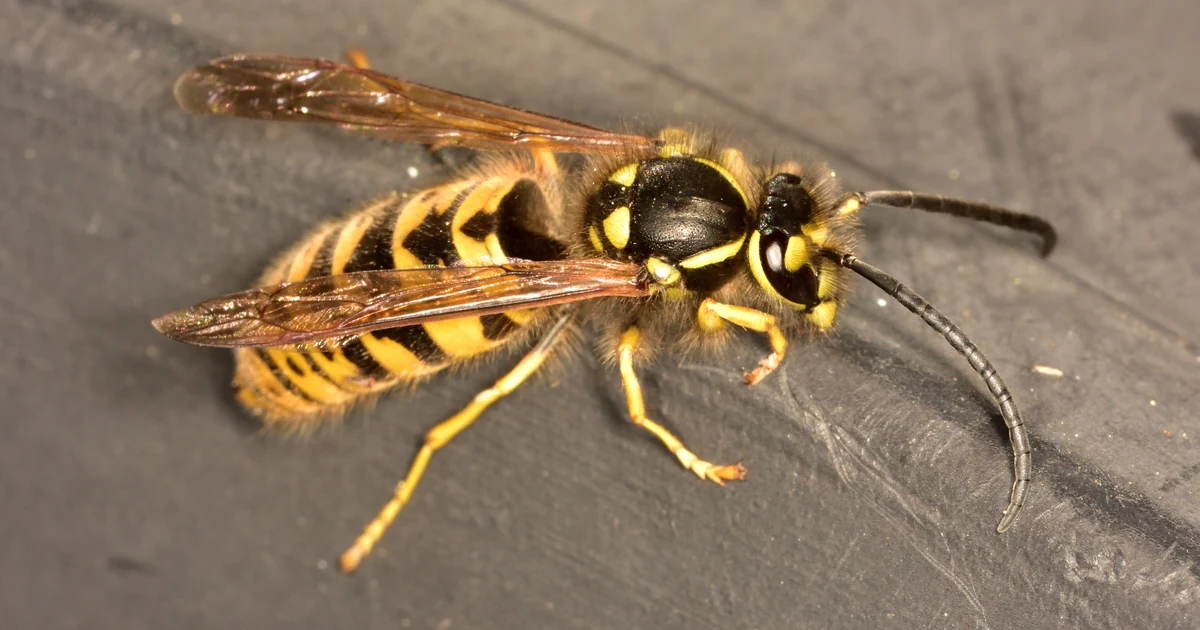
Each type of wasp selects a nesting location that suits its habits. Paper wasps build open-cell nests under eaves. Mud daubers are black and yellow, thread-waisted solitary wasps, building small, hard mud nests on sheltered surfaces. Yellowjackets typically nest underground, while aerial yellowjackets and bald-faced hornets build large exposed nests in trees and shrubs. These varied preferences mean nests can appear in eaves, ground-level cavities, or tree branches around your yard.
Food and Shelter That Attract Wasps Around California Homes
Wasps seek out sheltered areas with minimal disturbance, along with access to water and sugary or protein-rich substances. Protected spots like eaves and wall voids give wasps a place to establish colonies during warm weather. Because yellowjacket and paper wasp colonies normally live only one season, new queens look for fresh nesting sites each spring, which means your home can attract activity year after year.
How Wasps Move Around California Homes
Wasp activity near your home often shifts as the season progresses. Social wasps sting to defend their colony, and some yellowjacket species can become aggressive during late summer and fall, sometimes stinging unprovoked. If you spot paper wasp queens indoors during cooler months, they are not coming from an active nest but from a sheltered overwintering spot. Yellowjacket queens, by contrast, overwinter alone.
Trails and Entry Points Wasps Use in California
Paper wasps favor the undersides of eaves for their open-cell nests, giving them a direct path along rooflines. Yellowjackets may enter at ground level through gaps near foundations or landscaping. Aerial yellowjackets and bald-faced hornets prefer protected aerial locations, so openings near soffits or upper walls can serve as access points. If you notice wasp traffic around your home, contact Official Pest Prevention for a consultation.
Risks From Common Wasps in California
Not every wasp in California poses the same level of concern. Some types rarely sting, while others can deliver a sting that catches homeowners off guard. Understanding which risks apply to the wasps around your property helps you decide when to act and when to simply keep your distance.
Health Risks Linked to Wasps in California
Sting risk varies widely among the types of wasps you may encounter. According to UC IPM, paper wasps are much less defensive and rarely sting humans. Mud daubers also rarely sting and do not defend their nests. These traits make certain wasp species a lower concern when spotted around your home.
Other types present a more noticeable sting risk. Red wasp stings are considered more painful than Guinea wasp stings by most people who have experienced both. Some wasps deliver a sting that is painful and arguably more intense than a red wasp sting. If you notice a nest in a high-traffic area, keeping people and pets away is the safest first step.
Property Damage From Wasps in California
Certain wasp types cause less disruption to your property than you might expect. Mud daubers build small, hard mud nests that are compact and often found in sheltered spots like eaves. While the nests themselves are unsightly, mud daubers rarely sting and do not defend their nesting sites.
If you find a nest forming on or near your home, avoid disturbing it and contact Official Pest Prevention so our team can identify the wasp type and recommend the right approach.
Food Areas and Wasp Activity in California Homes
Wasps can be drawn to areas where sugary substances, protein, or water are accessible. Outdoor dining spaces and standing water near your home may attract wasp activity. Because Because social wasps such as yellowjackets live in colonies with many workers, a single food source can draw repeated visits from multiple members of the same nest., a single food source can draw repeat visits from multiple members of the same nest.
Reducing access to food and water near your home can help lower the chance of repeated wasp visits to these areas.
When to Look Closer at Wasp Activity in California
A lone wasp flying through your yard is not always cause for alarm. Paper wasps and mud daubers rarely sting, so a small nest on a low-traffic eave may not require immediate action. However, wasps and hornets are more territorial than other stinging insects, and large nests pose safety risks in busy areas.
If you spot a nest near doorways, walkways, or play areas, contact Official Pest Prevention right away. Africanized bees can pose a sting risk to everyone nearby. Contact Official Pest Prevention as soon as you notice activity rather than attempting removal yourself.
Professional Pest Control for Wasps in California
Not every wasp nest on your property needs treatment, but the ones close to your home deserve prompt attention. Knowing how to reduce what draws wasps in, understanding the value of a proper inspection, and working with a licensed pest control operator can help you stay ahead of nesting activity throughout the season.
How to Reduce Attractants for Wasps in California
Limiting access to sheltered nesting spots, standing water, and food sources around your home is a practical first step in discouraging nest construction. Focus your prevention efforts on high-traffic areas where your family spends time.
Some wasps nest away from where people live or work. According to Purdue Extension, when mud daubers nest in those locations they can actually be considered beneficial and controls are not needed.
Why Wasp Control in California Starts With Inspection
Proper identification matters because different wasps call for different responses. Paper wasp nests do not require treatment unless they are near people. Yellowjackets, on the other hand, are quick to defend a disturbed or threatened nest by stinging. Treating every nest the same way can lead to unnecessary risk or missed opportunities to act early.
Official Pest Prevention identifies the pest through a free phone consultation before scheduling service. This step helps our technicians determine the wasp type and whether the nest location poses a concern for your household.
What to Expect During Professional Wasp Treatment in California
DIY nest removal is not recommended. Disturbing a nest can provoke stinging, especially from territorial species. Our technicians wear bee suits for protection and can treat eaves up to 20 feet when needed.
Trapping or nest treatment can reduce yellowjacket populations around your property. We use Waspfreeze or Bifen depending on the situation. We do not treat honey bees and recommend contacting a local beekeeper for relocation. If Africanized bees may be present, we recommend homeowners call immediately rather than approach the nest.
What to Expect From a Wasp Control Plan in California
A consistent treatment plan helps keep wasps and hornets away for the entire season. After the initial service, a pest technician addresses nesting activity around your home’s eaves and other sheltered spots on an ongoing basis.
Official Pest Prevention is a local company with local technicians and local customer support serving Fresno, Elk Grove, West Sacramento, Yuba City, Stockton, Modesto, Pleasanton, Livermore, Hayward, and Fremont. Contact us to schedule a free phone consultation and get a quote tailored to your property.
Bottom Line on Types Of Wasps in California
Knowing which types of wasps in California you are dealing with is the first step toward keeping your household comfortable. Yellowjackets are the most common pest wasp in the state and can be defensive when their nest is disturbed. Paper wasps build open-cell nests and are rarely aggressive. Mud daubers are solitary, construct small hard mud nests, and rarely sting.
Colonies of yellowjackets and paper wasps normally live only one season, but that does not mean a nest near high-traffic areas should be ignored. If you spot wasp activity around your eaves or other sheltered spots, contact Official Pest Prevention for a free consultation to identify the species and recommend next steps.
Frequently Asked Questions About Types Of Wasps in California
Why Are Wasps Nesting Around My Home?
Wasps seek out sheltered nesting spots near food and water sources with minimal disturbance. Warm weather and access to standing water, sugary substances, or protein can attract them. If you notice a nest forming, keep people and pets away and contact Official Pest Prevention right away.
How Can I Tell the Difference Between Wasp Species?
Paper wasps are slender with open-cell nests that often hang under eaves. Yellowjackets are more defensive and the most common pest wasp in the state. Mud daubers are black and yellow, thread-waisted solitary wasps, identifiable by their small, hard mud nests on walls, ceilings, or rafters. Proper identification matters before any action is taken.
Can I Remove a Wasp Nest Myself?
DIY removal is not recommended. Yellowjackets in particular can be quick to defend their nest when it is threatened. Professional removal ensures safety and proper species identification, which is especially important since honey bees are vital pollinators that should not be treated like pest wasps. Contact Official Pest Prevention to schedule service.
What Should I Do If I See Wasps Near My Eaves?
Avoid disturbing the nest and keep your family and pets at a low-risk distance. Call Official Pest Prevention for a consultation so we can identify the species and schedule service. A consistent treatment plan can keep wasps away for the entire season. Early intervention helps you avoid dealing with a larger nest later.
Our methodology: how we research pest control topics
Every Official Pest Prevention article follows the same standard we hold our service work to: clear, accurate, and grounded in what actually works on a real Northern California home. Homeowners across the Sacramento metro and Bay Area communities count on us for honest pest information they can act on, and we treat the writing the same way.
We build our content from a combination of government guidance, peer-reviewed research, and the patterns our technicians see across thousands of homes in our service area. Here is how we approach each article:
Studying pest behavior We start with how each pest actually lives — where it nests, how it spreads, and what conditions support it. Northern California’s seasonal rain and dry cycles change pest pressure in ways that matter for treatment, and getting the biology right is what tells us what will and will not work.
Reviewing health and home risks We review research on how each pest affects human health and home structures. Some pests are a nuisance. Others trigger allergies, carry bacteria, or cause structural damage. Knowing the actual risk helps homeowners decide how urgently to act.
Using Integrated Pest Management Our recommendations are grounded in Integrated Pest Management (IPM), the framework supported by the USDA and EPA. IPM combines monitoring, sanitation, exclusion, and targeted treatment to reduce pest populations while limiting unnecessary product use.
Prioritizing prevention and lasting protection A pest problem rarely ends with one treatment. We focus on the conditions that allow infestations to start in the first place — moisture, food sources, gaps around the home, harborage zones — because long-term control depends on changing the environment, not just treating the symptoms.
Citing peer-reviewed and government sources Whenever possible, we support our recommendations with peer-reviewed studies, university extension research, and guidance from agencies like the EPA, CDC, and USDA. Each source we cite is listed at the end of the article.
Why trust us
Official Pest Prevention is a local company with local technicians and local customer support. We serve homeowners across the Sacramento metro and into the Bay Area — Fresno, Elk Grove, West Sacramento, Yuba City, Stockton, Modesto, Pleasanton, Livermore, Hayward, and Fremont. When you call, you reach our team. When a technician shows up, they live and work in your area.
That same standard runs through our content. The information you read here reflects what our technicians see in the field, what current research supports, and what we have learned from servicing homes across our Northern California footprint.
Our credentials
- Service across the Sacramento metro and Bay Area — Fresno, Elk Grove, West Sacramento, Yuba City, Stockton, Modesto, Pleasanton, Livermore, Hayward, and Fremont
- Local technicians and local customer support
- Specialty services including dewebbing and power sprayer treatments
- General pest control, mosquito, rodent, termite, and seasonal pest programs
- Continuous review of research, regulations, and California-specific pest pressure
Sources and standards we reference
To keep our content accurate and up to date, we rely on established research and authority sources, including:
Environmental Protection Agency (EPA): Guidelines on product use, labeling, and approved applications.
Centers for Disease Control and Prevention (CDC): Public-health guidance on pests that affect human health, including mosquitoes, ticks, rodents, and cockroaches.
United States Department of Agriculture (USDA): Integrated Pest Management standards and pest biology research.
National Pest Management Association (NPMA): Industry standards, pest behavior research, and seasonal trend reporting.
University of California Cooperative Extension: Peer-reviewed, region-specific research on Northern California pest biology and control methods.
Peer-reviewed journals: Research published in entomology, public health, and environmental science journals to support specific claims about pest behavior, health risks, and treatment efficacy.
Article sources
The following sources were specifically referenced in the research and development of this article:
All information is accurate at the time of publication and is reviewed regularly to reflect current research and pest control standards.