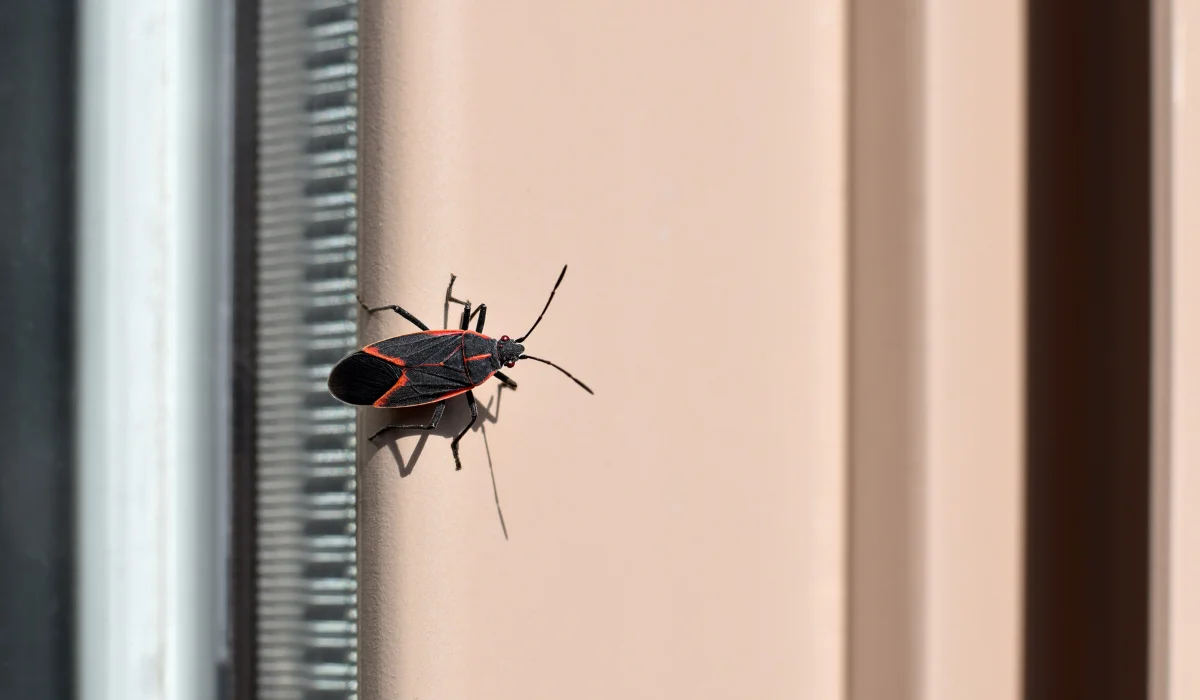
If you’ve noticed clusters of boxelder bugs around your home, this is a common issue. Many homeowners in West Sacramento deal with this nuisance pest as seasons change. Boxelder bugs often gather in large numbers on siding, windows, and fences as temperatures change.
Knowing when boxelder bugs go away helps you stay ahead of repeat infestations. In neighborhoods near the Sacramento River or areas with mature boxelder trees and ash trees, activity follows a clear pattern. Once you know this pattern, you can reduce bugs and limit indoor sightings with effective boxelder bug control.
Key Takeaways
When boxelder bugs are active
This timeline tracks boxelder bug activity through the year. Numbers rise in late summer as nymphs develop. Clusters move indoors in early fall. Winter brings dormancy. Spring warmth wakes them again. Darker segments mean heavier activity.
- Boxelder bugs are most active during late summer and early fall, then move into overwintering sites as temperatures drop.
- You may still see boxelder bug activity indoors during the winter months due to warmth in attics, basements, and wall voids.
- Their life cycle includes bright red nymphs that develop into adult boxelder bugs with red markings.
- Professional pest control focuses on sealing entry points, treating problem areas, and preventing future infestations.
When Boxelder Bugs Usually Go Away
Boxelder bugs follow a seasonal pattern based on temperature and sunlight. In West Sacramento, their activity rises and falls in a predictable cycle.
Late Summer Activity Increases
During late summer, boxelder bugs are highly visible. Eggs hatch, and nymphs develop during this time. These young bugs are bright red and gather in large numbers near host trees, such as boxelder and female boxelder trees, feeding on seed pods with their sucking mouthparts.
As they grow and molt, their numbers increase quickly. At this stage of the boxelder bug life cycle, many homeowners first notice an infestation around their property.
Early Fall Migration Begins
As early fall begins and the weather cools, adult boxelder bugs begin searching for overwintering sites. You’ll see them cluster on sun-facing walls during sunny days as they prepare to move indoors.
At this stage, large numbers of boxelder bugs may enter structures through crevices, gaps in siding, and other entry points for winter.
Winter Months Reduce Outdoor Activity
Once cold weather sets in, outdoor boxelder bug activity declines as they settle into protected areas such as attics, basements, and wall voids. These overwintering sites help them survive the cold and are less visible outside.
Early Spring Re-emergence
In early spring, warm spring weather often triggers boxelder bugs to become active again as they leave overwintering sites and move toward outdoor areas.
You may notice them near windows or light sources indoors as they attempt to exit and continue their life cycle, returning to host trees to lay eggs.
Why You May Still See Them for a While
After peak season, boxelder bugs don’t disappear right away. Several factors keep them active around your property.
Warm Indoor Environments
Boxelder bugs often remain inside heated areas during the winter months, especially in attics, basements, and wall voids where temperatures stay steady.
Changes in indoor temperature can trigger movement, which is why these true bugs may appear near windows, ceilings, or around houseplants.
Hidden Entry Points and Crevices
Small openings around windows, doors, and siding allow boxelder bugs to enter your home, where they can hide in crevices and other hard-to-reach areas.
If these entry points are not sealed with caulk or covered with weather stripping, the infestation can recur over time.
Nearby Host Trees and Seed Sources
Homes located near boxelder trees, ash trees, or areas with seed pods tend to attract more boxelder bugs. Female boxelder trees provide a steady food source that supports their population.
This link between host trees and your home explains why large numbers of boxelder bugs return each year.
Incomplete Treatment Approaches
Using a store-bought product may reduce visible bugs, but it often misses hidden areas where boxelder bugs remain inside wall voids or deeper structural spaces.
Without addressing the full infestation, the bug problem may seem gone, but return as conditions change.
What to Expect as Activity Drops Off
As boxelder bug activity slows, you’ll notice a gradual drop instead of a sudden stop.
Fewer Outdoor Clusters
As the weather cools, you’ll see fewer boxelder bugs gathering outside on walls and fences. However, many have already moved into overwintering sites, so the problem hasn’t fully gone away.
Occasional Indoor Sightings
Even after peak activity, you may still find boxelder bugs indoors as they emerge from hidden areas.
Using a vacuum cleaner is a simple way to remove boxelder bugs without leaving stains, since crushing them can leave marks.
Reduced Reproduction Activity
As temperatures drop, boxelder bugs typically reduce or stop reproducing, and their life cycle slows significantly.
This pause makes the infestation feel less intense, even though the insects remain inside your home.
Transition Into Dormancy
Eventually, boxelder bugs enter dormancy during the colder months, leading to minimal movement and fewer sightings.
At this stage, focus on prevention. Sealing cracks, fixing entry points, and preparing for the next season are key steps.
Schedule a Boxelder Bug Inspection in West Sacramento
Even when boxelder bugs seem to go away, they often stay hidden and return with the next season. A recurring boxelder bug infestation usually indicates unresolved entry points or nearby conditions that support their activity.
Professional pest control identifies where boxelder bugs enter and hide, so they can handle the issue more effectively. Inspections often cover common areas like attics, basements, wall voids, and exterior access points.
Official Pest Prevention provides residential pest control and commercial pest control services tailored to West Sacramento properties. Services focus on exterior barrier treatments and targeted solutions to help reduce re-entry.
If you’re ready to get rid of boxelder bugs and stop them from coming back, schedule your service or contact us today.
FAQs
When do boxelder bugs go away completely?
Boxelder bugs do not fully disappear but become inactive during the winter months. They move into overwintering sites like attics and wall voids. Outdoor activity drops after early fall, but indoor sightings can continue until early spring.
Are boxelder bugs harmful to homes or people?
Boxelder bugs are a nuisance pest, similar to a stink bug, and do not cause structural damage. They are not known to bite under normal circumstances, but they can stain surfaces when crushed and appear in large numbers, which makes them frustrating for homeowners and businesses.
What is the best way to get rid of boxelder bugs?
Professional pest control includes sealing entry points, applying targeted treatments, and fixing conditions around host trees that support infestations.