In Stockton and across San Joaquin County, many homes sit on soil that holds moisture. Moist soil creates ideal conditions for termites to live and grow. Termite activity often starts around the foundation of your home, where it is hard to see.
The most common signs near your foundation can be easy to miss at first. You may notice small changes such as cracks, soft wood, or debris near foundation walls, baseboards, or in your crawl space. These changes often indicate an active termite infestation.
If you catch these signs early, you can avoid serious termite damage and expensive repairs. Knowing what to look for helps you act quickly and take the right steps with termite control to protect your property.
Key Takeaways
- Mud tubes, swarmers, and frass are common signs of termites near foundations.
- Check crawl spaces, foundation walls, and baseboards for early signs.
- Subterranean termites often enter through soil contact and cracks.
- Ignoring signs of termite activity can lead to costly repairs.
- A termite inspection helps confirm a termite infestation early, so professionals can apply the right treatment.
Foundation Signs That Point to Termites
Termites often leave small clues around your foundation before major damage appears. Watch for these common signs.
Mud Tubes Along Foundation Walls
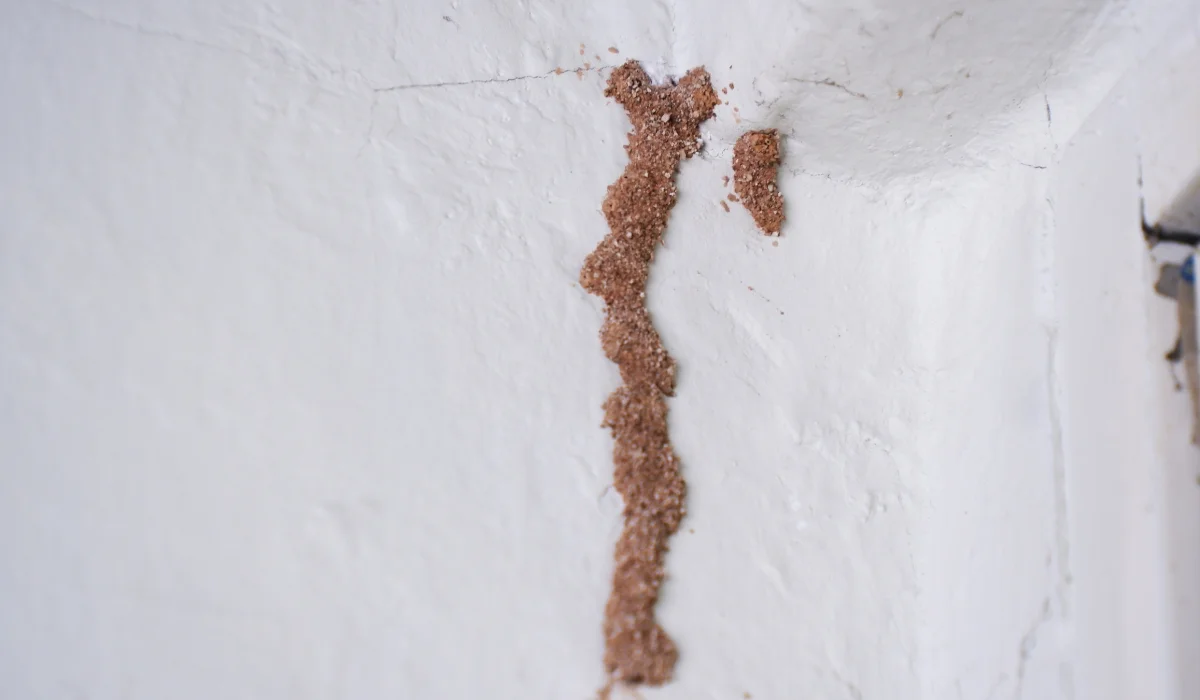
One of the clearest signs of termites is mud tubes along foundation walls. These thin, mud-made shelter tubes allow subterranean termites to travel between the soil and your home while staying protected.
In Stockton, homes with wet soil or heavy watering often see more of these mud tubes. They may run up concrete or into small cracks. If you break one open and see worker termites inside, it indicates an active termite colony.
Soft or Damaged Wood Near the Base
Termite damage often appears in wood near the base of your home, such as baseboards, door frames, and lower drywall.
The wood may feel soft or sound hollow when tapped because termites consume cellulose from the inside out. What looks minor on the surface can signal serious structural damage.
Termite Droppings and Frass
Drywood termites leave behind termite droppings called frass that look like tiny pellets or sawdust near baseboards or windowsills.
Frass can indicate an active termite infestation above the ground since drywood termites do not rely on soil contact.
Piles of Wings From Swarmers
Swarmers, or flying termites, appear during termite swarms. You may find piles of wings near windowsills, doors, or the foundation.
These discarded wings indicate termite activity nearby and the formation of a new colony.
Where to Check Around the Foundation First
Knowing where to look helps you catch signs of termite activity early. Start with these areas around your foundation.
Crawl Space and Soil Contact Areas
Your crawl space is one of the first places to check for signs of termites. Subterranean termites live in dark, damp environments.
Look for mud tubes, excess moisture, and wood in contact with soil. In Stockton, irrigation and rain can increase moisture levels, which helps termites access your home.
Exterior Foundation Edges and Cracks
Check the exterior of your foundation walls for cracks or gaps that act as entry points for termites.
Areas where soil touches the foundation are high risk because they provide shelter and food sources.
Baseboards and Lower Interior Walls
Inside your home, inspect baseboards and lower drywall for signs of termite damage.
Bubbled paint, soft wood, or hollow sounds can resemble water damage but also indicate termite activity. Look for frass or other supporting signs.
Around Doors and Windows
Door frames and windowsills are common places to find swarmers, especially since flying termites are attracted to light.
You may also notice piles of wings or small cracks that act as entry points, signaling termite activity inside your home.
What These Signs Usually Mean Next
Different signs point to different levels of risk. Here is what these warning signs usually tell you about your termite problem.
Early Stage Activity
If you see only a few signs, such as frass or a small number of swarmers, it often means a new colony is forming.
Early detection makes termite control easier and limits the infestation before it spreads.
Active Infestation
If you see mud tubes, live termites, or multiple warning signs, you likely have an active termite infestation with a colony feeding on your home.
At this point, professional pest control and a full termite inspection are necessary, as delays lead to greater damage and higher repair costs.
Advanced Structural Damage
If wood appears brittle, hollow, or heavily damaged, the infestation has likely been present for some time and may have caused significant damage to your home’s structural integrity.
You may need both termite treatment and repairs. Acting quickly reduces further damage to your foundation.
Schedule a Termite Inspection in Stockton
If you notice signs of termites, schedule a termite inspection as soon as possible. A trained exterminator can confirm the type of termites and how far the termite infestation has spread, so you know the extent of the problem.
In Stockton, moisture and warm weather increase the risk of termites. A local pest control company like Official Pest Prevention can inspect your property, identify entry points, and recommend the right termite treatment to address the problem.
Contact us today to schedule your inspection and protect your property from termites.
FAQs
What are the first signs of termites around a foundation?
The first signs of termites include mud tubes, swarmers, and small piles of wings. You may also see frass or soft wood near baseboards and foundation walls. These signs often appear before major termite damage becomes visible.
Are mud tubes always a sign of an active termite infestation?
Mud tubes usually point to subterranean termites, but not all are active. Break a small section open and check for worker termites. Even if you do not see activity, have a pest control company inspect it.
How often should I schedule a termite inspection in Stockton?
You should schedule a termite inspection at least once a year in Stockton. If your property has moisture issues or a history of termite problems, more frequent inspections help catch signs of termite activity early.