You spot a dark, cone-headed insect crawling along a windowsill or near a porch light after dark, and by the time you look twice, it’s gone. If you live in a foothill community near Sacramento or the Central Valley, that insect could be a kissing bug in California, a blood-feeding pest that slips indoors on warm nights and bites people while they sleep.
Kissing bugs aren’t just an odd sighting. Their bites can trigger allergic reactions, and in rare cases, they carry the parasite behind Chagas disease. This guide covers what kissing bugs look like, the real health risks involved, when they’re most active in California, and how to keep them out of your home.
Key Takeaways
- Kissing bugs are cone-headed, blood-feeding insects that turn up most often in foothill neighborhoods near Sacramento and the Central Valley, drawn indoors by porch lights and gaps around doors and windows.
- Bites are usually painless at first, but the resulting allergic reaction can range from mild swelling to severe anaphylaxis, and the parasite behind Chagas disease is rare but present in California kissing bugs.
- Warm evenings from late spring through fall bring the highest kissing bug activity, so sightings and bites are more likely during that stretch than in winter.
- Sealing entry points and screens helps, but a professional inspection is the surest way to confirm what you’re dealing with and stop repeat encounters.
What Kissing Bugs Look Like
Knowing what a kissing bug looks like is the first step in figuring out whether you actually have one. A few distinct features set it apart from more common household bugs.
Body and Head Features
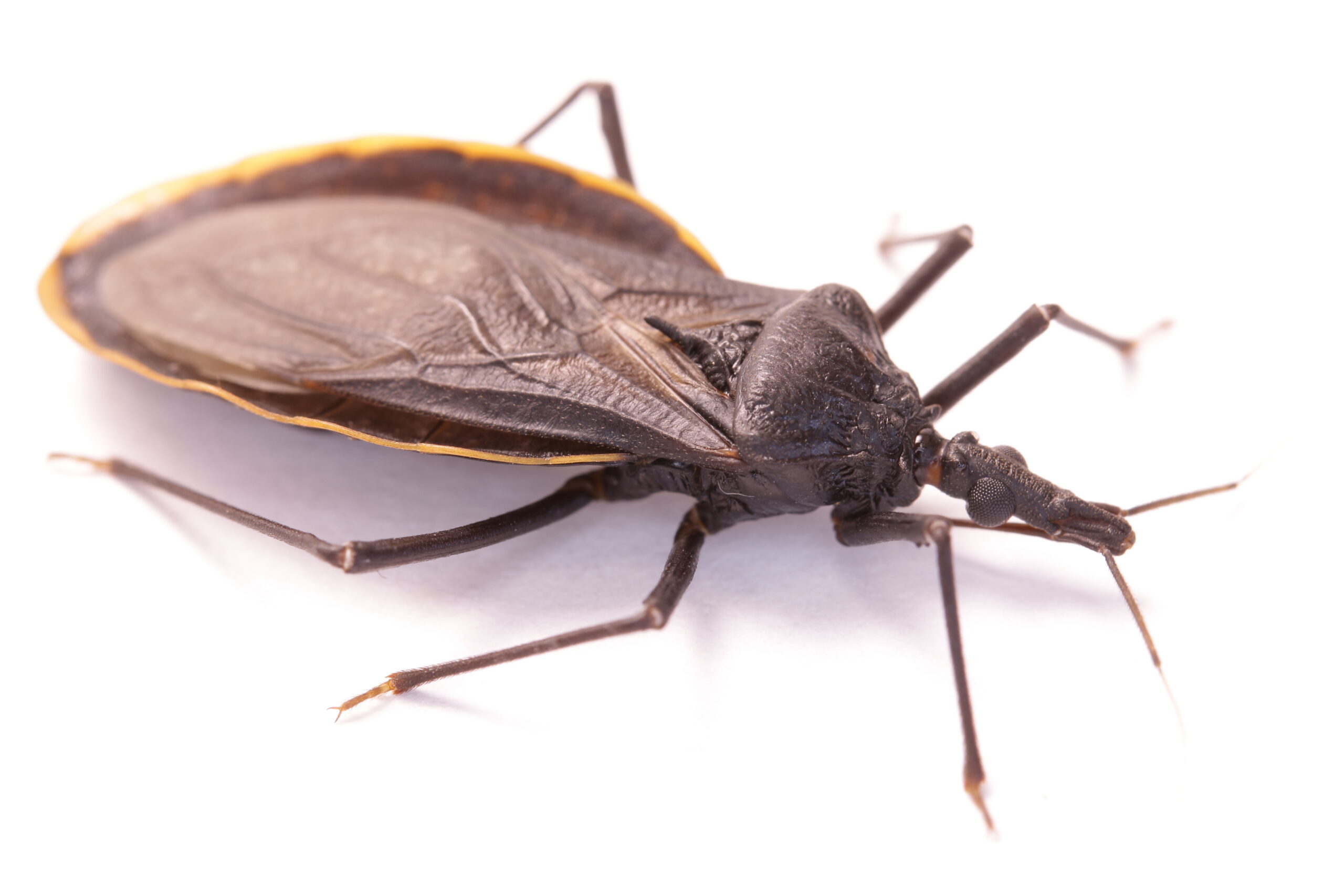
Kissing bugs, also known as conenose bugs, typically measure about half an inch to three-quarters of an inch long, with a dark brown to black body and a long, cone-shaped head. California’s most common species often carries a thin, light tan band along the outer edge of the abdomen, though some individuals appear almost entirely dark. Their wings fold flat over the back at rest, and their antennae have four segments.
Kissing Bug vs. Look-Alike Insects
Several other insects are mistaken for kissing bugs. The western corsair, a type of assassin bug, has a similar shape but carries an orange spot on each wing and delivers a painful bite when handled, unlike the typically painless bite of a kissing bug. Boxelder bugs and certain beetles are also sometimes confused with kissing bugs, but a closer look at the head shape usually tells them apart. If you’re unsure what you’re looking at, avoid handling the insect directly and have it identified by a professional.
Where Kissing Bugs Are Found in California
Location plays a big role in whether you’re likely to run into a kissing bug in California. Specific habitats matter more here than general climate, and knowing where they turn up can help you gauge your own risk.
Foothill and Rural Habitats
Kissing bugs occupy a range of habitats across the state, from coastal areas to foothill, mountain, and desert regions. The most common and widespread type in California is especially prevalent in the foothill areas surrounding the Central Valley, and much of Official Pest Prevention’s service area east of Sacramento falls within that same foothill zone.
What Draws Them Closer to Homes
Homes located near or bordering undeveloped land or areas with rodent activity are more likely to attract an occasional kissing bug than homes in dense urban neighborhoods. Rodents and other wildlife are the bugs’ main blood source, so a property with active burrows or dens nearby gives them a reason to stay close.
Health Risks From Kissing Bug Bites
A kissing bug sighting raises an obvious question: how worried should you actually be? The answer depends on which risk you’re asking about, since bites and disease exposure carry very different odds.
Allergic Reactions to Bites
The most immediate concern with kissing bug bites is an allergic reaction. The California Department of Public Health reports that most reactions are mild, involving redness, itching, and swelling within 24 to 48 hours of a bite.
A smaller number of people develop more severe reactions, including anaphylaxis, which requires immediate medical attention. Anyone with a history of severe reactions to insect bites should talk with a healthcare provider about carrying an epinephrine device.
Chagas Disease Risk in California
Kissing bugs can carry the parasite that causes Chagas disease. This parasite has been documented in California wildlife and kissing bug populations since the early 1900s, though locally acquired human cases remain very rare in the state.
A statewide review found that about 28% of kissing bugs submitted for testing carried the parasite, yet none of those infections were linked to a confirmed human case. Most Chagas disease diagnoses in California involve people who were infected while living in Mexico, Central America, or South America before moving here.
The reason locally acquired cases stay uncommon comes down to how the parasite spreads. According to the Centers for Disease Control and Prevention, infection occurs through contact with the bug’s droppings, such as when a person scratches a bite site or rubs the droppings into their eyes or mouth, rather than through the bite itself. California’s kissing bugs also tend to defecate later and away from the bite location, which appears to lower the chance of this kind of exposure.
When Kissing Bug Season Happens in California
Kissing bug activity isn’t constant throughout the year. It tracks closely with the weather, so knowing the pattern can help you anticipate when to be more watchful.
Peak Activity Months
Adults disperse by flight mainly on warm summer and fall evenings, drawn to exterior lighting as they search for new places to feed. This stretch of the year, when temperatures stay warm well into the evening, is when most kissing bug sightings and bites occur.
Off-Season Behavior
Once temperatures cool in late fall and winter, adult activity drops off, and the insects overwinter in outdoor shelters such as rodent burrows, woodpiles, and rock crevices before becoming active again the following warm season. This means the months when your household is most likely to notice a kissing bug line up with the same stretch when other seasonal pests become more active. If you already watch for common spring and summer pests in California, it’s worth adding kissing bugs to that seasonal checklist.
Signs of Kissing Bug Activity Around Your Home
Because kissing bugs are nocturnal and their bites are usually painless, most people don’t realize they’ve had an encounter until after the fact. A few practical signs can help you catch it sooner.
What to Look For
- An unfamiliar insect near a porch light, window screen, or door frame at night
- Grouped bites on the face, neck, arms, or other exposed skin that appear after sleeping
- Insects found near beds, couches, or other resting areas where people or pets sleep
What to Do If You Find One
If you find a bug you suspect is a kissing bug, don’t crush it. Place it in a sealed container using a glove or plastic bag so it can be safely identified later.
How to Prevent Kissing Bugs Around Your Property
Most kissing bug encounters come down to a handful of entry points and outdoor conditions that make a property more inviting. Addressing these reduces the chance of a bug finding its way inside.
Sealing Common Entry Points
- Seal cracks around windows, doors, and utility penetrations in exterior walls.
- Repair or replace torn window screens and install door sweeps or brush seals under exterior doors.
Reducing Outdoor Attractants
- Reduce outdoor lighting near entry points, or switch to yellow or motion-activated bulbs that attract fewer nighttime insects.
- Clear woodpiles, rock piles, and debris from areas close to the foundation, since these can shelter kissing bugs during the day.
- Address rodent activity around the property, since kissing bugs often live near rodent burrows and dens.
Doing all of this lowers the odds of an encounter, but sealing every gap and clearing every hiding spot around a property takes more time than most homeowners have on a weekend.
When to Call Professional Pest Control
A professional inspection makes sense once DIY sealing and cleanup aren’t enough, or when you’d simply rather have a trained eye confirm what you’re dealing with. A technician can verify whether the insect you found is actually a kissing bug, since several look-alikes are common across California, and identify the specific gaps, screens, or outdoor conditions giving pests access to your home.
After the inspection, the technician can recommend a treatment plan based on the conditions found, along with practical steps to help reduce future pest activity.
Kissing Bug in California: Bottom Line
Kissing bugs are a real, if uncommon, concern for California homeowners, particularly in foothill communities near the Central Valley, where the bugs are already established in the surrounding wildlife. They show up mainly on warm evenings from late spring through fall, and while most bites cause only mild irritation, the allergic and disease risks can be serious.
Sealing entry points and clearing outdoor harborage helps, but confirming a suspected kissing bug and closing off every access point is easier with local help on your side. Official Pest Prevention has served Northern and Central California for more than 20 years, with local offices in Elk Grove, West Sacramento, Fresno, and Yuba City. Our prevention-focused approach identifies the conditions contributing to pest activity and recommends treatments designed to help keep pests from coming back.
If a kissing bug has you concerned, schedule an inspection with us to confirm what’s going on and get a treatment plan suited to your property.
Frequently Asked Questions
Are kissing bugs common in California homes?
Kissing bugs are present in California, particularly in foothill areas near the Central Valley and Southern California’s foothill and desert regions. They don’t build permanent indoor colonies here, so most encounters involve a single bug that has wandered in rather than an established infestation.
What time of year are kissing bugs most active in California?
Kissing bugs are most active on warm evenings from late spring through fall, when adults fly toward lights while searching for a blood meal. Activity slows once temperatures drop in late fall and winter.
Are kissing bug bites dangerous?
Most kissing bug bites cause a mild reaction like redness, itching, or swelling. A smaller number of people experience more severe allergic reactions, including anaphylaxis, which needs prompt medical attention.
Can Kissing Bugs Give Me Chagas Disease in California?
It’s possible but very rare. The parasite that causes Chagas disease has been found in California wildlife and kissing bugs for decades, but locally acquired human cases are uncommon, and most California diagnoses trace back to prior exposure outside the state.
What should I do if I find a kissing bug in my home?
Avoid touching or crushing it. Use a glove or plastic bag to place it in a sealed container, then contact a pest control professional for identification and guidance on next steps.