Scorpions in California can create costly problems when early signs are missed. Learn what to spot and when to call Official Pest Prevention.
Key Takeaways About California Scorpions
- California is home to several scorpion species, and knowing which ones may appear around your property helps you respond.
- Most scorpion stings are comparable to a bee sting, but the bark scorpion is the one species considered dangerous and can cause more serious reactions.
- Reducing hiding spots around your home and keeping outdoor items stored properly are practical steps to help prevent scorpion encounters.
- If you notice scorpion activity near your home, contact Official Pest Prevention to request a quote and discuss your options.
How to Identify California Scorpions
California sits within the warm, dry climate zone where many North American scorpion species are found. According to UC IPM, many of the species found on the continent occur in Arizona, adjacent areas of California, and parts of New Mexico. Knowing what to look for helps you respond if one turns up in or around your home.
How to Tell Scorpion Types Apart in California
Around 70 species are found across North America, and several of those can appear in California. Of all those species, only one, the bark scorpion, is considered dangerous to people, as noted by UC IPM. Learning to distinguish the bark scorpion from other local species is the most important identification step for any California homeowner.
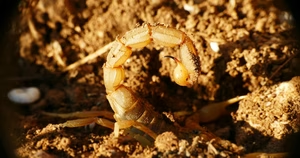
Scorpions share common features: a pair of front pincers, a segmented tail that curves over the body, and four pairs of legs. Size, color, and tail thickness vary between species found in different parts of the state. When you spot one, note those details before contacting a service professional.
How to Spot Scorpion Activity Inside Your California Home
Scorpions are nocturnal, so you may not see them during the day. Check dark, undisturbed areas such as closets, garages, and storage boxes. Because scorpions are nocturnal, checking dark, sheltered areas at night with a flashlight can reveal activity you would otherwise miss.
Finding even one scorpion indoors suggests others may be nearby. Because most scorpions prefer warm, dry conditions, interior spaces that stay still and sheltered can attract them.
Where Scorpion Activity Shows Up Around California Homes
Outdoors, scorpions tend to shelter under rocks, woodpiles, and debris during the day. Landscaping features that hold warmth and provide cover are common resting spots. Regularly inspecting these areas gives you an early indication of scorpion presence before they move closer to your living spaces.
Exterior Entry Points Scorpions Use Around California Homes
Scorpions can squeeze through small gaps. Inspect the perimeter of your home for cracks in the foundation, gaps around doors, and openings where utility lines pass through walls. Sealing those access points is a practical first step toward keeping scorpions outside.
If you are finding scorpions in or around your California home and want professional help, contact Official Pest Prevention to request a quote. Our local service professionals can evaluate your property and recommend next steps.
Why Scorpion Problems Develop in California
California’s warm, dry climate matches the habitat preferences of many scorpion species. Understanding where they nest, what draws them in, and how they reach your living spaces can help you stay ahead of the problem.
Outdoor Nesting Areas for Scorpions Around California Homes
Several species can turn up around California homes. According to UC IPM, the Arizona hairy scorpion is a common desert species found in Southern California and throughout Arizona. The stripedtail scorpion is one of the most common species in Southern California. The bark scorpion is found in the extreme southeastern portion of California near Arizona.
Additional, less common species also occur from sea level to elevations above 7,000 feet. That wide elevation range means outdoor nesting areas are not limited to low desert landscapes alone.
Food and Shelter That Attract Scorpions Around California Homes
Yards and structures that provide both cover and warmth can become appealing resting spots. Because multiple species occupy different elevation bands across the state, the food and shelter pressures vary by location but share a common thread: anywhere conditions stay dry and undisturbed, scorpions may settle in.
How Scorpions Move Around California Homes
Movement patterns differ depending on whether your home sits in a valley, foothill, or desert community. Species that occupy lower desert areas may behave differently from those at higher elevations. Monitoring activity around your property helps you understand local patterns.
How Scorpions Find Their Way Indoors in California
When outdoor conditions are right, scorpions can work their way toward a home’s exterior and eventually inside. Any gap or opening that connects the outdoors to your interior can serve as a pathway. If you notice scorpion activity, contact Official Pest Prevention to have a service professional assess the situation.
Risks From California Scorpions
Scorpions are mostly a nuisance pest, but a scorpion sting can still catch you off guard and cause discomfort. Understanding the actual risks helps you respond calmly and take the right precautions around your home.
Health Risks Linked to California Scorpions
A scorpion sting is the primary health concern for homeowners. According to UC IPM, physicians in the Southwest reported 1,573 scorpion sting cases over a 10-month period. While that number sounds high, death from a scorpion sting is rare because stinging encounters are uncommon and antivenin is effective.
If you are stung, applying pressure compression along with an ice pack to the sting site may help manage discomfort. Seek medical attention if symptoms persist or worsen.
Property Damage From Scorpions in California
Scorpions do not cause structural damage to your home. They do not chew wood, wiring, or building materials. The real issue is that they seek shelter in debris and clutter near your foundation. Stacks of wood or lumber, piles of bricks or stones, and piles of plant debris around the house create hiding spots that draw scorpions closer to living spaces.
Removing these outdoor refuges reduces the chance of a scorpion sting near entry points and keeps the perimeter of your home less inviting to them.
Food Areas and Scorpion Activity in California Homes
Scorpions are not attracted to your food the way ants or cockroaches are. However, they may wander into garages, laundry rooms, or other ground-level areas while hunting smaller insects. One common risk is leaving shoes, boots, clothing items, or wet towels outdoors where scorpions can hide. Always shake out these items before bringing them inside to avoid an unexpected sting.
When to Look Closer at Scorpion Activity in California
If you notice scorpions around your property, check for debris piles and other hiding areas outdoors. Clear away stacks of wood, piles of stones, and accumulated plant debris near the house. These simple steps remove the sheltered spots scorpions prefer.
When scorpion activity continues despite your efforts, reach out to Official Pest Prevention for a property assessment. Our local team can recommend next steps based on what they find.
Professional Pest Control for Scorpions in California
If you spot a scorpion on your property, a professional pest control assessment can clarify which species is present and how to respond.
How to Reduce Attractants for Scorpions in California
Reducing hiding places is one of the simplest steps you can take. Clear stored items away from exterior walls, keep ground-level clutter to a minimum, and seal gaps around doors and foundation lines where a scorpion could slip through.
Because scorpion stings are painful — though according to UC IPM, death from a scorpion sting is rare — reducing the likelihood of an encounter around living spaces is worth the effort. Fewer hiding spots near your home means fewer surprises indoors.
Why Scorpion Control in California Starts With Inspection
An inspection helps identify where scorpions are entering and sheltering. Some California scorpion species are relatively small — the stripedtail scorpion reaches about 2.5 inches at maturity, while bark scorpions can grow up to 3 inches. Their modest size makes it easy to overlook entry points without a trained eye.
Stripedtail scorpions and other local species can turn up in unexpected spots around a property, and some scorpion sightings may result from accidental transport in building materials or firewood. A thorough look at your property can reveal conditions that draw scorpions closer and help a pest control professional plan the right next steps.
What to Expect During Professional Scorpion Treatment in California
When you contact Official Pest Prevention, a local technician will visit your property to assess the situation. Our team serves homeowners in Fresno, Elk Grove, West Sacramento, Yuba City, Stockton, Modesto, Pleasanton, Livermore, Hayward, and Fremont.
During treatment, your technician will focus on areas where scorpions are likely to shelter or enter the home. Our power sprayer services target those zones directly. Because we are a local company with local customer support, you can reach us if you have questions before or after your visit.
Ongoing Scorpion Prevention After Treatment in California
A pest control plan for scorpions typically pairs treatment with ongoing monitoring. Your technician can recommend adjustments to your property that make it less inviting to scorpions over time, building on the inspection findings.
Bottom Line on Scorpions in California
Scorpions are part of the California landscape, and homeowners who understand the basics can take practical steps to reduce encounters. While stings from most species are painful, they are rarely deadly. Keeping your property clear of hiding spots and sealing entry points goes a long way. If you notice scorpion activity, a professional inspection can pinpoint the problem and guide your next steps. Official Pest Prevention serves homeowners across Fresno, Stockton, Modesto, and other Central California communities.
Contact us to request a quote.
Frequently Asked Questions About Scorpions in California
Are Scorpion Stings Dangerous?
Most scorpion species found in California deliver a sting that is painful but rarely deadly. If you experience unusual symptoms after a sting, seek medical attention.
Where Do Scorpions Hide Around a Home?
Scorpions tend to seek out sheltered spots. Shoes, boots, clothing items, and wet towels left outdoors can attract them. Bringing these items inside and shaking them out before use reduces your chances of an unexpected encounter.
Why Am I Seeing Scorpions on My Property?
Scorpions prefer warm, dry conditions. Properties near undeveloped land or with plenty of ground-level cover can be more appealing to them. Reducing clutter and debris around the exterior of your home helps make the area less inviting.
How Can Official Pest Prevention Help?
Official Pest Prevention is a local company with local technicians and local customer support. We offer dewebbing and power sprayer services that can help address pest activity around your home. Reach out to request a quote tailored to your property.
Our methodology: how we research pest control topics
Every Official Pest Prevention article follows the same standard we hold our service work to: clear, accurate, and grounded in what actually works on a real Northern California home. Homeowners across the Sacramento metro and Bay Area communities count on us for honest pest information they can act on, and we treat the writing the same way.
We build our content from a combination of government guidance, peer-reviewed research, and the patterns our technicians see across thousands of homes in our service area. Here is how we approach each article:
Studying pest behavior
We start with how each pest actually lives — where it nests, how it spreads, and what conditions support it. Northern California’s seasonal rain and dry cycles change pest pressure in ways that matter for treatment, and getting the biology right is what tells us what will and will not work.
Reviewing health and home risks
We review research on how each pest affects human health and home structures. Some pests are a nuisance. Others trigger allergies, carry bacteria, or cause structural damage. Knowing the actual risk helps homeowners decide how urgently to act.
Using Integrated Pest Management
Our recommendations are grounded in Integrated Pest Management (IPM), the framework supported by the USDA and EPA. IPM combines monitoring, sanitation, exclusion, and targeted treatment to reduce pest populations while limiting unnecessary product use.
Prioritizing prevention and lasting protection
A pest problem rarely ends with one treatment. We focus on the conditions that allow infestations to start in the first place — moisture, food sources, gaps around the home, harborage zones — because long-term control depends on changing the environment, not just treating the symptoms.
Citing peer-reviewed and government sources
Whenever possible, we support our recommendations with peer-reviewed studies, university extension research, and guidance from agencies like the EPA, CDC, and USDA. Each source we cite is listed at the end of the article.
Why trust us
Official Pest Prevention is a local company with local technicians and local customer support. We serve homeowners across the Sacramento metro and into the Bay Area — Fresno, Elk Grove, West Sacramento, Yuba City, Stockton, Modesto, Pleasanton, Livermore, Hayward, and Fremont. When you call, you reach our team. When a technician shows up, they live and work in your area.
That same standard runs through our content. The information you read here reflects what our technicians see in the field, what current research supports, and what we have learned from servicing homes across our Northern California footprint.
Our credentials
- Service across the Sacramento metro and Bay Area — Fresno, Elk Grove, West Sacramento, Yuba City, Stockton, Modesto, Pleasanton, Livermore, Hayward, and Fremont
- Local technicians and local customer support
- Specialty services including dewebbing and power sprayer treatments
- General pest control, mosquito, rodent, termite, and seasonal pest programs
- Continuous review of research, regulations, and California-specific pest pressure
Sources and standards we reference
To keep our content accurate and up to date, we rely on established research and authority sources, including:
Environmental Protection Agency (EPA):
Guidelines on product use, labeling, and approved applications.
Centers for Disease Control and Prevention (CDC):
Public-health guidance on pests that affect human health, including mosquitoes, ticks, rodents, and cockroaches.
United States Department of Agriculture (USDA):
Integrated Pest Management standards and pest biology research.
National Pest Management Association (NPMA):
Industry standards, pest behavior research, and seasonal trend reporting.
University of California Cooperative Extension:
Peer-reviewed, region-specific research on Northern California pest biology and control methods.
Peer-reviewed journals:
Research published in entomology, public health, and environmental science journals to support specific claims about pest behavior, health risks, and treatment efficacy.
Article sources
The following sources were specifically referenced in the research and development of this article:
All information is accurate at the time of publication and is reviewed regularly to reflect current research and pest control standards.