Centipedes in California can create costly problems when early signs are missed. Learn what to spot and when to call Official Pest Prevention.
Key Takeaways About California Centipedes
- Centipedes are elongated, flattened arthropods with one pair of legs per body segment, making them easy to distinguish from millipedes and insects once you know what to look for.
- Some larger centipedes can deliver a painful bite when provoked, so it is worth learning which types may turn up around your home.
- Reducing moisture around your property is one of the most practical steps you can take to discourage centipedes from settling in.
- If centipedes keep appearing indoors, contact Official Pest Prevention to request a quote and discuss your options.
How to Identify California Centipedes
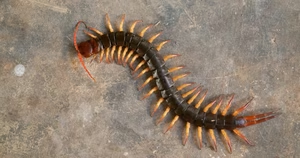
Centipedes, sometimes called hundred-leggers, are elongated and flattened animals that carry one pair of legs per body segment. According to UC IPM, unlike insects, which have three clearly defined body sections and three pairs of legs, centipedes have numerous body segments and numerous legs. That high leg count is usually the first feature California homeowners notice when one of these creatures darts across a floor or wall.
How to Tell Centipede Types Apart in California
The quickest way to confirm you are looking at a centipede rather than a similar creature is to count the legs on each body segment. Centipedes carry one pair per segment. Millipedes, by contrast, bear two pairs per segment. That single detail separates the two groups no matter which species you encounter around your California home.
How to Spot Centipede Activity Inside Your California Home
Centipedes are fast movers, so a live sighting is often the clearest sign of activity. Their flattened bodies allow them to fit through narrow gaps, which means you may spot one slipping beneath a baseboard or along a wall. Their distinctive body plan and high leg count help them stand out from common household insects.
Where Centipede Activity Shows Up Around California Homes
Around the exterior of your home, centipedes may be found in areas where their flattened body shape lets them tuck into tight spaces. Checking under items stored directly on the ground can sometimes reveal these many-legged animals resting during the day.
Exterior Entry Points Centipedes Use Around California Homes
The same flattened build that helps centipedes hide outdoors also lets them squeeze through small openings in your home’s exterior. Gaps around foundations, doors, and utility penetrations can all serve as pathways. If you are finding centipedes inside regularly, contact Official Pest Prevention to have a service professional assess your property.
Why Centipede Problems Develop in California
Centipedes are drawn to areas that offer both moisture and a steady supply of prey. Understanding what creates these conditions around your home can help you recognize why centipedes show up and where they tend to settle.
Outdoor Nesting Areas for Centipedes Around California Homes
Centipedes prefer damp, sheltered spots outdoors. Leaf litter, mulch beds, stones, and wood piles that hold moisture close to the ground all provide the kind of cover they seek. These areas stay cool and humid, giving centipedes a place to rest during the day before they come out to hunt at night.
Food and Shelter That Attract Centipedes Around California Homes
House centipedes capture flies, cockroaches, and other small household pests. According to UC IPM, this prey-driven behavior means that a home with an existing insect population is more likely to attract centipedes. If other pests are present, centipedes have a reason to stay.
Damp conditions play an equal role. Centipedes may occur in damp areas of basements, closets, or bathrooms, or anywhere in the home where insects occur. Reducing moisture and addressing other pest activity removes two of the main draws.
How Centipedes Move Around California Homes
Centipedes are fast-moving and typically active after dark. They follow areas of high humidity and prey activity, shifting from outdoor harborage toward interior spaces when conditions outside become less favorable. A change in irrigation, landscaping, or weather can push them closer to your foundation.
Trails and Entry Points Centipedes Use in California
Gaps around doors, windows, and foundation-level openings give centipedes a path inside. Once indoors, they gravitate toward damp rooms where humidity stays higher than the rest of the house.
If you are noticing centipedes indoors regularly, the issue likely involves both moisture and a food source. Contact Official Pest Prevention for a professional assessment of what is drawing them in.
Risks From California Centipedes
Centipedes in California belong to the phylum Arthropoda, the same broad group that includes insects, spiders, and crustaceans, though centipedes occupy their own distinct class with a very different body plan. While they are not among the most destructive household pests, they can create concerns worth understanding so you know how to respond when you spot one indoors.
Health Risks Linked to California Centipedes
When provoked, some large centipedes can inflict a painful bite that may cause localized swelling, discoloration, and numbness, according to UC IPM. Millipedes, which are sometimes confused with centipedes, can exude a defensive liquid that may irritate skin or burn the eyes. If you experience irritation or a bite reaction after a centipede or millipede encounter, rinse the area with clean water and contact a medical professional if discomfort continues.
Property Damage From Centipedes in California
Centipedes are predatory pests that feed on other small arthropods rather than on building materials. They do not chew wood, fabric, or stored goods the way some other household pests do. Their presence is primarily a nuisance issue, though finding several indoors may point to moisture conditions or other pest populations worth addressing.
Food Areas and Centipede Activity in California Homes
Centipedes are not drawn to pantries or countertops the way some pests are. They hunt live prey, so food-preparation areas attract them only when smaller pests are already present. If you notice centipede activity near your kitchen or dining area, the bigger concern may be the prey pests that brought them there.
When to Look Closer at Centipede Activity in California
A single centipede sighting is common and usually not cause for alarm. Repeated sightings, however, suggest conditions in your home that support these pests and potentially other arthropod pests as well. Damp crawl spaces and cluttered storage areas are typical harborage spots.
If you are seeing centipedes regularly in your California home, contact Official Pest Prevention to request a quote. Our local team serves Fresno, Elk Grove, Stockton, Modesto, and other Central California communities and can help you understand what is drawing pests indoors.
Professional Pest Control for Centipedes in California
Managing centipedes in California comes down to two core strategies: reducing the moisture they depend on and cutting off their food supply. When you address both conditions around your home, centipede activity typically drops. Below is a closer look at how prevention, inspection, and professional treatment work together.
How to Reduce Attractants for Centipedes in California
Centipedes follow their food. Keeping the number of insects, spiders, and other prey under control around your property removes a major reason centipedes show up in the first place. If there is nothing to hunt, centipedes have less incentive to stay.
Moisture is the other key attractant. Fix leaky faucets, ensure proper drainage near your foundation, and use dehumidifiers in areas that tend to stay damp. Pairing moisture reduction with prey control addresses both conditions that draw centipedes indoors.
Why Centipede Control in California Starts With Inspection
Before any treatment plan can work, you need to know what you are dealing with. A thorough inspection identifies where moisture is building up and where prey insects are active. These two findings guide every step that follows.
An inspection also helps rule out other pests that may look similar. Understanding the scope of the issue lets a service professional recommend targeted steps rather than a one-size-fits-all approach.
What to Expect During Professional Centipede Treatment in California
A professional approach to centipedes in California focuses on the conditions that support them. That means addressing prey populations and identifying moisture issues that make your home more hospitable.
Official Pest Prevention serves homeowners in Fresno, Elk Grove, West Sacramento, Yuba City, Stockton, Modesto, Pleasanton, Livermore, Hayward, and Fremont. With local techs and local customer support, the team can assess your property and focus on the specific conditions driving centipede activity at your home.
What to Expect From a California Centipede Control Plan
A well-structured centipede control plan tackles the problem at its source. According to the University of Minnesota Extension, reducing the number of insects, spiders, and other prey is a foundational step. Your control plan should address both prey reduction and moisture management on an ongoing basis rather than relying on a single visit.
The team can walk you through what a control plan looks like for your property.
Bottom Line on Centipedes in California
Centipedes are common household visitors in California, drawn indoors by moisture and the availability of smaller prey. While a bite from a larger centipede can be painful, most encounters are more startling than harmful. Reducing moisture around your home and limiting the insects centipedes feed on are the most practical steps you can take. If centipedes keep showing up despite your efforts, a local pest control team can help identify the attractants and address the problem at the source.
Frequently Asked Questions About Centipedes in California
Why Do Centipedes Come Inside?
Centipedes typically move indoors when they find damp conditions and a supply of smaller prey such as insects and spiders. Lowering indoor moisture and keeping other pest populations in check can make your home less appealing to them.
Can Centipedes Bite?
Yes. Larger centipedes can bite when provoked, potentially causing localized swelling, discoloration, and numbness. Avoid handling centipedes directly, and contact a medical professional if you experience an unusual reaction.
How Can I Tell Centipedes Apart From Millipedes?
Centipedes have one pair of legs per body segment and a flattened shape. Millipedes, by contrast, have a rounded body and multiple pairs of tiny legs on each segment. For identification tips, the UC Statewide IPM Program offers detailed comparisons of centipedes and millipedes. Knowing which one you are seeing helps determine the right approach.
When Should I Call a Professional?
If you are spotting centipedes regularly inside your home, it may point to a moisture issue or a larger pest population attracting them. Official Pest Prevention serves homeowners in Fresno, Stockton, Modesto, Elk Grove, and several other California communities. Contact us to request a quote and learn what may be driving the activity.
Our methodology: how we research pest control topics
Every Official Pest Prevention article follows the same standard we hold our service work to: clear, accurate, and grounded in what actually works on a real Northern California home. Homeowners across the Sacramento metro and Bay Area communities count on us for honest pest information they can act on, and we treat the writing the same way.
We build our content from a combination of government guidance, peer-reviewed research, and the patterns our technicians see across thousands of homes in our service area. Here is how we approach each article:
Studying pest behavior
We start with how each pest actually lives — where it nests, how it spreads, and what conditions support it. Northern California’s seasonal rain and dry cycles change pest pressure in ways that matter for treatment, and getting the biology right is what tells us what will and will not work.
Reviewing health and home risks
We review research on how each pest affects human health and home structures. Some pests are a nuisance. Others trigger allergies, carry bacteria, or cause structural damage. Knowing the actual risk helps homeowners decide how urgently to act.
Using Integrated Pest Management
Our recommendations are grounded in Integrated Pest Management (IPM), the framework supported by the USDA and EPA. IPM combines monitoring, sanitation, exclusion, and targeted treatment to reduce pest populations while limiting unnecessary product use.
Prioritizing prevention and lasting protection
A pest problem rarely ends with one treatment. We focus on the conditions that allow infestations to start in the first place — moisture, food sources, gaps around the home, harborage zones — because long-term control depends on changing the environment, not just treating the symptoms.
Citing peer-reviewed and government sources
Whenever possible, we support our recommendations with peer-reviewed studies, university extension research, and guidance from agencies like the EPA, CDC, and USDA. Each source we cite is listed at the end of the article.
Why trust us
Official Pest Prevention is a local company with local technicians and local customer support. We serve homeowners across the Sacramento metro and into the Bay Area — Fresno, Elk Grove, West Sacramento, Yuba City, Stockton, Modesto, Pleasanton, Livermore, Hayward, and Fremont. When you call, you reach our team. When a technician shows up, they live and work in your area.
That same standard runs through our content. The information you read here reflects what our technicians see in the field, what current research supports, and what we have learned from servicing homes across our Northern California footprint.
Our credentials
- Service across the Sacramento metro and Bay Area — Fresno, Elk Grove, West Sacramento, Yuba City, Stockton, Modesto, Pleasanton, Livermore, Hayward, and Fremont
- Local technicians and local customer support
- Specialty services including dewebbing and power sprayer treatments
- General pest control, mosquito, rodent, termite, and seasonal pest programs
- Continuous review of research, regulations, and California-specific pest pressure
Sources and standards we reference
To keep our content accurate and up to date, we rely on established research and authority sources, including:
Environmental Protection Agency (EPA):
Guidelines on product use, labeling, and approved applications.
Centers for Disease Control and Prevention (CDC):
Public-health guidance on pests that affect human health, including mosquitoes, ticks, rodents, and cockroaches.
United States Department of Agriculture (USDA):
Integrated Pest Management standards and pest biology research.
National Pest Management Association (NPMA):
Industry standards, pest behavior research, and seasonal trend reporting.
University of California Cooperative Extension:
Peer-reviewed, region-specific research on Northern California pest biology and control methods.
Peer-reviewed journals:
Research published in entomology, public health, and environmental science journals to support specific claims about pest behavior, health risks, and treatment efficacy.
Article sources
The following sources were specifically referenced in the research and development of this article:
All information is accurate at the time of publication and is reviewed regularly to reflect current research and pest control standards.